

Operational, Regulatory and ESG Shifts Might Change The Case For Investing In CVS Health (CVS)
CVS Health Corporation CVS | 0.00 |
- In April 2026, Aetna, a CVS Health company, reported major progress in simplifying prior authorizations while CVS Health faced new Tennessee rules separating pharmacy benefit managers from pharmacy ownership and advanced sustainability efforts through recyclable, fiber-based cold-chain packaging.
- Together, these shifts highlight how CVS Health’s integrated model is being reshaped by regulatory pressure, operational reform in Aetna, and incremental environmental improvements.
- Next, we’ll examine how Aetna’s prior-authorization reforms and related operational changes feed into CVS Health’s broader investment narrative and outlook.
Outshine the giants: these 18 early-stage AI stocks could fund your retirement.
CVS Health Investment Narrative Recap
To own CVS Health, you need to believe its integrated model of insurance, pharmacy and care delivery can translate heavy scale into improving earnings, despite thin margins and regulatory scrutiny. The latest Tennessee FAIR Rx Act raises questions around that integration in one state but does not yet change the central short term catalyst, which is restoring profitability in Health Care Delivery and stabilizing the medical benefit ratio. The key near term risk remains sustained pressure on margins across insurance and pharmacy reimbursement.
Aetna’s progress on prior authorization reform, with 88% of volume standardized and most requests processed within 24 hours, ties directly into that profitability story. Faster, simpler utilization management can reduce friction for providers and members, potentially supporting customer retention and operational efficiency across CVS Health’s ecosystem, even as the company contends with legislative challenges to its vertically integrated PBM and pharmacy structure.
Yet behind these operational wins, the Tennessee effort to separate PBMs from pharmacy ownership is a risk investors should be aware of because it could...
CVS Health's narrative projects $445.1 billion revenue and $10.3 billion earnings by 2029. This requires 3.6% yearly revenue growth and a $8.5 billion earnings increase from $1.8 billion today.
Uncover how CVS Health's forecasts yield a $96.58 fair value, a 23% upside to its current price.
Exploring Other Perspectives
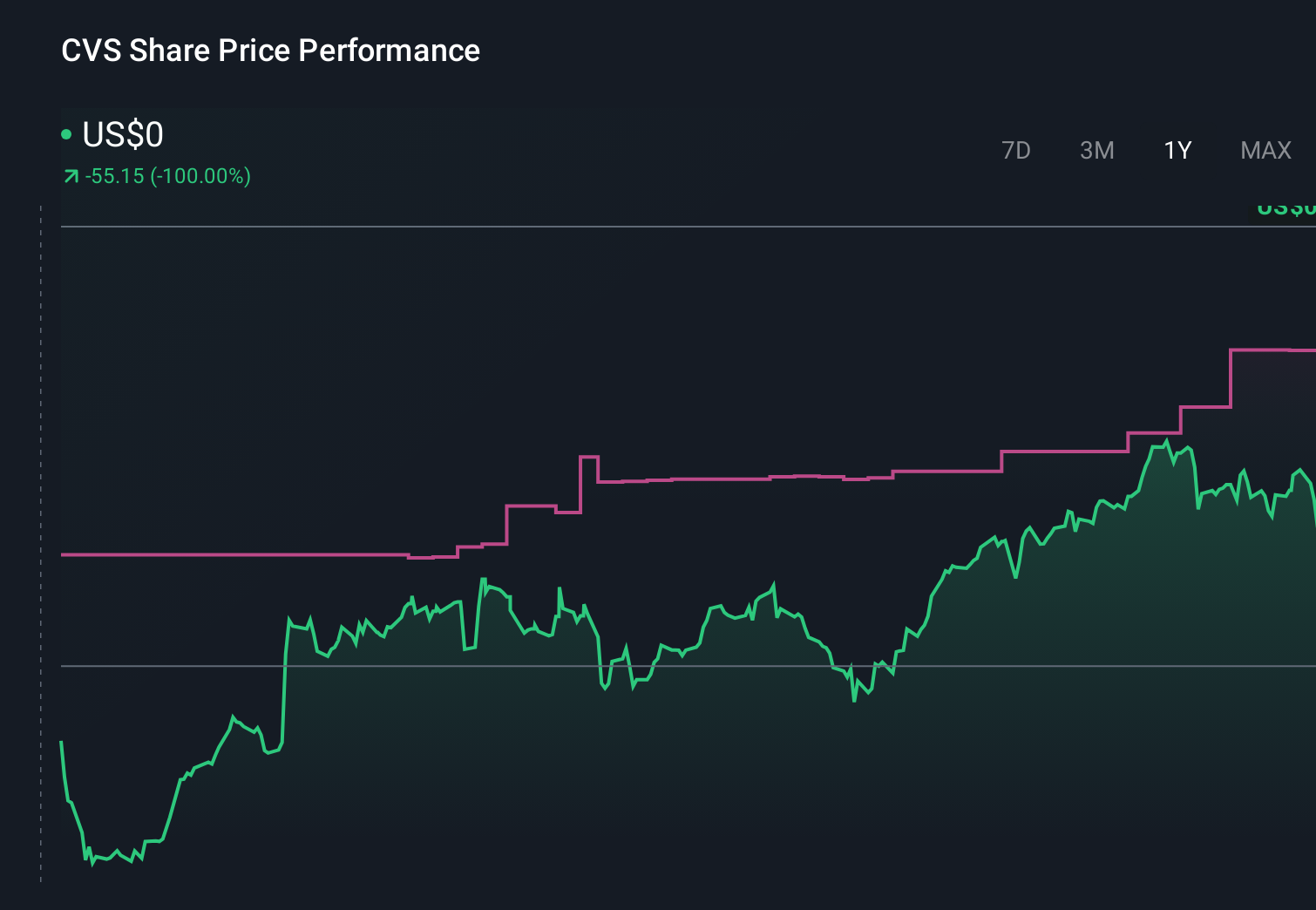
Five members of the Simply Wall St Community currently estimate CVS Health’s fair value between about US$96.58 and US$279.04 per share, reflecting wide variation in expectations. Set against this, concerns about persistent pharmacy reimbursement pressure and regulatory efforts like Tennessee’s FAIR Rx Act may shape how you think about CVS Health’s ability to sustain its integrated model and earnings profile over time.
Explore 5 other fair value estimates on CVS Health - why the stock might be worth over 3x more than the current price!
Reach Your Own Conclusion
Disagree with existing narratives? Extraordinary investment returns rarely come from following the herd, so go with your instincts.
- A great starting point for your CVS Health research is our analysis highlighting 3 key rewards and 4 important warning signs that could impact your investment decision.
- Our free CVS Health research report provides a comprehensive fundamental analysis summarized in a single visual - the Snowflake - making it easy to evaluate CVS Health's overall financial health at a glance.
Ready To Venture Into Other Investment Styles?
Early movers are already taking notice. See the stocks they're targeting before they've flown the coop:
- The future of work is here. Discover the 35 top robotics and automation stocks leading the charge in AI-driven automation and industrial transformation.
- AI is about to change healthcare. These 32 stocks are working on everything from early diagnostics to drug discovery. The best part - they are all under $10b in market cap - there's still time to get in early.
- Uncover the next big thing with 24 elite penny stocks that balance risk and reward.
This article by Simply Wall St is general in nature. We provide commentary based on historical data and analyst forecasts only using an unbiased methodology and our articles are not intended to be financial advice. It does not constitute a recommendation to buy or sell any stock, and does not take account of your objectives, or your financial situation. We aim to bring you long-term focused analysis driven by fundamental data. Note that our analysis may not factor in the latest price-sensitive company announcements or qualitative material. Simply Wall St has no position in any stocks mentioned.