

Palo Alto Networks (PANW) Is Up 14.4% After New IBM–Red Hat Security Alliance - Has The Bull Case Changed?
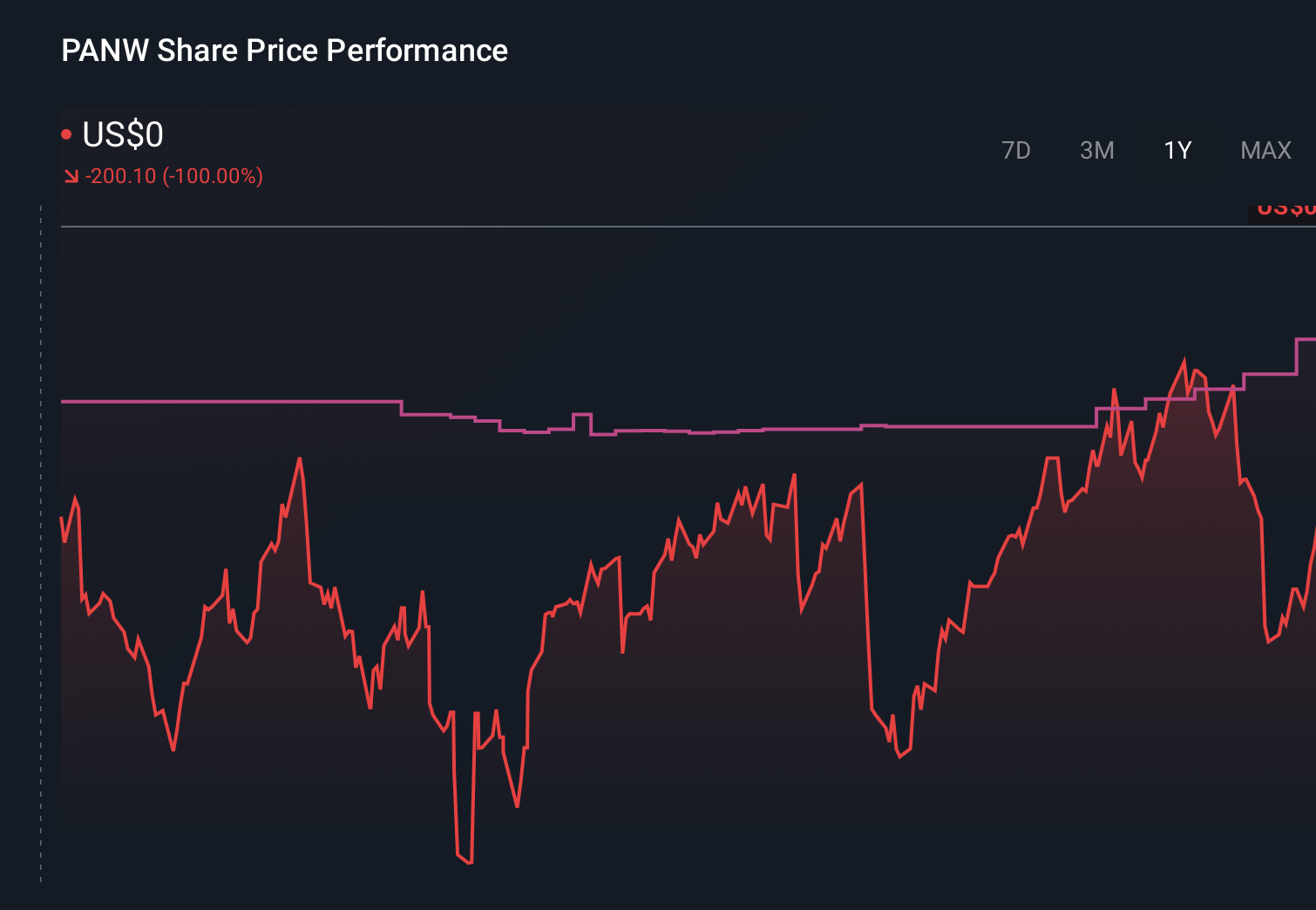
Palo Alto Networks, Inc. PANW | 0.00 |
- In late June 2026, Palo Alto Networks, IBM and Red Hat completed a collaboration integrating Palo Alto Networks’ Virtual Patching with IBM and Red Hat’s Project Lightwell to deliver rapid, dual-layer protection and remediation across open source, commercial, OT and healthcare software environments.
- This alliance links IBM and Red Hat’s US$5,000 million open source security commitment with Palo Alto Networks’ platform, creating an information-sharing and remediation ecosystem that could materially influence how enterprises manage emerging vulnerabilities.
- We’ll now examine how this IBM and Red Hat collaboration, especially its dual-layer vulnerability protection, may reshape Palo Alto Networks’ investment narrative.
This technology could replace computers: discover 26 stocks that are working to make quantum computing a reality.
Palo Alto Networks Investment Narrative Recap
To own Palo Alto Networks, you need to believe its integrated, AI-driven security platform can keep winning as enterprises consolidate vendors and the attack surface expands. The IBM and Red Hat collaboration reinforces this platform story by deepening virtual patching and remediation, but it does not change the key near term tension between high expectations embedded in the valuation and execution risk around complex platform and acquisition integration.
Among recent developments, the expanded partnership with Wipro on AI-driven Managed Detection and Response ties directly into the same theme as the IBM and Red Hat work: turning Palo Alto Networks’ AI and automation into real-world SOC outcomes. Together, these alliances highlight how third parties are building on Palo Alto Networks’ platform, which matters for the catalyst of platformization, but also raises the bar if competition in AI security accelerates.
Yet behind the strong story, investors should be aware that heavy reliance on large platform deals and ongoing integration risk could...
Palo Alto Networks' narrative projects $17.6 billion revenue and $2.6 billion earnings by 2029. This requires 18.4% yearly revenue growth and about a $1.8 billion earnings increase from $842.9 million today.
Uncover how Palo Alto Networks' forecasts yield a $310.32 fair value, a 11% downside to its current price.
Exploring Other Perspectives
Some of the most optimistic analysts were already assuming about US$17.3 billion of revenue and US$3.5 billion of earnings by 2029, yet this new IBM and Red Hat collaboration could either reinforce that AI centric growth story or expose how dependent it is on faster AI adoption than we have actually seen so far.
Explore 17 other fair value estimates on Palo Alto Networks - why the stock might be worth less than half the current price!
Form Your Own Verdict
Disagree with existing narratives? Extraordinary investment returns rarely come from following the herd, so go with your instincts.
- A great starting point for your Palo Alto Networks research is our analysis highlighting 1 key reward and 3 important warning signs that could impact your investment decision.
- Our free Palo Alto Networks research report provides a comprehensive fundamental analysis summarized in a single visual - the Snowflake - making it easy to evaluate Palo Alto Networks' overall financial health at a glance.
Seeking Other Investments?
Our daily scans reveal stocks with breakout potential. Don't miss this chance:
- Find 44 companies with promising cash flow potential yet trading below their fair value.
- Rare earth metals are the new gold rush. Find out which 31 stocks are leading the charge.
- The future of work is here. Discover the 29 top robotics and automation stocks leading the charge in AI-driven automation and industrial transformation.
This article by Simply Wall St is general in nature. We provide commentary based on historical data and analyst forecasts only using an unbiased methodology and our articles are not intended to be financial advice. It does not constitute a recommendation to buy or sell any stock, and does not take account of your objectives, or your financial situation. We aim to bring you long-term focused analysis driven by fundamental data. Note that our analysis may not factor in the latest price-sensitive company announcements or qualitative material. Simply Wall St has no position in any stocks mentioned.