

PDD Holdings Faces 2026 Regulatory Probes And Shifting Growth Outlook
PINDUODUO INC. PDD | 0.00 |
- PDD Holdings (NasdaqGS:PDD) is facing heightened regulatory scrutiny in China in 2026, as authorities continue sector wide probes.
- The company is caught up in broader investigations into internet platforms, including food delivery services and anti monopoly actions.
- Recent analyst commentary has flagged regulatory risk as a key issue for PDD Holdings and the wider Chinese internet sector.
PDD Holdings, the owner of discount ecommerce platform Pinduoduo and global site Temu, now sits in the middle of a tougher regulatory climate for Chinese internet firms. Authorities are examining business practices across multiple online services, including pricing, data use and competition, which adds an extra layer of uncertainty for companies that rely heavily on scale and user engagement.
For you as an investor, the key question is how this changing regulatory stance could affect PDD Holdings' growth plans, costs and flexibility in 2026. Market sentiment toward Chinese internet stocks can shift quickly when policy risk rises, so this development may influence how investors think about position sizing, diversification and risk tolerance around NasdaqGS:PDD.
Stay updated on the most important news stories for PDD Holdings by adding it to your watchlist or portfolio. Alternatively, explore our Community to discover new perspectives on PDD Holdings.
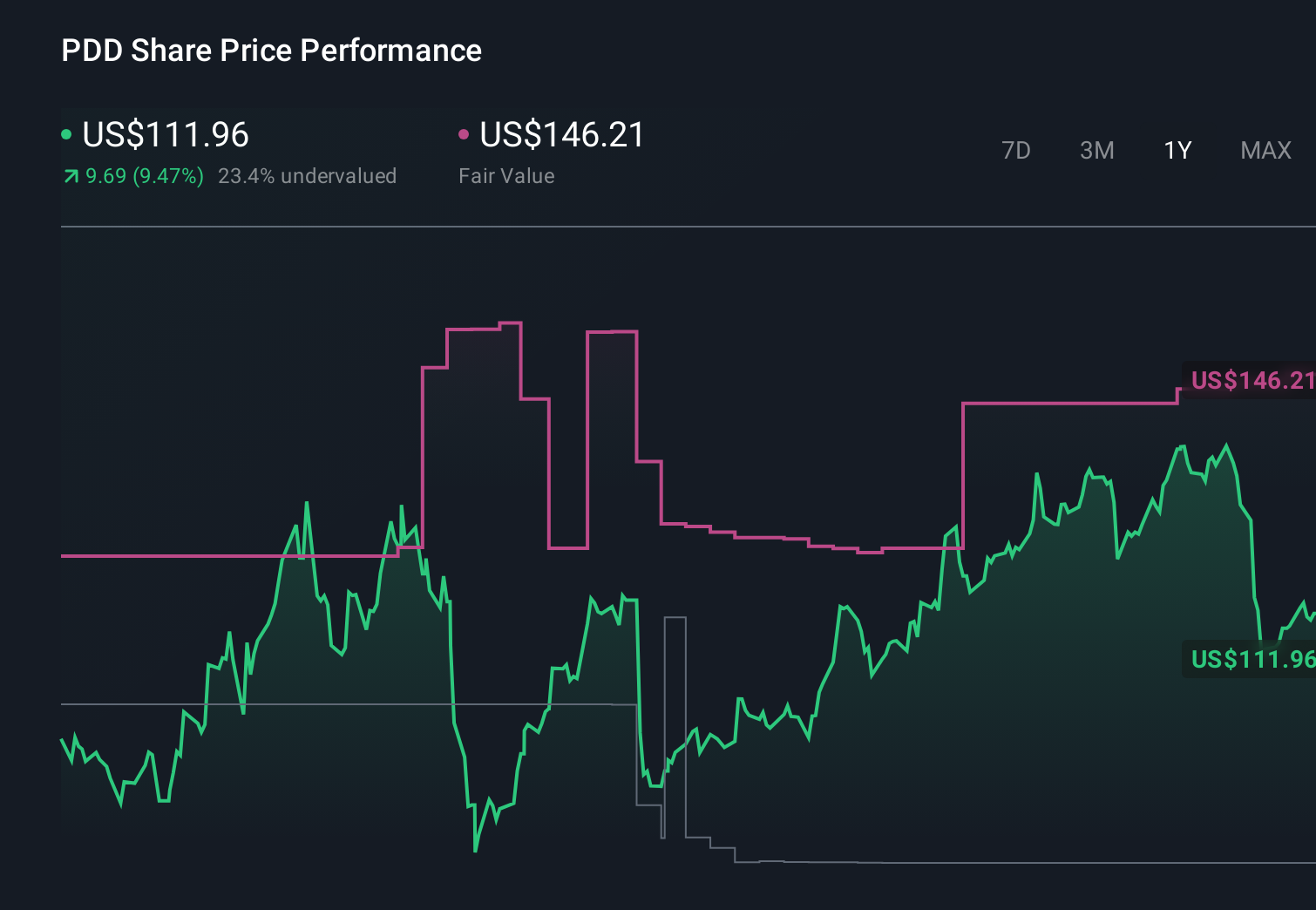
Regulatory scrutiny in China adds a layer of uncertainty for PDD Holdings just as it is already dealing with higher expected expenses, margin pressure and a slower domestic retail backdrop. For you, that raises questions not only about potential fines or operating restrictions, but also about management attention and how flexible the company can be in adjusting pricing, subsidies and data use compared with peers such as Alibaba and JD.com.
PDD Holdings narrative, now seen through a regulatory lens
The existing narratives around PDD focus heavily on long-term ecosystem investment, tariff resilience and international expansion via Temu, and this regulatory turn sits directly on top of those themes. On one hand, a smaller than feared tax fine has already shown that clarity can reduce tail risks, but on the other, new sector wide probes and overseas investigations, such as those into Temu, add fresh questions about how smoothly PDD can pursue margin recovery and global growth.
Risks and rewards you should weigh
- ⚠️ Heightened regulatory focus in China and abroad could result in further fines, stricter compliance requirements or changes to business practices that weigh on profitability.
- ⚠️ Analysts highlight higher expenses, ongoing margin pressure and a delayed consumer recovery in China as potential headwinds in 2026.
- 🎁 Several research houses still see PDD as operationally resilient, pointing to its response to U.S. tariffs and duty rule changes as a sign it can adapt to policy shifts.
- 🎁 Existing investor narratives emphasize long-term benefits from ecosystem investment and global expansion, which some analysts connect to higher long-run earnings potential if regulatory outcomes remain manageable.
What to watch next
From here, you may want to track any concrete outcomes from regulatory probes, management commentary on compliance costs and how analyst ratings or options activity shift as new information comes through. If you want a broader view of how other investors are framing these risks and opportunities, have a look at the community narratives for PDD on the PDD Holdings page where different long-term views are set out in full.
This article by Simply Wall St is general in nature. We provide commentary based on historical data and analyst forecasts only using an unbiased methodology and our articles are not intended to be financial advice. It does not constitute a recommendation to buy or sell any stock, and does not take account of your objectives, or your financial situation. We aim to bring you long-term focused analysis driven by fundamental data. Note that our analysis may not factor in the latest price-sensitive company announcements or qualitative material. Simply Wall St has no position in any stocks mentioned.