

Pfizer (PFE) Rides MRNA Cancer Optimism On A Valuation That Still Looks Modest
Pfizer Inc. PFE | 0.00 |
Pfizer (PFE) moved back onto investor watchlists after Merck and Moderna reported positive Phase 3 results for an mRNA melanoma treatment, lifting sentiment toward companies with oncology focused mRNA pipelines.
Across 2026, Pfizer’s share price has shifted from COVID reset concerns to renewed interest in its pipeline, with a 30 day share price return of 11.43% and a 1 year total shareholder return of 15.54%. Short term momentum is building, although the 3 year and 5 year total shareholder returns of 6.79% and 23.58% declines show longer term holders are still waiting for a more convincing recovery, with recent legal headlines, the EMA’s Lyme vaccine review and insider buying all feeding into changing views on Pfizer’s risk and growth profile.
If progress in mRNA oncology and vaccines is on your radar, it can help to widen the lens beyond Pfizer and see what else is moving in the sector through the 41 healthcare AI stocks
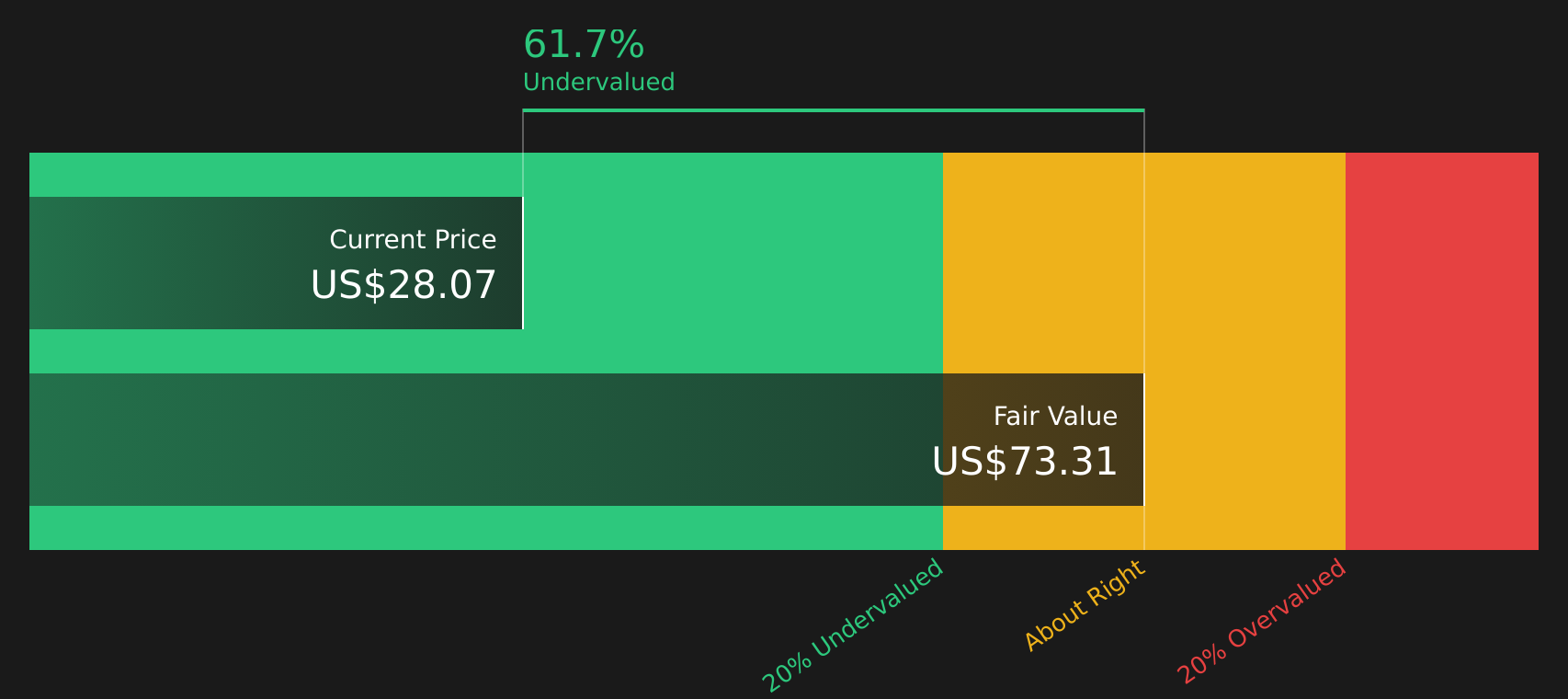
Pfizer now trades only about 3% below the average analyst target, while intrinsic value models suggest a much steeper 62% discount. After the recent rebound and resolution of the legal overhang, the key question is whether the market remains too cautious or not cautious enough.
Most Popular Narrative: 4.8% Undervalued
The most followed narrative currently places Pfizer’s fair value at $29.19 per share, slightly above the last close of $27.79, which frames today’s discount as modest rather than extreme.
Strategic business development and licensing (such as the 3SBio bispecific antibody deal and ongoing portfolio additions in high-value areas like oncology, immunology, and obesity) support revenue diversification and lifecycle management, mitigating the impact of patent expirations and increasing net margins via synergies and an optimized product mix.
Curious what sits underneath that fair value for Pfizer? The narrative leans on shifting sales mix, margin rebuild and a richer earnings multiple. The exact assumptions might surprise you.
The narrative uses a 7.11% discount rate and ties Pfizer’s valuation to falling headline revenue, firmer margins and a higher future earnings multiple than the wider pharmaceuticals sector. These moving parts, along with differing analyst views on the obesity and oncology pipeline, explain why the implied upside is modest and why sentiment can change quickly as new data arrives.
Result: Fair Value of $29.19 (UNDERVALUED)
However, the narrative around Pfizer can unravel quickly if patent expirations bite harder than expected or if pricing and reimbursement pressure squeeze margins and future earnings assumptions.
Another View on Pfizer’s Valuation
The earlier fair value of $29.19 for Pfizer comes from a model that projects future cash flows and discounts them back using a 7.11% rate. The SWS DCF model instead points to a value of $73.31 per share, which implies Pfizer looks materially undervalued. Which story feels more realistic to you?
Next Steps
If this mix of optimism and concern around Pfizer resonates with you, now is a good time to review the underlying data and decide where you stand by weighing the 2 key rewards and 4 important warning signs
Looking for more investment ideas beyond Pfizer?
If Pfizer has sharpened your interest, do not stop there. The screener can surface other opportunities that match your style before the market catches on.
- Target more resilient income by reviewing companies in the 12 dividend fortresses that may suit a yield focused portfolio.
- Hunt for potential value opportunities with the 50 high quality undervalued stocks and see which stocks currently align with stricter valuation filters.
- Prioritize stability first by checking the 79 resilient stocks with low risk scores and focus on businesses that screen well on risk metrics.
This article by Simply Wall St is general in nature. We provide commentary based on historical data and analyst forecasts only using an unbiased methodology and our articles are not intended to be financial advice. It does not constitute a recommendation to buy or sell any stock, and does not take account of your objectives, or your financial situation. We aim to bring you long-term focused analysis driven by fundamental data. Note that our analysis may not factor in the latest price-sensitive company announcements or qualitative material. Simply Wall St has no position in any stocks mentioned.