

Procter & Gamble (PG) Stock Looks Below Fair Value Despite Mixed Broader Checks
Procter & Gamble Company PG | 0.00 |
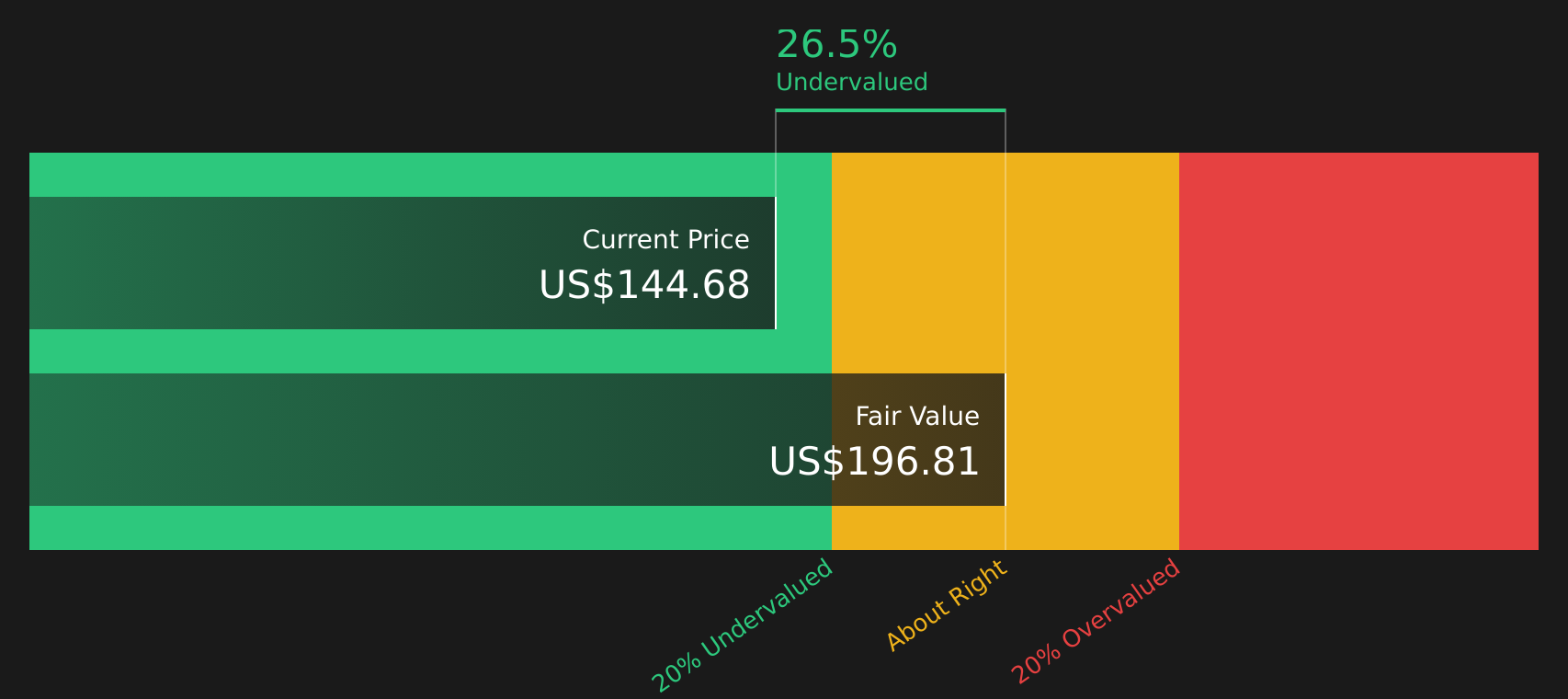
Procter & Gamble stock has delivered a 15.6% total return over the past 5 years, yet current valuation checks and an intrinsic value estimate from a Discounted Cash Flow (DCF) model both point to the shares trading below that intrinsic value. With the market price at US$144.68 and several valuation signals leaning toward undervaluation, investors are weighing whether the current discount offers a margin of safety.
- Over 5 years, Procter & Gamble has returned 15.6% in total, which is a modest outcome for a large consumer staples company and sets a measured backdrop for assessing value today.
- The company’s ability to keep turning household brands into steady cash flow can support the DCF based valuation, while any pressure on consumer spending or input costs may cap how much of that intrinsic value the market is willing to recognize.
- Procter & Gamble screens as undervalued on both the Discounted Cash Flow (DCF) estimate and earnings multiples, yet its broader checks are mixed, with the stock passing 4 of 6 valuation tests. This points to some support for value but not an across the board bargain. See the 4 out of 6 score for detail.
The stock’s next move may depend on whether the current discount to intrinsic value, including an estimated 26.5% undervaluation on the DCF, genuinely reflects an opportunity or simply compensates for the risks around future cash flows.
Is Procter & Gamble Still Cheap on Cash Flow?
The Discounted Cash Flow (DCF) approach aims to compare today’s share price with the cash the business is expected to generate in the future. For Procter & Gamble, the model uses latest twelve month free cash flow of about US$15.6b and assumes these cash flows continue to grow rather than shrink over time. That profile fits a mature consumer products company that already generates substantial cash instead of relying on a distant ramp up.
On these assumptions, the DCF model points to an intrinsic value of about $196.81 per share, compared with the current market price of $144.68. The implied 26.5% discount suggests the market price is not fully reflecting the projected cash generation of Procter & Gamble, even after factoring in a transition to more modest long term growth.
On this cash flow view, Procter & Gamble stock appears undervalued relative to the intrinsic value indicated by the DCF model.
Our Discounted Cash Flow (DCF) analysis suggests Procter & Gamble is undervalued by 26.5%. Track this in your watchlist or portfolio, or discover 49 more high quality undervalued stocks.
Is Procter & Gamble a Bargain on Earnings?
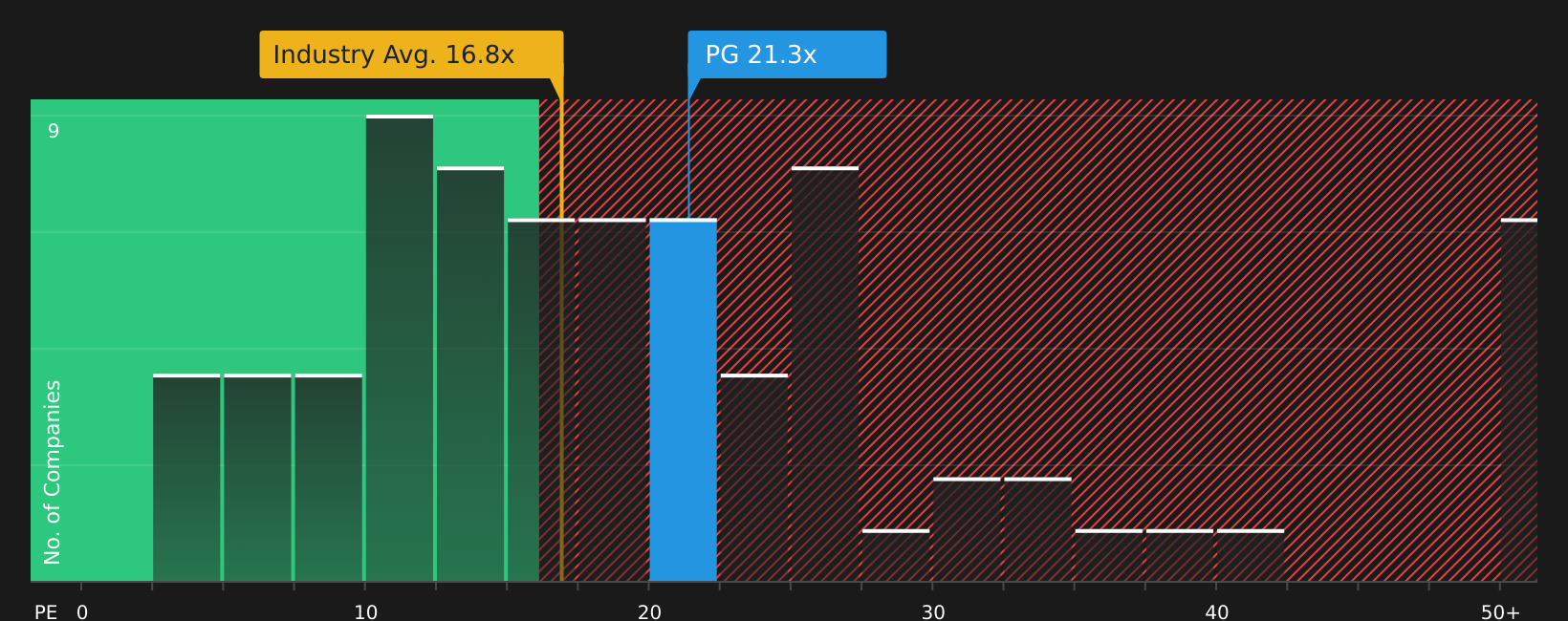
The P/E ratio suits Procter & Gamble because earnings remain a key anchor for how investors view a mature consumer products stock. Procter & Gamble currently trades on a P/E of about 21.3x, which is higher than the broader household products industry average of 18.3x.
However, the fair P/E ratio suggested by the model is 26.0x. This figure factors in the company’s scale, margins and risk profile more directly than a simple industry average. Against that benchmark and against peers that sit closer to 27.7x, Procter & Gamble’s current 21.3x multiple points to the market pricing the stock at a discount to what those fundamentals imply.
On this earnings measure, Procter & Gamble stock appears undervalued relative to the P/E level suggested by the fair ratio and peer group.
The Procter & Gamble Narrative: What Would Justify Today's Price?
Simply Wall St Narratives pick up from this valuation puzzle for Procter & Gamble by spelling out what would need to happen to growth, margins and earnings for the stock to be worth materially more or less than today’s price. They sit on the company’s Community page. Rather than rely on a single multiple or model output, each Narrative lays out its underlying assumptions so you can compare them with Procter & Gamble's actual results as they are reported.
Community views on Procter & Gamble are wide apart, with some investors seeing a value opportunity and others flagging meaningful downside risk.
Bull case: roughly fairly valued
"The company maintains a powerful stable of global brands... non-food consumer staples with strong brand loyalty and frequent repeat purchases..."
Bear case: 35% overvalued
"From this we can say that there''s more than ~90% probability of Procter & Gamble being overvalued..."
Do you think there's more to the story for Procter & Gamble? Head over to our Community to see what others are saying!
The Bottom Line
For Procter & Gamble, both the Discounted Cash Flow (DCF) intrinsic value estimate and the earnings multiple view point to the stock screening as undervalued, even if broader checks are only mixed rather than overwhelmingly supportive. That leaves the current discount looking like a possible cushion, but not a clear cut bargain. The key question from here is whether Procter & Gamble can keep converting its brand strength into dependable cash flows without a marked hit to margins. How that trade off plays out is likely to decide whether the current valuation gap closes or proves to be a value trap.
This article by Simply Wall St is general in nature. We provide commentary based on historical data and analyst forecasts only using an unbiased methodology and our articles are not intended to be financial advice. It does not constitute a recommendation to buy or sell any stock, and does not take account of your objectives, or your financial situation. We aim to bring you long-term focused analysis driven by fundamental data. Note that our analysis may not factor in the latest price-sensitive company announcements or qualitative material. Simply Wall St has no position in any stocks mentioned.