
Richard Wyckoff: How the Best Traders Make Money from Their Mistakes
PowerShares QQQ Trust,Series 1 QQQ | 584.98 | +0.11% |
Apple Inc. AAPL | 255.92 | +0.11% |
Microsoft Corporation MSFT | 373.46 | +1.11% |
Tesla Motors, Inc. TSLA | 360.59 | -5.42% |
SAUDI ARAMCO 2222.SA | 27.60 | +0.15% |
Richard Wyckoff, an exceptionally successful stock trader, is celebrated for his profound understanding of market behavior through technical analysis, chart interpretation, and tape reading. His remarkable success and wealth earned him a place among legendary traders like Jesse Livermore and W.D. Gann. Wyckoff developed a trading methodology named after himself, utilizing price action and volume to interpret markets and execute trades, amassing millions in the process.
In this series, we will explore the Richard Wyckoff trading method together!
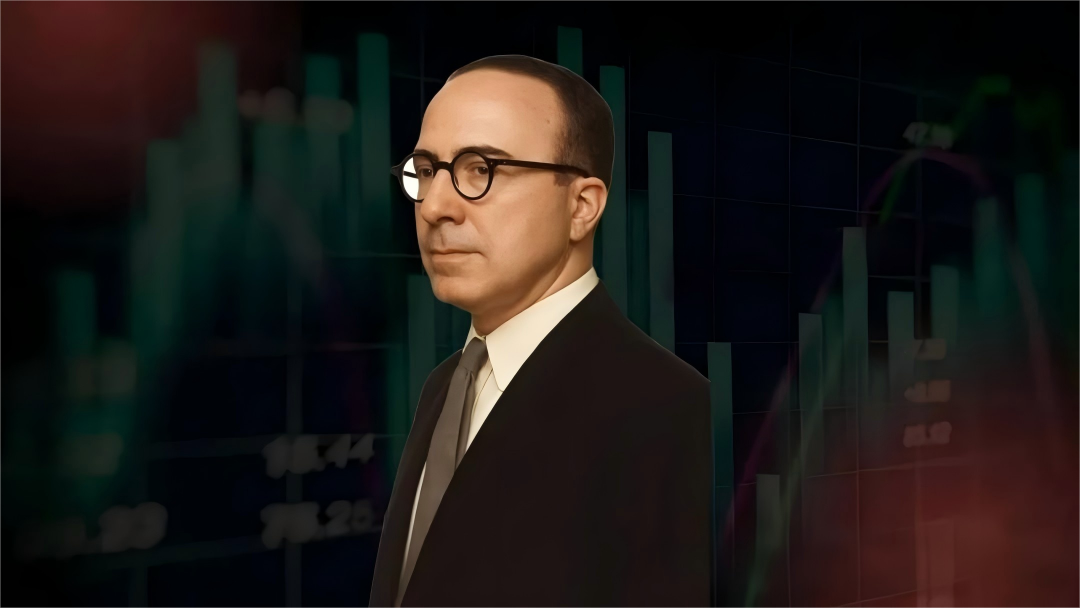
Learning from Mistakes: A Must for Every Trader
Wyckoff famously said, "One cannot learn to trade by ignoring the tape or by merely visiting a broker's office after lunch."* He emphasized that true growth comes from extensive market observation, followed by even more time spent away from the market to reflect on one’s mistakes.
It’s a harsh truth, but an incredibly valuable one.
Many traders focus on analyzing profitable trades, believing they hold the “secrets” to success. However, Wyckoff believed that the greatest lessons lie in losses. Every losing trade is a live, personalized coaching session.
Why did you make the wrong decision? Where were you impulsive? Why didn’t you execute your stop loss? Why did you chase the price? Why couldn’t you read the market structure? Answering these questions thoroughly during a review can help you avoid repeating the same mistakes.
To achieve this, meticulous record-keeping is essential. Don’t just log what you bought or sold—document your emotions, rationale, market conditions, and risk management details. Your trading journal is your personal “therapist, coach, and recorder” rolled into one.
Trading Is Not What You Think
To understand what trading is, you first need to recognize what it is not. Wyckoff’s observations are blunt and to the point:
- Trading is not about guessing market direction by glancing at price quotes.
- It’s not about blindly reacting to news headlines.
- It’s not about chasing rumors or insider gossip.
- It’s not about buying just because prices are rising or selling because they’re falling.
- It’s not about relying mechanically on a few technical indicators.
- And it’s certainly not about simplistic “buy low, sell high” strategies.
Trading requires a proven methodology and rigorous thought processes. It is not a random or emotional activity.
In essence, many people approach the market with casual, unstructured methods—but those approaches do not qualify as real trading. Real trading is systematic, logical, and carefully planned, not driven by gut feelings or snap decisions.
Momentum: The Market’s Underlying Logic
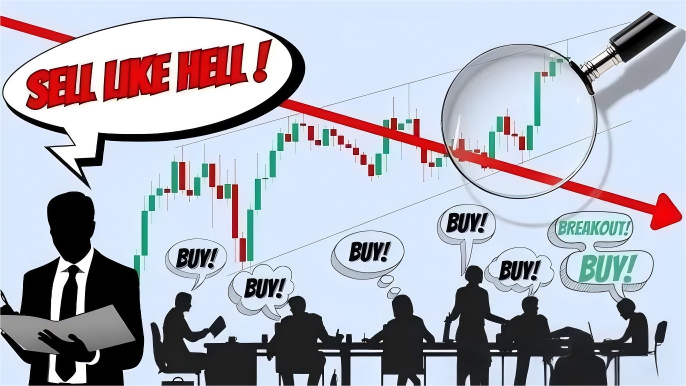
Wyckoff likened the market to a massive wheel: as long as a force is applied, the wheel will keep rolling in the same direction. Even when the force stops, the wheel will continue to turn for a while due to inertia.
Markets tend to maintain their current trajectory unless a new force intervenes. This principle, that “markets are more likely to continue than to reverse,” is a cornerstone of technical analysis.
This explains why trends often persist rather than reverse abruptly.
Many novice traders love to “bet on reversals,” thinking, “It’s risen too much, it must fall,” or, “It’s fallen too much, it must rise.” But the market doesn’t care about what you think is “too much” or “too little.” It simply moves in the direction dictated by momentum and capital flow.
To understand trends, reversals, and consolidations, you must first identify the market’s current phase, its structure, and where volume reveals the true forces at play.
Market Manipulation: Always Present, But Not the Real Problem
“The market is like a slowly turning wheel. Whether it continues in the same direction, stops, or reverses depends entirely on the forces acting upon it. Even if those forces disappear, the wheel retains its momentum until it is stopped or influenced by other factors.”
In today’s era of high-frequency trading, institutional manipulation, and flash crashes, many traders worry about market manipulation. However, manipulation has existed since Wyckoff’s time. The key to uncovering manipulation lies in analyzing volume. Even the largest players cannot conceal the traces of massive trades, which serve as signals of their activity. Learning to identify volume patterns is crucial to spotting the footprints of these market giants.
Wyckoff’s perspective is pragmatic: manipulation is not the problem—recognizing it is the solution.
Market manipulation refers to deliberate actions to distort the supply-demand dynamics of financial assets, often for personal gain. Common tactics include spreading false information, engaging in fake trades (such as wash trading), or artificially inflating volume to create the illusion of demand. These practices are illegal in most countries and are subject to severe penalties.
Large institutions, with their significant trading volumes, are like giants wearing “seven-league boots.” Every step they take leaves a loud “thud” on the volume chart. By understanding the relationship between price and volume, you can identify their movements and follow their lead.
That said, remember this: follow them, but don’t stand too close—or you might get trampled.
The Natural Advantage of Small Traders
Many believe that institutions are unbeatable, while retail traders are at a disadvantage. Wyckoff argued the opposite: small traders are more agile and have significant advantages over large trend-following funds.
The reason is simple: as a small trader, your positions are small enough to enter and exit the market without causing disruptions. You can cut losses quickly, whereas institutions often struggle to move their massive positions. You can also reverse direction faster and are free from the bureaucratic constraints of internal approvals.
In other words, small traders are like speedboats, while institutions are like aircraft carriers. You can change course instantly, while they need to plan miles ahead.
This is your moat.
Clear Trading Goals: Small Steps Lead to Big Results
Wyckoff’s approach to goal setting was refreshingly simple: focus on achieving consistent average profits, then gradually scale up.
“The trader’s goal is to achieve average profits. In a month of trading, he might make $3,500 in gains and incur $3,000 in losses—netting $500. If he can maintain this average, trading 100 shares at a time, he only needs to gradually increase his position size to 200, 300, or 500 shares to achieve significant results.”
Start small and trade patiently. If you can achieve consistent profitability, you can gradually increase your trading size. Trading goals should be specific, measurable, and achievable, often encompassing:
- Profit targets (e.g., annual return rates, monthly profit/loss ratios);
- Risk management (e.g., maximum loss per trade, drawdown limits);
- Account growth plans;
- Skill improvement objectives (e.g., enhancing discipline, optimizing strategies).
Setting clear goals helps traders stay focused, make rational decisions, and measure their true progress in the financial markets.

Conclusion: Trading Is a Journey of Continuous Improvement
Wyckoff’s philosophy reveals a recurring theme: trading is about ongoing learning, disciplined risk management, and steady growth.
- Mistakes are the best teachers.
- Trading is not impulsive but a calculated execution.
- Trends have momentum—follow them.
- Market manipulation is not a threat; volume reveals the truth.
- Small traders have unique advantages in flexibility.
- Consistent small profits, compounded over time, lead to significant success.
Ultimately, trading is not about predicting the future—it’s about preparing for it. As long as you continue to review your trades and deepen your understanding, you will grow stronger and more stable in the market.