

SBA Communications (SBAC) Stock Looks Like A Bargain Below Fair Value
SBA Communications Corp. Class A SBAC | 0.00 |
SBA Communications stock has had a difficult run over the past five years, yet the current share price of US$182.43 looks cheap when set against an intrinsic value estimate from a Discounted Cash Flow (DCF) model and traditional valuation multiples that both point to undervaluation.
- The share price has declined 43.3% over the past five years, which suggests investors have grown cautious even as valuation indicators now lean supportive.
- Future cash flow growth from SBA Communications' tower portfolio can support today’s valuation, although the capital intensive nature of the business may limit flexibility if funding conditions tighten.
- SBA Communications screens as undervalued on 6 of 6 key checks, which suggests the broader valuation picture leans cheap based on this score.
The stock's next move may depend on whether the current discount to intrinsic value and multiples offers a genuine margin of safety or simply reflects ongoing business and funding risks.
Does SBA Communications Look Undervalued on Cash Flow?
The Discounted Cash Flow (DCF) approach here uses projected adjusted funds from operations to estimate what SBA Communications could be worth based on its future cash generation.
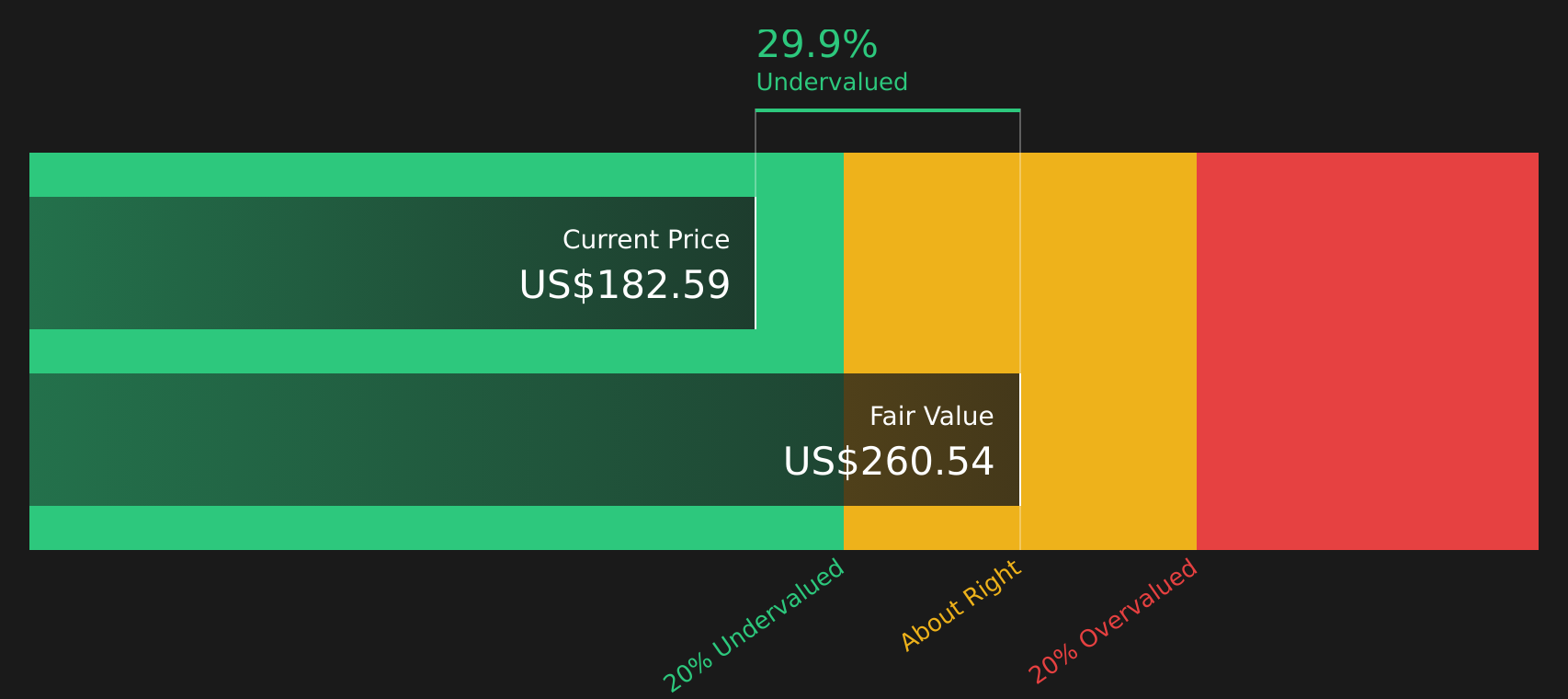
The model assumes SBA Communications continues to produce growing free cash flows in the coming years, with projections reaching over $1.5b by 2030. On this basis, the DCF estimate points to an intrinsic value of about $260.82 per share. That sits above the recent share price of $182.43, which implies a valuation gap.
The implied 30.1% discount suggests the market is pricing SBA Communications below what this cash flow profile supports, even after accounting for the capital intensive nature of its tower portfolio and the need for ongoing investment.
On this DCF view, SBA Communications stock appears undervalued relative to its estimated intrinsic value.
Our Discounted Cash Flow (DCF) analysis suggests SBA Communications is undervalued by 30.1%. Track this in your watchlist or portfolio, or discover 52 more high quality undervalued stocks.
Is SBA Communications a Bargain on Earnings?
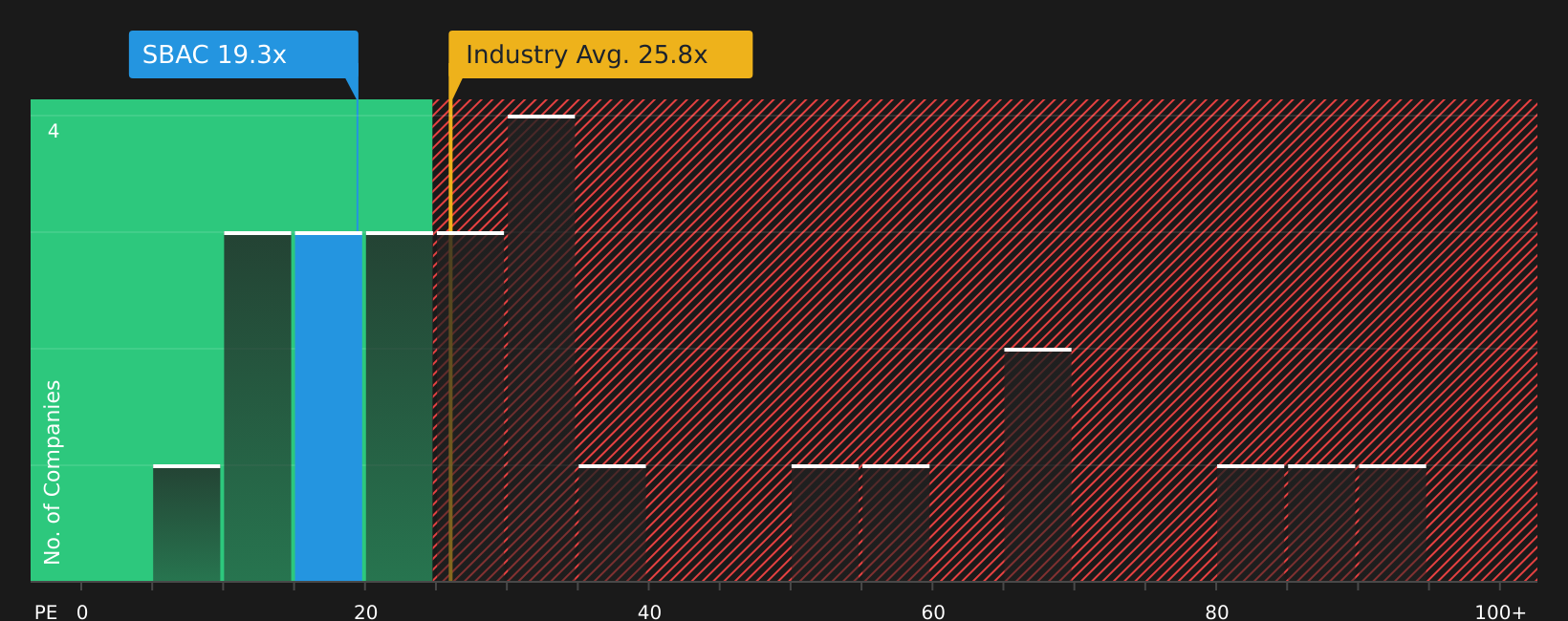
The P/E ratio works well for SBA Communications because the stock does generate positive earnings that can anchor the comparison. On current numbers, SBA Communications trades at about 19.5x earnings, which is above the Specialized REITs industry average of roughly 16.6x but below the average of close peers at about 29.8x.
The tailored fair P/E multiple for SBA Communications is estimated at about 35.1x. That is materially higher than the current 19.5x. This points to a sizeable gap between what the stock is priced at and what this framework suggests could be justified given its characteristics relative to other tower and infrastructure REITs.
On this P/E basis, SBA Communications stock appears undervalued relative to the level the fair multiple implies.
The SBA Communications Narrative: What Would Justify Today's Price?
Simply Wall St Narratives for SBA Communications link the valuation gap above to concrete assumptions about SBA Communications' future growth, margins and earnings, and set out what would need to change for the stock to be worth materially more or less than today’s price. Rather than relying on a single multiple or DCF output, each Narrative lays out the underlying assumptions for its fair value view so you can compare them with the company’s actual results over time. Narratives are available on Simply Wall St's Community page.
Share a narrative on SBA Communications' stock to add your voice to how its growth, margins and execution story is framed in the Simply Wall St community. Present a clear, number-driven case on SBA Communications and see how it holds up as new results come through.
Do you think there's more to the story for SBA Communications? Head over to our Community to see what others are saying!
The Bottom Line
SBA Communications screens as undervalued on both the Discounted Cash Flow (DCF) intrinsic value estimate and on earnings based multiples, and the broader valuation checks are supportive rather than a single outlier signal. The debate from here is not whether the stock looks cheap on paper, but whether its tower cash flows, funding needs and reinvestment requirements justify a higher multiple than the market is currently willing to pay. For investors, the key swing factor is whether the current discount reflects mispricing or is the market’s way of accounting for capital intensity and potential pressure on future financing flexibility.
This article by Simply Wall St is general in nature. We provide commentary based on historical data and analyst forecasts only using an unbiased methodology and our articles are not intended to be financial advice. It does not constitute a recommendation to buy or sell any stock, and does not take account of your objectives, or your financial situation. We aim to bring you long-term focused analysis driven by fundamental data. Note that our analysis may not factor in the latest price-sensitive company announcements or qualitative material. Simply Wall St has no position in any stocks mentioned.