
Shareholders May Be More Conservative With The Scotts Miracle-Gro Company's (NYSE:SMG) CEO Compensation For Now
Scotts Miracle-Gro Company Class A SMG | 63.88 | +4.70% |
Key Insights
- Scotts Miracle-Gro's Annual General Meeting to take place on 26th of January
- Total pay for CEO Jim Hagedorn includes US$1.20m salary
- Total compensation is 78% above industry average
- Scotts Miracle-Gro's EPS grew by 85% over the past three years while total shareholder return over the past three years was 16%
Performance at The Scotts Miracle-Gro Company (NYSE:SMG) has been reasonably good and CEO Jim Hagedorn has done a decent job of steering the company in the right direction. In light of this performance, CEO compensation will probably not be the main focus for shareholders as they go into the AGM on 26th of January. However, some shareholders may still want to keep CEO compensation within reason.
Comparing The Scotts Miracle-Gro Company's CEO Compensation With The Industry
According to our data, The Scotts Miracle-Gro Company has a market capitalization of US$3.7b, and paid its CEO total annual compensation worth US$12m over the year to September 2025. Notably, that's a decrease of 19% over the year before. We think total compensation is more important but our data shows that the CEO salary is lower, at US$1.2m.
On comparing similar companies from the American Chemicals industry with market caps ranging from US$2.0b to US$6.4b, we found that the median CEO total compensation was US$6.9m. Hence, we can conclude that Jim Hagedorn is remunerated higher than the industry median. What's more, Jim Hagedorn holds US$5.8m worth of shares in the company in their own name, indicating that they have a lot of skin in the game.
| Component | 2025 | 2024 | Proportion (2025) |
| Salary | US$1.2m | US$1.2m | 10% |
| Other | US$11m | US$14m | 90% |
| Total Compensation | US$12m | US$15m | 100% |
Speaking on an industry level, nearly 16% of total compensation represents salary, while the remainder of 84% is other remuneration. In Scotts Miracle-Gro's case, non-salary compensation represents a greater slice of total remuneration, in comparison to the broader industry. If total compensation is slanted towards non-salary benefits, it indicates that CEO pay is linked to company performance.
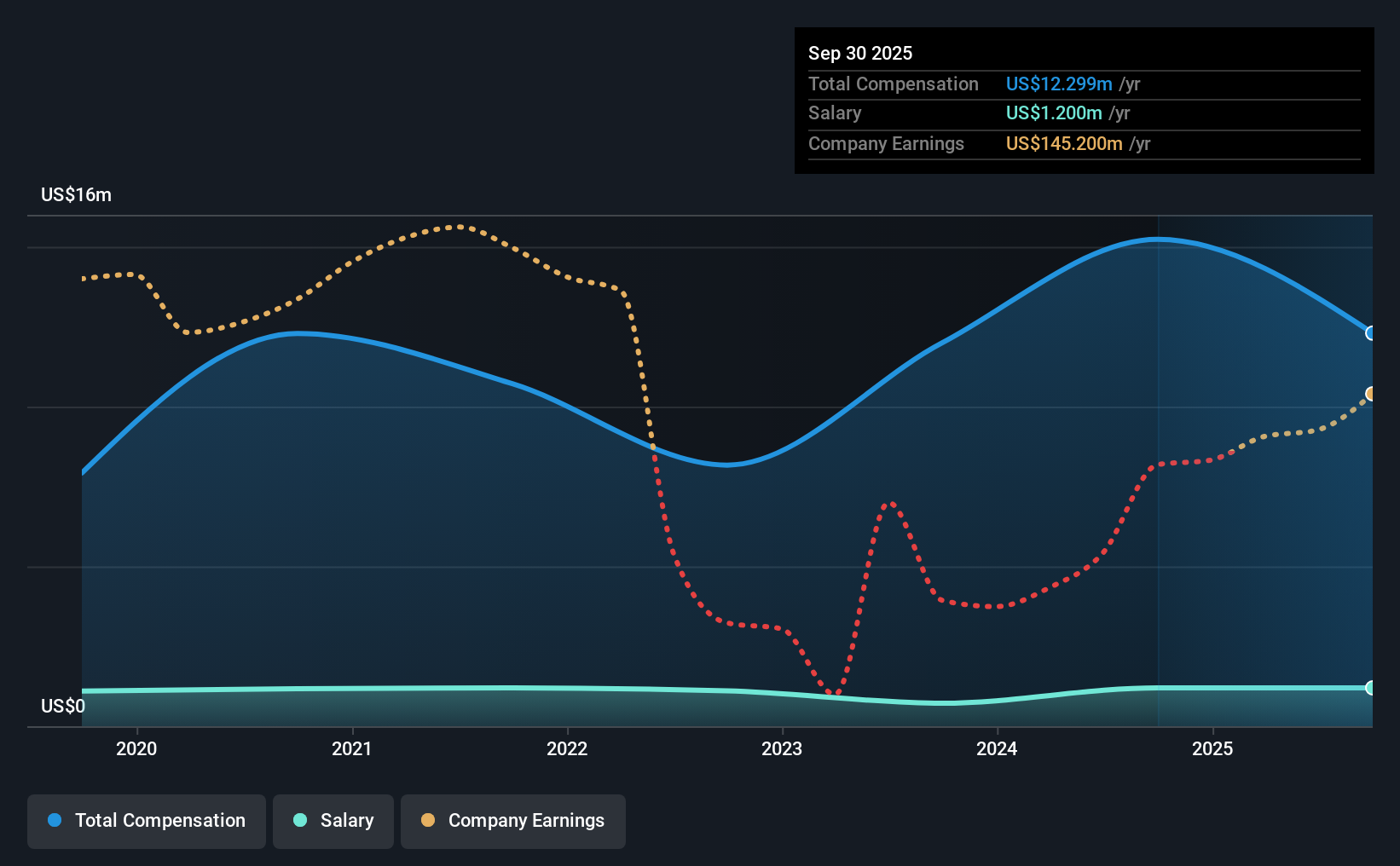
The Scotts Miracle-Gro Company's Growth
Over the past three years, The Scotts Miracle-Gro Company has seen its earnings per share (EPS) grow by 85% per year. It saw its revenue drop 3.9% over the last year.
Overall this is a positive result for shareholders, showing that the company has improved in recent years. While it would be good to see revenue growth, profits matter more in the end. Moving away from current form for a second, it could be important to check this free visual depiction of what analysts expect for the future.
Has The Scotts Miracle-Gro Company Been A Good Investment?
The Scotts Miracle-Gro Company has generated a total shareholder return of 16% over three years, so most shareholders would be reasonably content. But they probably wouldn't be so happy as to think the CEO should be paid more than is normal, for companies around this size.
In Summary...
Given that the company's overall performance has been reasonable, the CEO remuneration policy might not be shareholders' central point of focus in the upcoming AGM. However, any decision to raise CEO pay might be met with some objections from the shareholders given that the CEO is already paid higher than the industry average.
We can learn a lot about a company by studying its CEO compensation trends, along with looking at other aspects of the business. We did our research and identified 3 warning signs (and 1 which doesn't sit too well with us) in Scotts Miracle-Gro we think you should know about.
Switching gears from Scotts Miracle-Gro, if you're hunting for a pristine balance sheet and premium returns, this free list of high return, low debt companies is a great place to look.
This article by Simply Wall St is general in nature. We provide commentary based on historical data and analyst forecasts only using an unbiased methodology and our articles are not intended to be financial advice. It does not constitute a recommendation to buy or sell any stock, and does not take account of your objectives, or your financial situation. We aim to bring you long-term focused analysis driven by fundamental data. Note that our analysis may not factor in the latest price-sensitive company announcements or qualitative material. Simply Wall St has no position in any stocks mentioned.