

Shopify Resets Partner Model As AI Commerce And Legal Risks Evolve
Shopify, Inc. Class A SHOP | 0.00 |
- Shopify announced a major internal restructuring in its partnerships division, including layoffs and a shift toward new partner models focused on agentic commerce initiatives.
- The company reported a key legal victory, overturning a large patent verdict that had posed a risk to its technology and product roadmap.
- Shopify also expanded its AI commerce integration with Google, introducing a co developed Universal Commerce Protocol aimed at AI driven online shopping.
For investors watching NasdaqGS:SHOP, these changes come with the stock at $137.64 and a 29.7% return over the past year, alongside a very large 3 year gain and a 22.8% return over five years. Shorter term performance has been weaker, with a 12.9% decline over the past week, an 18.8% decline over the past month, and a 12.4% decline year to date, which can influence how this news is interpreted.
The restructuring, legal outcome, and AI work with Google together reshape Shopify's risk profile, merchant ecosystem, and product direction. As you think about Shopify's role in ecommerce platforms and AI driven shopping, these moves could be useful context when comparing it with other commerce and software names in your watchlist.
Stay updated on the most important news stories for Shopify by adding it to your watchlist or portfolio. Alternatively, explore our Community to discover new perspectives on Shopify.
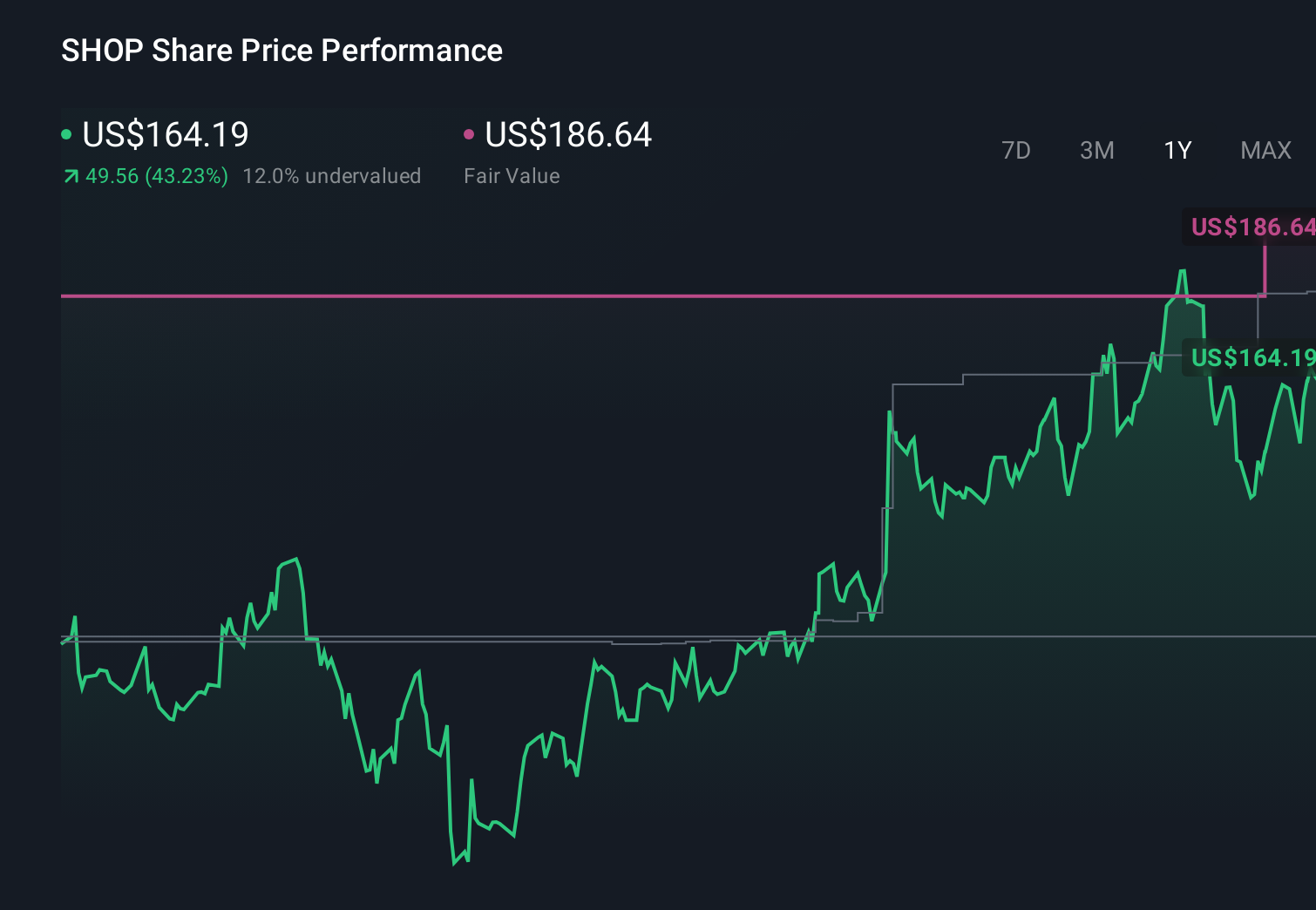
The restructuring in Shopify’s partnerships division points to a leadership decision to concentrate resources on fewer, higher impact partner models tied to agentic commerce, which could change how merchants, app developers, and agencies plug into the platform. Combined with the overturned US$40 million patent verdict and the AI focused work with Google on the Universal Commerce Protocol, this set of moves reduces a specific legal overhang while pushing the company further into AI led commerce experiences that may matter for larger brands.
How This Reshapes The Shopify Narrative
For investors who see Shopify as an ecommerce infrastructure provider rather than just a storefront tool, the shift toward agentic commerce and embedded AI shopping journeys can reinforce the idea that leadership is trying to keep the platform central to how brands sell across search, assistants, and other AI channels. At the same time, job cuts in partnerships may challenge older narratives that leaned on an ever expanding partner ecosystem, so you may want to watch how app partners, agencies, and third party tools respond over the next few quarters.
Shopify Risks And Rewards In Focus
- 🎁 Legal overhang from the prior patent verdict has eased, which simplifies the picture around Shopify's product roadmap.
- 🎁 Expanded AI commerce integration with Google supports the view that Shopify is actively competing for AI driven shopping flows.
- ⚠️ Layoffs and partner model changes could disrupt merchant sign ups or add on sales if key partners feel less aligned with the new direction.
- ⚠️ Execution risk rises when leadership pushes several changes at once, from restructuring and AI initiatives to legal strategy.
What Investors Should Watch Next
From here, you may want to track whether merchant growth, partner engagement, and AI related product adoption are discussed more prominently in upcoming earnings and management commentary, as that will show how this leadership shift is playing out in practice. If you want to see how other investors are framing the story, you can check out community narratives in this discussion hub and compare those views with your own thesis.
This article by Simply Wall St is general in nature. We provide commentary based on historical data and analyst forecasts only using an unbiased methodology and our articles are not intended to be financial advice. It does not constitute a recommendation to buy or sell any stock, and does not take account of your objectives, or your financial situation. We aim to bring you long-term focused analysis driven by fundamental data. Note that our analysis may not factor in the latest price-sensitive company announcements or qualitative material. Simply Wall St has no position in any stocks mentioned.