

Should Lyft’s (LYFT) California Malice Finding in Worker Case Prompt Investor Reassessment of Legal Strategy?
Lyft LYFT | 0.00 |
- In July 2026, a California Workers' Compensation Appeals Board judge sanctioned Lyft, Inc. a total of US$66,735 for willfully delaying discovery and repeatedly violating court orders to produce employment records in a catastrophic-injury case involving former driver Mark Nahvi, finding the company acted with malice.
- The ruling puts renewed focus on Lyft’s handling of worker-classification disputes in California, a long-running legal battleground for gig-economy employment models.
- Next, we’ll assess how this judicial finding of malice in a worker-classification dispute may influence Lyft’s broader investment narrative.
The best AI stocks today may lie beyond giants like Nvidia and Microsoft. Find the next big opportunity with these 18 smaller AI-focused companies with strong growth potential through early-stage innovation in machine learning, automation, and data intelligence that could fund your retirement.
Lyft Investment Narrative Recap
To own Lyft, you need to believe its ride sharing platform and partnerships can support durable profitability, despite legal and regulatory headwinds. The California sanction for discovery delays highlights conduct risk around worker classification, but the dollar amount is not material relative to Lyft’s scale. The bigger near term swing factor remains regulatory outcomes on driver status and associated cost structures, which could matter far more to margins than this individual ruling.
The recent share repurchase updates are most relevant here, because they sit alongside these legal developments as signals of how Lyft is deploying cash. Management has continued buying back stock under the US$1,000 million authorization even as legal disputes unfold, which keeps investor attention on capital allocation and earnings power as key catalysts, while regulatory and labor outcomes remain the main uncertainties to watch.
Yet beneath the focus on earnings and buybacks, there is a legal and labor risk around driver classification that investors should be aware of...
Lyft's narrative projects $9.1 billion revenue and $463.0 million earnings by 2029. This implies 10.4% yearly revenue growth and an earnings decrease of about $2.4 billion from $2.9 billion today.
Uncover how Lyft's forecasts yield a $19.33 fair value, a 11% upside to its current price.
Exploring Other Perspectives
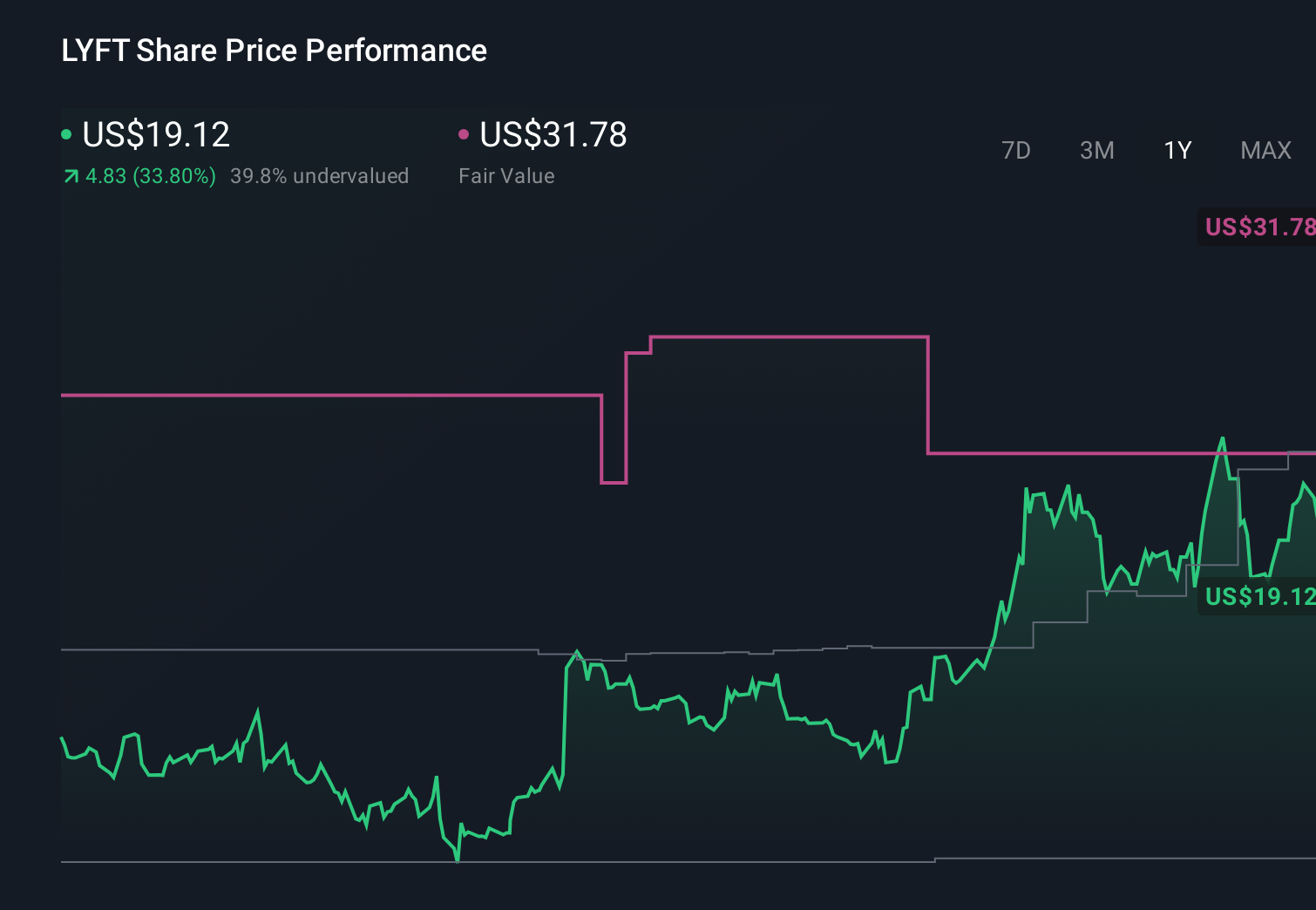
While consensus focuses on competition and AV costs, the more optimistic analysts were assuming roughly US$9.6 billion in 2029 revenue and US$480 million in earnings, even as labor regulation and classification risks like this case could still reshape Lyft’s story, reminding you that informed investors can reasonably land on very different views.
Explore 7 other fair value estimates on Lyft - why the stock might be worth over 2x more than the current price!
Decide For Yourself
Disagree with existing narratives? Extraordinary investment returns rarely come from following the herd, so go with your instincts.
- A great starting point for your Lyft research is our analysis highlighting 3 key rewards and 2 important warning signs that could impact your investment decision.
- Our free Lyft research report provides a comprehensive fundamental analysis summarized in a single visual - the Snowflake - making it easy to evaluate Lyft's overall financial health at a glance.
Searching For A Fresh Perspective?
These stocks are moving-our analysis flagged them today. Act fast before the price catches up:
- Capitalize on the AI infrastructure supercycle with our selection of the 55 best 'picks and shovels' of the AI gold rush converting record-breaking demand into massive cash flow.
- Rare earth metals are the new gold rush. Find out which 28 stocks are leading the charge.
- Find 48 companies with promising cash flow potential yet trading below their fair value.
This article by Simply Wall St is general in nature. We provide commentary based on historical data and analyst forecasts only using an unbiased methodology and our articles are not intended to be financial advice. It does not constitute a recommendation to buy or sell any stock, and does not take account of your objectives, or your financial situation. We aim to bring you long-term focused analysis driven by fundamental data. Note that our analysis may not factor in the latest price-sensitive company announcements or qualitative material. Simply Wall St has no position in any stocks mentioned.