
Silver Hits Record High Again at $64: Is $100 the Next Stop?
First Majestic Silver Corp. AG | 21.84 | -1.49% |
Pan American Silver Corp. PAAS | 55.77 | +0.34% |
Sprott Physical Silver Trust PSLV | 23.57 | -3.56% |
Silver Trust Ishares SLV | 65.79 | -3.45% |
ETF-S&P 500 SPY | 655.83 | +0.09% |
The "poor man's gold" is no longer poor. Silver has doubled in value this year, hitting record highs and outshining gold. Here is what is driving the frenzy and what investors should be watching.
What Happened?
The rally in silver has turned into a historic run. On December 12, spot silver prices surged to a record high of $64.32 per ounce, with futures reach a peak of $64.72 the day before. Since the start of the year, silver prices have doubled, delivering returns that far exceed gold and many other asset classes.
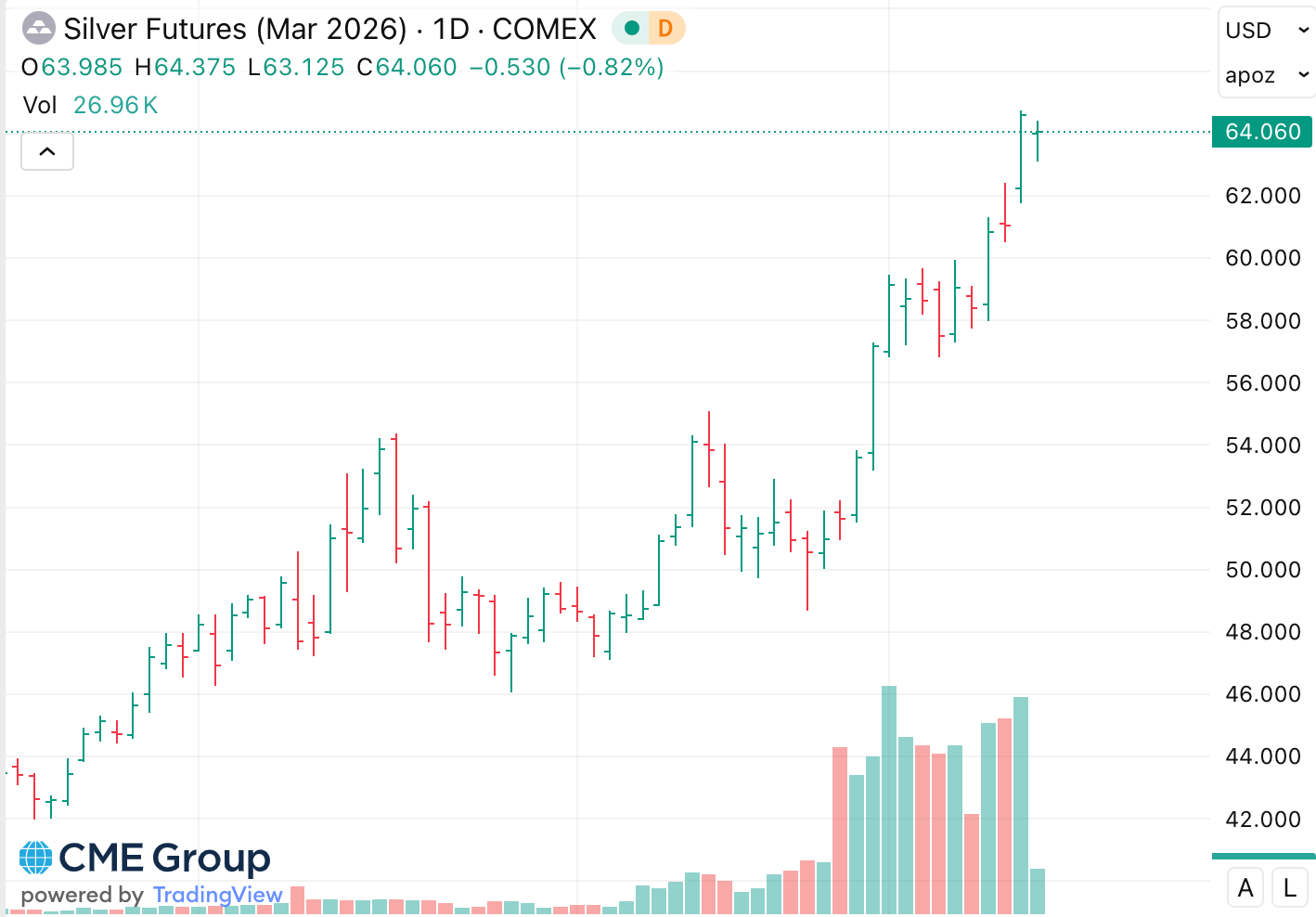
Market observers note that this "parabolic" rise—a steep, vertical climb—is rare. Similar patterns were only seen during the late 1970s oil crisis and the 2008 financial crisis. However, unlike those periods, today's rally isn't accompanied by a market crash, making this a unique "supercycle" driven by fundamentals rather than just fear.
The Core Drivers: A "Perfect Storm"
Why is silver soaring? It comes down to a collision of three major forces:
- Structural Deficit: The world is running out of silver faster than miners can dig it up. According to the Silver Institute, 2025 marks the fifth consecutive year of supply deficits, with a massive shortfall of 117 million ounces expected. Mine production has stagnated at roughly 813 million ounces, while demand is breaking records.
- Industrial Hunger: Silver is the backbone of the green economy. From solar panels (photovoltaics) to electric vehicles and advanced electronics, industrial demand is at an all-time high.
- The "Strategic" Shift: With geopolitical tensions rising, the US government recently designated silver as a "strategic commodity." This has triggered hoarding by corporations and investors fearing supply chain breaks, further squeezing available inventory.
What Are the Analysts Saying?
Institutions are scrambling to update their price targets. The consensus is shifting from "if" silver will rise further, to "how high."
- The $100 Club: Paul Williams of Solomon Global and Philippe Gijsels of BNP Paribas Fortis both predict silver could breach the $100 mark by 2026.
- The Conservative View: Bank of America recently raised its target to $65, citing ETF inflows and real yield adjustments.
- The Sentiment: Analysts are increasingly viewing silver as "the new gold"—a hedge against inflation ("debasement trade") and currency volatility, but with the added kick of industrial necessity.
Focus on the Market: What to Watch
For investors navigating this volatility, it is crucial to understand the different ways to track the market. As we highlighted in our December 5th update, different assets react differently to silver's price action.
Here is a recap of the key names we are monitoring, plus a notable addition:
- Pan American Silver Corp.(PAAS.US): The "Blue Chip." Often viewed as a balance of growth and stability, focusing on its high-grade Juanicipio Mine.
- First Majestic Silver Corp.(AG.US): The "High Beta" Play. Known for high leverage to silver prices. When silver rallies, AG often outperforms due to its pure-play exposure.
- Sprott Physical Silver Trust ETV(PSLV.US): The Physical Play. Preferred by investors seeking fully allocated physical bars to minimize counterparty risk during shortages.
- Silver Trust Ishares(SLV.US): One of the largest and most liquid ETFs tracking silver. It is a standard instrument for investors looking for direct exposure to spot price movements without holding physical metal or mining stocks.
A Note of Caution
While the momentum is strong, silver is historically known as the "Devil's Metal" for a reason: volatility. Current technical indicators (like the RSI) show the market is in "overbought" territory. Additionally, history offers a warning: the famous 1980 crash (driven by the Hunt Brothers' speculation) reminds us that parabolic rises can face sharp corrections.
Risks to watch include a potential slowdown in industrial demand if prices get too high, or a shift in Federal Reserve interest rate policy that could strengthen the dollar.
Disclaimer: This content is for informational purposes only and does not constitute financial, investment, or trading advice. The views expressed are based on market data and analyst opinions as of the date of publication. Past performance is not indicative of future results. Investors should conduct their own due diligence and consult with a qualified financial advisor before making investment decisions. Trading in precious metals and related securities involves significant risk and volatility.