

Stocks To Watch | Intel Up 200%, Micron Breaks $1 Trillion, Dell Soars 38%—All Linked to Trump Holdings & Praise. Should You Follow the President's Picks?
Dell Technologies, Inc. Class C DELL | 0.00 | |
Micron Technology, Inc. MU | 0.00 | |
Intel Corporation INTC | 0.00 | |
Apple Inc. AAPL | 0.00 | |
Thermo Fisher Scientific Inc. TMO | 0.00 |
Intel up 200%, Micron hits $1T, Dell up 38%—each rally followed Trump buying or praising. Of 3,711 trades, 625 were timed just before positive comments. Markets are now guessing his next pick.
The Most Foolproof Wall Street Strategy Last Year? “Follow Trump Trades”
In the past year, the best-performing trading strategy wasn’t about AI or rate cuts—it was simply “tracking Trump.” Social media trader TheAIInvestor sums it up plainly:
Don’t bother reading earnings—just check who the White House praised today.
This approach boils down to a clear supply chain: First, a company appears in the President’s portfolio. Then, it’s mentioned in speeches. Finally, it rallies on the charts.
Recent beneficiaries? Intel, Micron, and Dell, each surging after Trump-linked endorsements or investments.
- Dell Technologies(DELL.US): Got a direct plug—“Go buy a Dell, they're great.”
- Micron Technology(MU.US): Was bought before public praise.
- Intel(INTC.US): Rode the wave of government funding and industry security narratives.
The Playbook Is Simple, But Investors Keep Biting
Dell Technologies, Inc. Class C(DELL.US) is the poster child for “Presidential Product Placement.”
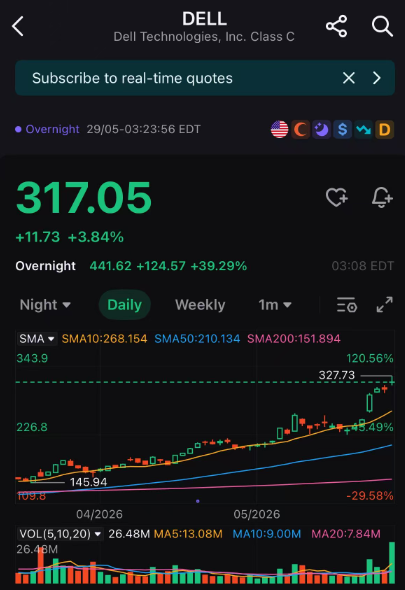
On February 10, Trump bought $1M–$5M of Dell stock. Nine days later, on stage in Georgia, he earnestly told the crowd: “Go buy a Dell computer, they’re great.” He reiterated this support on the White House YouTube channel, even hinting: “They’ve invested a lot”—which was a wink to savvy investors. Dell’s stock soared 38% overnight, hitting all-time highs, on top of steady gains.
Of course, Dell’s surge isn’t just talk—real demand for AI infrastructure and enterprise servers is boosting fundamentals. Mizuho analyst Vijay Rakesh upgraded the price target from $215 to $260 citing the AI boom.
Micron Technology(MU.US)'s timeline was even tighter.
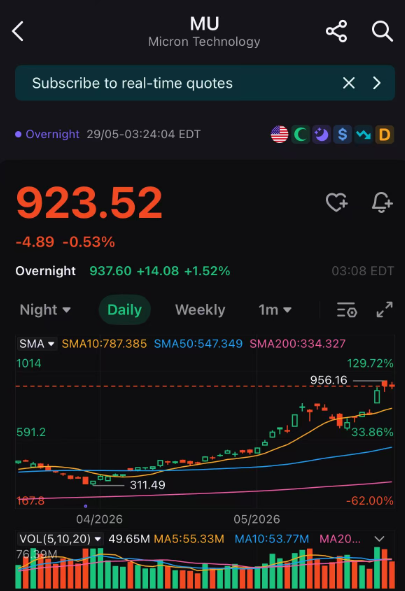
On March 25, Trump bought $50,000–$100,000 of Micron shares. The next day, he called into Fox News’s “The Five,” warmly stating: “I just met with Micron’s CEO—this is one of the hottest companies.” By May 22, he added: “Micron is great.”
Four days later, Micron’s market cap topped $1 trillion for the first time.
UBS quickly hiked its target from $535 to $1,625, citing AI server memory demand and a rebound in storage supply/demand.
This playbook was repeated with Apple Inc.(AAPL.US) and Thermo Fisher(TMO.US), mirroring the same pattern.
Intel(INTC.US): “Verbal Boost Not Enough, Fiscal Policy Steps In”
Dell and Micron are crossovers between personal holdings and public praise, but Intel’s case is more advanced—a mix of policy, industry security, and national capital.
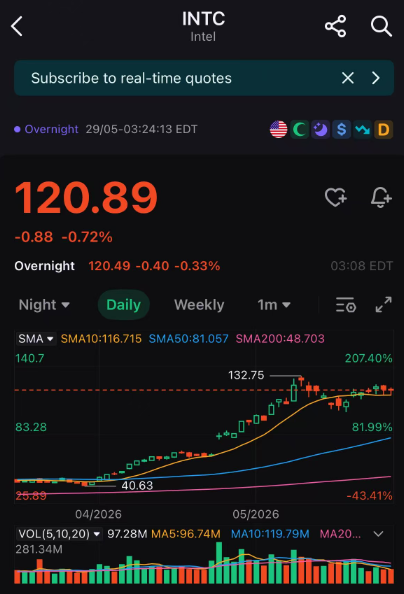
Documents show US government equity investment helped drive Intel up 200% this year. On May 18, the White House confirmed its $8.9 billion stake was now worth over $50 billion.
In short, Intel didn’t just get a shout-out—it was spotlighted by policy, capital, and national security interests.
For investors, the real lesson: Don’t just track what Trump buys or praises—but watch what the government invests, rescues, or supports.
3,711 Trades: Automated Indexing or Presidential Day Trading?
Things heated up with the May 14 OGE disclosure: Trump made 3,711 securities trades in Q1 2026, totaling $220M–$750M. That’s over 60 trades per day.
According to Vise co-founder Samir Vasavada, the holdings overlap ~90% with Russell 3000 index constituents—a hallmark of “direct indexing” (owning the stocks instead of funds, harvesting tax losses systematically).
The logic: If a stock falls, the system sells for a loss, buys a similar industry peer, so realized losses can offset taxes—overall exposure barely changes, but trading frequency jumps.
March 23—the second busiest trading day—coincided with S&P component rebalancing and FTSE Russell changes. On February 12 and March 18, S&P500 fell by >1%, triggering 155 and 124 automated trades.
The timeline matches, the logic holds.
Official White House explanation:
“The President's investments are managed independently by third-party financial institutions via automated, model-driven direct indexing. Neither Trump nor his family or business influence decisions.”
So, 3,711 trades aren’t suspect themselves. The real puzzle is 625 “unsolicited” trades.
625 “Unsolicited” Trades: When Coincidence Is Too Smooth
“Unsolicited” means trades are client-initiated, not broker-suggested.
In other words, these 625 trades weren’t system-generated—they were human-driven.
Almost all occurred in March, and most were buys. They spiked right after the US struck Iran—seemingly, someone picked specific stocks at specific times.
Crucially, the timing was too smooth:
- March 11: Trump visits Thermo Fisher’s Ohio plant, calls it a “great company.” Same day, buys $15,000–$50,000 Thermo Fisher (flagged “unsolicited”).
- Same day, praises Apple CEO Tim Cook in Kentucky. Buys $250,000–$500,000 of Apple, also “unsolicited.” In March, he bought $2M–$7.2M of Apple, with five unsolicited orders.
- March 25: Buys Micron (“unsolicited”). Next day, calls Micron “one of the hottest companies” live on Fox.
- Feb 10: Buys Dell. Nine days later, tells America to buy a Dell computer.
These trades aren’t part of automatic indexing.
Markets Are Betting on the “Next Presidential Shout-Out”
Now, Wall Street is speculating on the next “lottery winner.”
Trump’s disclosed Q1 holdings include ServiceNow, Adobe, Texas Instruments, and more—investors are guessing who’ll be praised next.
- Oracle(ORCL.US) is a top candidate (Larry Ellison ties, Stargate AI infra project).
- Broadcom Limited(AVGO.US) fits the playbook: $2 trillion valuation, custom US data center chips (a major policy focus).
- Motorola Solutions(MSI.US) is in the law enforcement/public safety niche, matching the border security narrative.
On May 26, Trump even posted on TruthSocial to endorse prediction markets, urging the CFTC to grant exclusive regulatory rights to platforms like Kalshi and Polymarket.
Disclaimer: The content is provided as general information only and should not be taken as investment advice. All the contents shall not be taken as a recommendation to buy or sell any security or financial instruments. Any action you take resulting from information, analysis, or commentary on this article is your responsibility. Please consult your investment advisor before making any investments.