

Trading Wisdom | 66% Annual Returns, Unbeaten for 34 Years! How Mathematician Simons Used "Pattern Recognition" to Outsmart Wall Street
S&P 500 index SPX | 0.00 | |
Tadawul All Shares Index TASI.SA | 0.00 |
Jim Simons passed away in May 2024 at the age of 86. The "Medallion Fund" he managed achieved an astounding average annual return of 66% over 34 years—the most legendary and unbelievable performance record in investment history. Not a 66% total return, but 66% per year.
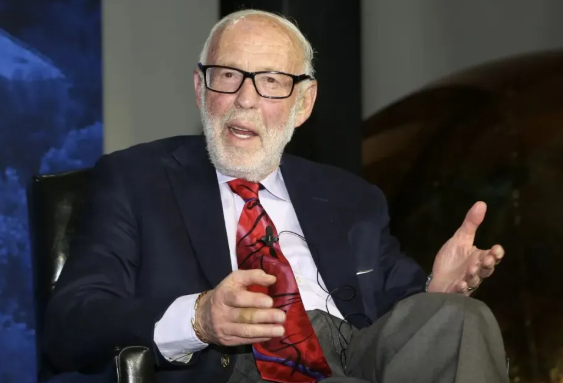
This number remains staggering. $100 invested in the Medallion Fund in 1988 would have grown to $398.7 million after fees by 2018. That same $100 invested in the S&P 500 would have grown to only about $2,000.
But what strikes me most is this: Simons wasn't a finance professional by training. He was, at heart, a mathematician who won the prestigious Oswald Veblen Prize in Geometry in 1976. At age 40, leaving academia, he applied code-breaking techniques to financial markets, building a system that "should not have existed" according to efficient market theory.
I spent the past week reading almost everything I could find about Simons—not because I believe anyone can replicate Medallion's returns (no one can). The fund is closed, built by 90 PhDs and decades of refining a unified model.
I simply wanted to know: What lessons can his career offer to investors? What can a traditional portfolio manager learn from a mathematician who treated the market as a code to be cracked?
The answer: A tremendous amount.
Do Not Confuse "Intelligence" with "Method"
Simons didn't hire finance professionals. He hired physicists, astronomers, and speech recognition experts. He deliberately avoided MBAs and people with Wall Street backgrounds. When his firm hit a wall in 1993, he recruited Robert Mercer and Peter Brown from IBM's speech recognition team—neither of whom had ever traded a stock.
This wasn't unconventional for its own sake. Simons believed the essence of markets was a pattern-recognition problem, not macro forecasting or economic deduction. He wanted people who could prove theorems, not those who could debate the Fed's next move.
The crucial hire was Leonard Baum in the early 1980s—co-creator of the Baum-Welch algorithm for speech recognition. The algorithm, based on hidden Markov models (HMM), is designed to find hidden patterns in noisy data. Price movements, of course, are the epitome of noisy data.
More importantly for investors: Simons never tried to understand why the market moved. He only cared how it moved.
No macro forecasts, no earnings predictions, no judgments on company management—none of it.
Renaissance Technologies processes vast amounts of data daily, searching for recurrent anomalous patterns. As Simons put it: "We don't start with a model. We start with data. We look for phenomena that can be repeated thousands of times."
Robert Mercer even admitted he didn't know Chrysler was no longer an independent company—the model just told him when to buy and sell. That's pure quantitative investing: no fundamental research needed.
I'm not saying fundamental analysis has no value. I use it myself. But Simons proved another path can create alpha: find statistically repeatable edges, systematize them, and don't let narrative override data.
The Best Investment Is Investing in People Smarter Than You
Simons repeated this in every interview: his greatest contribution wasn't mathematics, but hiring exceptional people.
Renaissance has only 300–400 total employees, while competitors often have 2,000–5,000. The research team is about 150–200, including roughly 90 PhDs. Compared to the industry's typical 2–3 year average tenure, Renaissance's median tenure is 14–16 years.
Their compensation structure is unique: a 5% management fee and a 44% performance fee (versus the typical 2% and 20%). Yes, Renaissance charges more, but employees receive a significant portion of that 44%. Through a special IRS exemption, employees' 401(k) plans could directly invest in the Medallion Fund. Combined with lifelong NDAs and non-competes, leaving meant forfeiting immense wealth.
Simons insisted everyone could see what others were working on. After Robert Mercer and Peter Brown implemented the "single model" system in 1995, all researchers began collaboratively building a unified model across all asset classes. Discoveries in currencies helped stock trading; breakthroughs in commodities improved fixed income strategies.
This is the opposite of most hedge funds, where different portfolio managers compete, hoard their best ideas, and get fired for poor performance.
The lesson isn't "hire PhDs" or "pay 44% fees." Most can't do that. But the principle is universal: if you can find people stronger than you in certain areas—research, risk management, execution—that is often the highest-return investment.
I've seen investors pay heavily for Bloomberg terminals they barely use, yet refuse to pay for quality research or professional tax advice. That's backwards. Simons built the world's most profitable fund by surrounding himself with people who knew more than he did.
Pattern Recognition Beats Prediction
During the March 2020 crash, when markets fell 34% in 23 days—the fastest bear market ever—most funds were caught off guard. The Medallion Fund made money.
Why? The details remain secret, but the philosophy is clear: they don't predict market direction; they find statistically recurrent patterns.
During the 2008 crisis, when Medallion made a 152% gross return (82% net), they didn't predict Lehman's collapse. In 2000, during the dot-com bust, their 128% gross return wasn't because they knew which internet companies would fail.
They traded short-term anomalies—price discrepancies lasting hours or days.
It's statistical arbitrage executed with thousands of positions at high frequency.
The win rate of any single trade might not be high, but with enough trades and proper position sizing, the law of large numbers works.
The lesson for traditional investors is this: you don't need to predict the future to make money; you just need to repeat processes with a higher probability of success.
I think about this in my own investing. I don't know if we'll enter a recession, if inflation will spike or fall, or if the Fed will cut three times this year or not at all.
But I know that high-quality companies with pricing power and low debt tend to perform better during volatility; regular rebalancing forces you to buy low and sell high; dollar-cost averaging eliminates timing risk.
None of these require predicting anything. They're just patterns that have worked repeatedly in the past.
Simons took this to its extreme with a fully quantitative approach. Most investors can't do that, but we can stop pretending we can predict the future and focus on what truly repeats.
Beautiful Solutions Often Come from Unexpected Places
In the early 1970s, Simons collaborated with mathematician Shing-Shen Chern on what later became Chern–Simons theory. They aimed to find a combinatorial formula for the first Pontryagin class but ultimately didn't achieve that original goal.
Yet what they created in the process—a secondary characteristic class known as the Chern–Simons form—became foundational in modern theoretical physics. When Edward Witten proved in 1988 that this mathematics described topological quantum field theory, it immediately became central to string theory, knot theory, and quantum computing.
Simons said: "We knew nothing about physics and never imagined it would apply to physics. That's how mathematics is—you never know where it will lead."
He brought this philosophy to investing. Renaissance's approach came from code-breaking, speech recognition, and signal processing—fields unrelated to traditional finance. Treating markets as encrypted messages or noisy audio was far from obvious in 1978.
The takeaway for me: elegant solutions often come from asking questions others aren't asking.
When Simons studied markets, he didn't ask: "How much is this company worth?"
Nor did he ask: "Where is the economy heading?"
He asked: "Are there statistically repeatable patterns in the price data?"
That's a fundamentally different question than what traditional investors ask, leading to completely different answers.
I'm not saying everyone should go quantitative. But I believe questioning ingrained assumptions is valuable.
Why do we analyze companies the way we do?
Because it actually works? Or because that's how it's always been done?
The investors who create exceptional long-term returns—Simons with quant, Buffett with value, Dalio with macro—all ask different questions than their peers. They found paths that matched their skills and temperaments.
Know When to Leave (and When to Return)
Simons left academia at 40, just after winning the Veblen Prize. The math world thought he had "sold his soul." One colleague said it was like "selling out to the devil."
But Simons had achieved what he wanted in mathematics—his work impacted physics for decades. He wanted to try something else, so he did.
Then, after retiring as Renaissance's CEO in 2009, he returned to mathematical research. At age 71. He collaborated with Dennis Sullivan on differential K-theory, publishing multiple papers until 2024.
That is rare. Most people don't return to a field after leaving. Simons did because he genuinely loved mathematics—not for a career, not for fame, but for pure intellectual interest.
This makes me think about investing.
How many people truly love investing?
How many do it only because they feel they "should"?
How many follow strategies ill-suited to them because "experts say it's best practice"?
Simons succeeded in investing partly because he treated it as mathematics: pattern recognition, rigorous testing, collaborating with smart people, and being willing to admit mistakes.
These were his strengths.
If you're good at fundamental analysis and enjoy reading 10-Ks, go in that direction.
If you're more quantitative, preferring data over stories, build a systematic strategy.
If you're patient and disciplined, passive indexing might suit you better than frequent active trading.
The worst investment strategy is one you can't stick with.
Simons found a method perfectly matched to his skills and temperament—that's why it worked consistently for 34 years.
How He Used His Money Is More Important Than How He Made It
Simons and his wife Marilyn gave away roughly $6 billion during their lifetimes. The Simons Foundation holds over $5 billion and grants about $450 million annually for scientific research.
In June 2023, he donated $500 million to Stony Brook University—the largest unrestricted gift to an American university. Math for America supports about 1,000 STEM teachers in New York public schools each year. The Simons Foundation Autism Research Initiative, which started with one known autism-related gene, has now identified about 100.
What impresses me most: Simons could have kept all that money for himself. He earned it. A 34-year streak of 66% annualized returns wasn't luck—it was decades of systematic execution.
But he chose to direct wealth toward basic scientific research. Not applied research with commercial prospects, but fundamental science—the kind that asks questions about the nature of the universe without knowing what answers will emerge.
Just as his Chern–Simons theory found its place in physics decades later, Simons funded science because he believed: good science takes you where you didn't expect to go.
In his final years, he summarized his life: "I did a lot of math, I made a lot of money, and I gave almost all of it away."
I won't tell anyone how to spend their money. But Simons' approach to philanthropy reflects the philosophy that drove his success: follow what you find beautiful, surround yourself with smart people, and trust that meaningful work will bear fruit, even if you don't know where.
He wasn't optimizing for taxes or building a legacy. He funded what he genuinely found valuable and meaningful.
What I'll Remember
Jim Simons proved markets aren't perfectly efficient. They are discoverable. Patterns exist. Data is more powerful than narrative.
But the deeper lesson is this: success comes from finding a method that fits you, working with people smarter than you, and having the courage to ignore conventional wisdom when you find a better answer.
When he left academia, his peers thought he was crazy.
When he hired scientists instead of traders, Wall Street thought he was naive.
When he charged 5 and 44, the industry standard was 2 and 20.
When he gave billions to basic science, other billionaires bought yachts and sports teams.
Every decision was unconventional.
Every decision was right.
I won't achieve 66% annualized. No one will.
Medallion's performance is the product of the unparalleled: top talent, proprietary data, decades of model iteration, and some luck in finding anomalies before they were arbitraged away.
But here's what I can do:
Ask better questions.
Focus on process over prediction.
Collaborate with people smarter than me.
Stick to a method that matches my temperament.
That's what Simons taught me about investing.
Not the mathematics—I'll never understand Baum–Welch or hidden Markov models.
But the philosophy: be rigorous, be systematic, be humble enough to learn from data, and be brave enough to go against the tide when you believe you're right.