

Trading Wisdom | When to Adjust Your Trading Strategy? 99% of Traders Get the Timing Wrong!
SAUDI ARAMCO 2222.SA | 0.00 | |
ACWA 2082.SA | 0.00 | |
Tadawul All Shares Index TASI.SA | 0.00 | |
Parallel Market Capped Index (NomuC) NOMUC.SA | 0.00 | |
PowerShares QQQ Trust,Series 1 QQQ | 0.00 |

Are you wondering if it’s time to tweak your trading strategy?
You’ve done your research, sought advice, and combined it with your own experience to build a trading system. The problem is, it hasn’t brought you the rapid profits you expected. So, you start to wonder: How long should I stick with it? When and how should I make adjustments?
Below is some essential trading wisdom on when to make minor tweaks—or major pivots—to your trading strategy.
1. Master the Game Before Making Your Move
Why do we need a strategy in the first place? Think of a skilled base runner in baseball: he doesn’t attempt to steal a base on every single pitch. Instead, he stays alert, waiting for the perfect opportunity to safely advance.
Great traders are the same; they must fully understand the "game" they are playing. Before applying your strategy to a live account, you must:
- Understand how economic news and data affect the market.
- Know how to read market charts.
- Have a crystal-clear understanding of your own capital and financial situation.
Once you have mastered these basics, you can deploy your strategy in the live market. Break your system down into simple, actionable steps. You don’t need to do everything at once—take it step by step.
Ultimately, there is only one way to know if your strategy works: Execute it and stay patient. Observe the results over a large enough sample size of trades. If it succeeds, scale up. If it fails, learn from your mistakes and adjust so you don’t repeat them.
2. Don’t Abandon Your Edge Prematurely
Even the greatest trading strategies will experience temporary drawdowns due to market volatility. Before giving up on your system, ask yourself three questions:
- Have I given this strategy enough time to truly prove whether it is a success or a failure?
- Am I 100% certain that this strategy will never work the way I intended?
- Are my expectations aligned with market reality?
Many traders feel like "failures" simply because their expectations are completely divorced from reality. They fail to understand a core concept: Expected Value (EV). Mathematically, EV is the probability of a winning (or losing) trade multiplied by the monetary size of that win (or loss).
While most traders fixate entirely on trade frequency and size, truly successful traders focus on the Expected Value of every trade to determine if the risk is worth taking. Those who build their strategies around EV know that small losses are inevitable, and they accept them gracefully. They understand that a single great trade can generate enough profit to wipe out a string of minor losses.
However, if your strategy is constantly bleeding money, you must accept a hard truth: The market is sending you a message, and what you are doing right now is likely wrong.
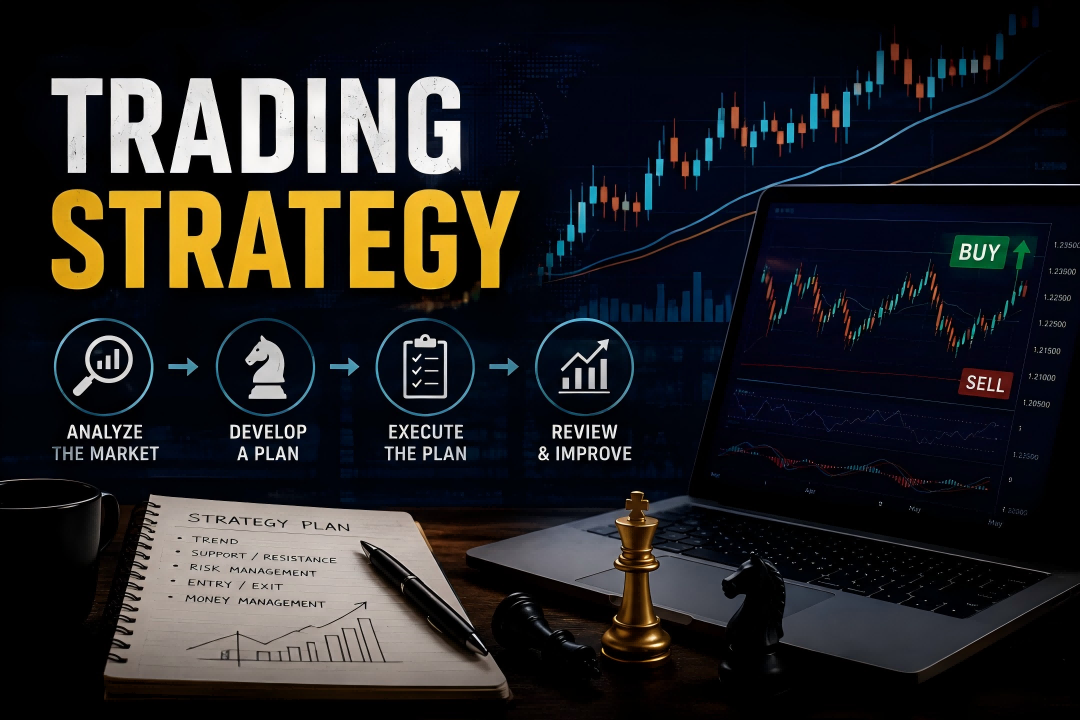
3. Don't Sabotage Your Strategy with Random Tweaks
Whether your strategy came from a book, an online course, or a seminar, treat it like your favorite piece of technology. You wouldn’t rip open your smartphone or tablet just to swap out one tiny internal component, would you? Your trading strategy is the same.
If you are using a portfolio-based strategy, you cannot cherry-pick a few stocks from the model and expect the exact same results as executing the entire portfolio. Similarly, mixing the rules of one strategy with the indicators of another rarely ends well.
Most trading strategies are closed systems. They are designed to operate independently and are not meant to be mixed and matched.
4. What Should You Actually Adjust?
Markets and their underlying factors are never static; they constantly ebb and flow over time. Eventually, every strategy will need an update. When your strategy starts underperforming, look at market trends to identify which assets are lagging.
But remember: Do not change everything at once. Think of it like buying new clothes. You wouldn't throw away your entire wardrobe just because you bought one new shirt. Likewise, you shouldn't scrap your entire trading system just because one specific element is underperforming.
To optimize your strategy without destroying its foundation, consider making these precise adjustments:
- Tweak your position sizing.
- Find ways to maximize and scale the trades that are already winning.
- Slightly adjust your trade frequency.
- Learn a new strategy on the side, and test it in a demo environment to see if it outperforms your current one.
- Shorten your trading timeframes, but never let emotions dictate your decision-making.
The Ultimate Takeaway
Experienced traders know one fundamental truth: There is no single "Holy Grail" strategy that works for everyone.
If you have been trading for a while, have confidence in the knowledge you have acquired. Realize that your understanding of the financial markets already exceeds that of the vast majority of people.
When you do need to adjust your strategy, keep the changes small, stay objective, and let the results guide your next move.