

UPS (UPS) Stock Trades Below Fair Value Despite Mixed Valuation Checks
United Parcel Service, Inc. Class B UPS | 0.00 |
United Parcel Service stock is coming off a tough five year stretch, with investors seeing a cumulative decline over that window, yet current valuation checks suggest the shares may now trade below an estimated intrinsic value based on a Discounted Cash Flow (DCF) model and market multiples.
- United Parcel Service has declined 32.4% over the past five years, which keeps longer term shareholders under pressure even after more recent gains.
- On the upside, recent cost savings from UPS's network overhaul and plans to expand its Asia Pacific air network can support the cash flow profile that underpins today’s valuation. However, upcoming labor negotiations with the Teamsters union may add uncertainty around future cost levels.
- The stock scores 4 out of 6 on Simply Wall St's broader valuation checks, which points to a mixed picture rather than a clear bargain or clear overvaluation across metrics. This comes even though both the Discounted Cash Flow (DCF) and earnings based multiples currently screen the shares as undervalued.
The stock's next move may depend on whether United Parcel Service can convert its operational changes and capital allocation into cash flows that justify the current discount to intrinsic value estimates.
Does United Parcel Service Look Undervalued on Cash Flow?
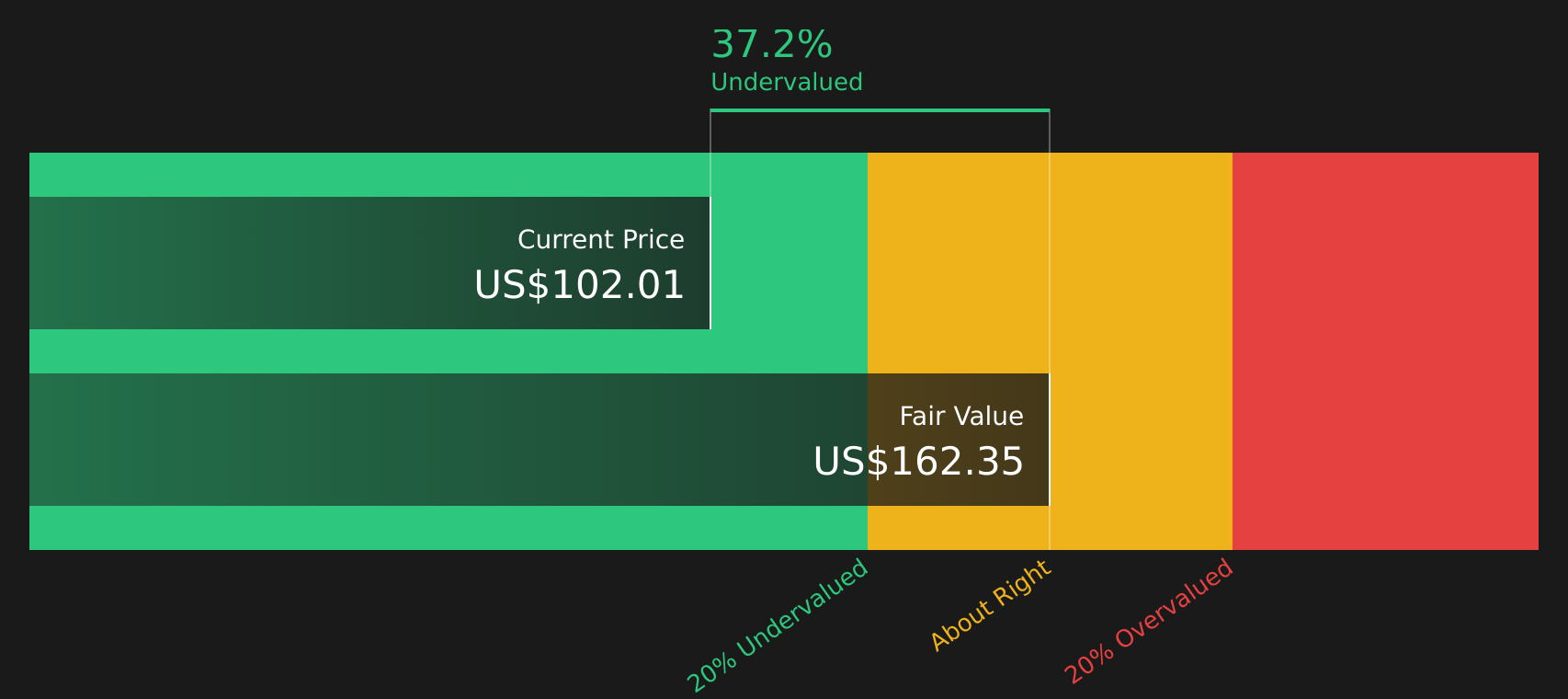
The Discounted Cash Flow (DCF) method estimates what United Parcel Service is worth based on the cash it is expected to generate for shareholders. For UPS, the latest twelve month free cash flow is about $4.6b, and the model assumes these cash flows grow from this base rather than shrink. On that basis, the DCF points to an estimated intrinsic value of about $155 per share.
This compares to a current share price that sits roughly 33.8% below that intrinsic value estimate, which screens United Parcel Service as undervalued on this cash flow view. The recent report that UPS’s network overhaul could yield up to $3b in cost savings helps explain why some investors may see the current cash flow outlook as more supportive than the share price implies.
On balance, the DCF workup suggests United Parcel Service stock appears undervalued relative to the cash flows implied by current operations and planned efficiencies.
Our Discounted Cash Flow (DCF) analysis suggests United Parcel Service is undervalued by 33.8%. Track this in your watchlist or portfolio, or discover 50 more high quality undervalued stocks.
Is United Parcel Service Still Cheap on Earnings?
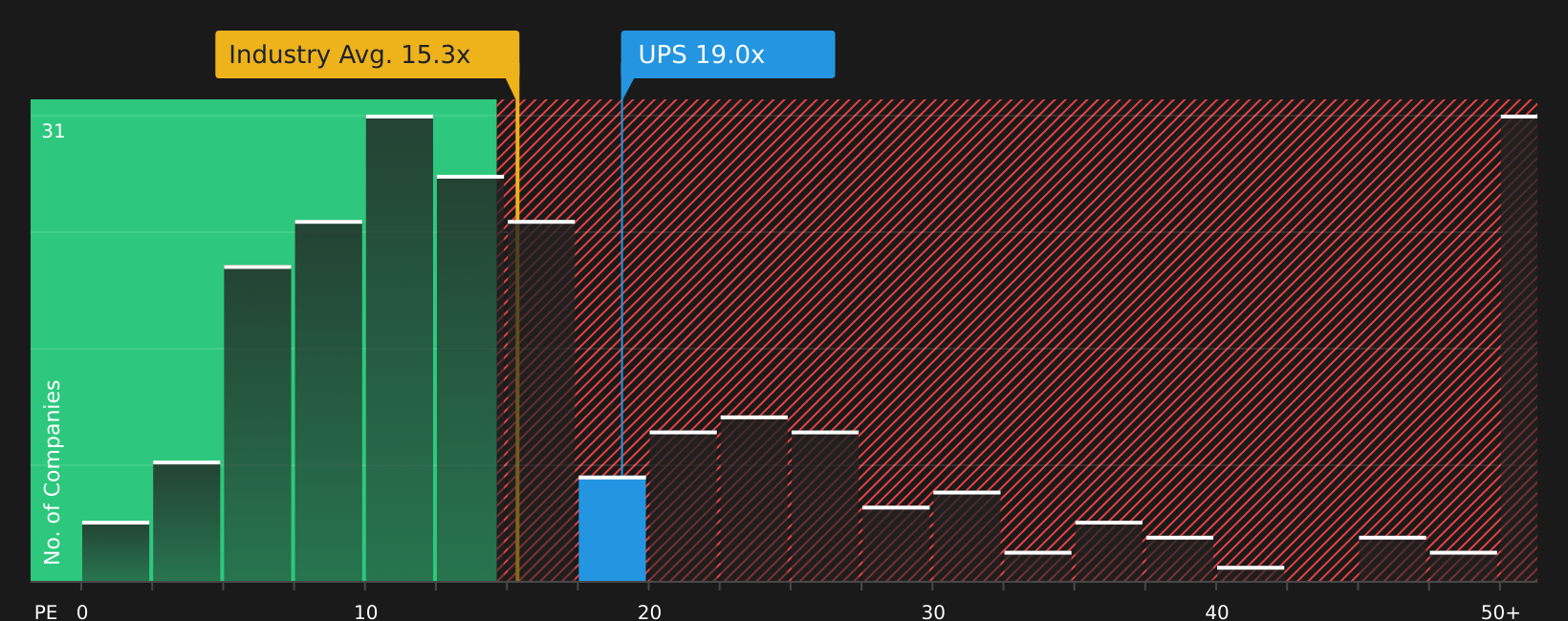
The P/E ratio works well for a mature, profitable business like United Parcel Service because earnings are a primary focus for many shareholders. Right now, UPS trades at about 19.1x earnings, which is below both the logistics industry average of roughly 15.2x and a peer group average of 20.2x. That means the stock carries a premium to the wider sector but sits at a small discount compared with closer peers.
The fair P/E ratio implied by Simply Wall St’s model is about 29.0x, which is well above where United Parcel Service trades today. This fair ratio reflects what investors might expect to pay given the company’s size, profitability profile and risk factors, including upcoming labor talks and continued investment in its network. The gap between the current P/E and this fair ratio suggests the market is assigning a lower earnings multiple than the model implies.
On this earnings multiple view, United Parcel Service stock appears undervalued relative to what the fair P/E suggests investors might reasonably pay.
The United Parcel Service Narrative: What Would Justify Today's Price?
Simply Wall St Narratives take the valuation puzzle around United Parcel Service and spell out what mix of future growth, margins and earnings would need to play out for the stock to be worth materially more or less than today's price, and they sit on the platform's Community page. Rather than focusing on a single multiple or model output, each narrative lays out the assumptions behind its fair value so you can compare them with UPS's actual results over time.
Community views on United Parcel Service are split, with one camp leaning into the cost savings story and another focused on execution and balance sheet pressure.
Bull case: 12% undervalued
"UPS anticipates $3.5 billion in annual cost reductions for 2025 through variable, semi-variable, and fixed cost savings, positioned to exceed the revenue loss from Amazon..."
Bear case: 8% overvalued
"These pressures, combined with declining revenue and earnings per share across recent quarters, suggest that profitability will continue to struggle..."
Do you think there's more to the story for United Parcel Service? Head over to our Community to see what others are saying!
The Bottom Line
United Parcel Service screens as undervalued on both the Discounted Cash Flow (DCF) intrinsic value estimate and earnings multiples, although the broader checks only point to a mixed verdict rather than a clear bargain. For you as an investor, the key question is whether UPS can sustain the cash flow and earnings profile implied by its cost savings plans and network changes. The crux of the bull versus bear debate is whether those efficiencies offset labor and execution risks enough to close the current discount, or whether the market is correctly pricing in the possibility of weaker profitability ahead.
This article by Simply Wall St is general in nature. We provide commentary based on historical data and analyst forecasts only using an unbiased methodology and our articles are not intended to be financial advice. It does not constitute a recommendation to buy or sell any stock, and does not take account of your objectives, or your financial situation. We aim to bring you long-term focused analysis driven by fundamental data. Note that our analysis may not factor in the latest price-sensitive company announcements or qualitative material. Simply Wall St has no position in any stocks mentioned.