
US Scrutiny Of EA Takeover Puts Jobs And Deal Outcome In Focus
Electronic Arts Inc. EA | 203.60 | +0.01% |
- US lawmakers and a major labor union have formally asked the FTC to review the proposed acquisition of Electronic Arts (NasdaqGS:EA) by Saudi Arabia's Public Investment Fund and private equity firms.
- The request centers on potential risks to workforce stability, labor market competition, and the broader gaming industry structure.
- This development places regulatory and governance questions at the forefront for one of the largest global video game publishers.
Electronic Arts, best known for large gaming franchises and live service titles, sits at the intersection of gaming, media, and digital services. As consolidation continues across the gaming sector, regulators are paying closer attention to ownership, data, and employment effects, and EA now finds itself squarely in that conversation.
For investors watching NasdaqGS:EA, the key areas of focus are likely to include regulatory timelines, possible deal terms, and any conditions tied to employment or content oversight. How regulators respond to this review request could influence not just EA's path but also how future capital from state-backed funds and private equity approaches major gaming publishers.
Stay updated on the most important news stories for Electronic Arts by adding it to your watchlist or portfolio. Alternatively, explore our Community to discover new perspectives on Electronic Arts.
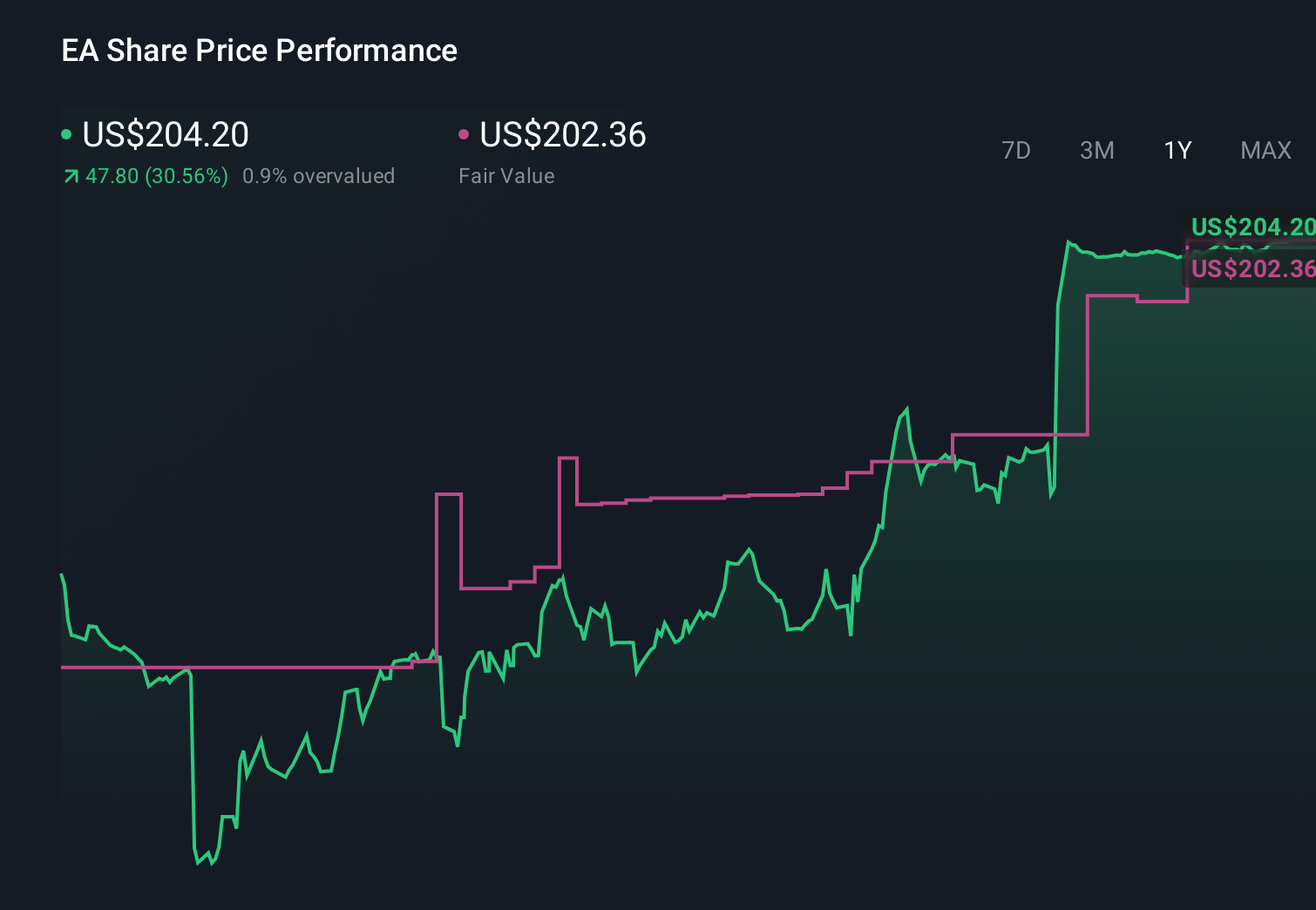
The request from US lawmakers for an FTC review adds regulatory uncertainty to EA's proposed US$55b take private, as it directly questions the deal's effect on jobs, labor bargaining power, and competition in US gaming where peers such as Activision Blizzard and Take-Two also operate. For you as an investor, this scrutiny could affect the timeline, the likelihood of conditions being attached to the transaction, or the ultimate outcome of a deal that would hand control of EA to Saudi Arabia's Public Investment Fund and private equity backers.
How This Fits With The Electronic Arts Narrative
The existing narrative around EA focuses on its live-service franchises, recurring revenue, and the role of major releases like EA Sports FC and Battlefield in driving engagement and cash generation. The proposed acquisition sits on top of that story as a potential end-point for public shareholders. Congressional and union pushback introduces a governance and stakeholder dimension that runs alongside the themes analysts already watch closely, such as execution on new titles, portfolio shifts away from underperforming IPs, and the importance of live-services to future earnings power.
Key Risks And Rewards Investors Should Weigh
- Regulatory scrutiny could delay closing, create pressure for divestitures or labor-related conditions, or even result in the deal not proceeding.
- Lawmaker concerns about layoffs and labor market concentration highlight execution risk around any post-deal restructuring or cost actions.
- A thorough review could, if cleared, reduce overhang around regulatory risk and provide more clarity on the terms and stability of EA's operating model under new ownership.
- EA's focus on large franchises and live services, in a market that also includes competitors like Take-Two and Ubisoft, may still support interest from financial and sovereign buyers looking for scaled gaming assets.
What To Watch Next
From here, the key things to track are how the FTC responds, whether regulators signal concerns early, and if the consortium or EA adjusts terms, governance, or employment commitments to address political and labor pushback. If you want a broader view of how this potential deal sits alongside EA's longer term business story and community sentiment, take some time to check community narratives on EA and see how other investors frame the balance between corporate control changes and underlying fundamentals.
This article by Simply Wall St is general in nature. We provide commentary based on historical data and analyst forecasts only using an unbiased methodology and our articles are not intended to be financial advice. It does not constitute a recommendation to buy or sell any stock, and does not take account of your objectives, or your financial situation. We aim to bring you long-term focused analysis driven by fundamental data. Note that our analysis may not factor in the latest price-sensitive company announcements or qualitative material. Simply Wall St has no position in any stocks mentioned.