

U.S. Stake Reshapes Intel Governance Capital Choices And Turnaround Hopes
Intel Corporation INTC | 66.78 79.51 | +2.31% +19.06% Post |
- The U.S. government has acquired a 10% equity stake in Intel as part of a new national security and supply chain initiative.
- This stake makes the federal government Intel’s largest shareholder and more directly links corporate decisions to U.S. industrial policy.
- The move is designed to anchor domestic semiconductor capacity and could influence Intel’s capital allocation and governance.
For investors watching NasdaqGS:INTC, the new ownership structure comes alongside a share price of $43.93 and a mixed return profile. The stock shows a 21.4% return over the past 30 days and 11.6% year to date, alongside a 121.9% return over 1 year, while the 5 year return reflects a 16.2% decline. This combination highlights how recent momentum compares with a longer, more uneven performance record.
The U.S. government’s 10% position ties Intel more closely to policy priorities around domestic manufacturing and supply chain resilience. Investors may want to watch how this influences board decisions, capital spending plans, partnerships, and Intel’s approach to balancing shareholder interests with national security objectives.
Stay updated on the most important news stories for Intel by adding it to your watchlist or portfolio. Alternatively, explore our Community to discover new perspectives on Intel.
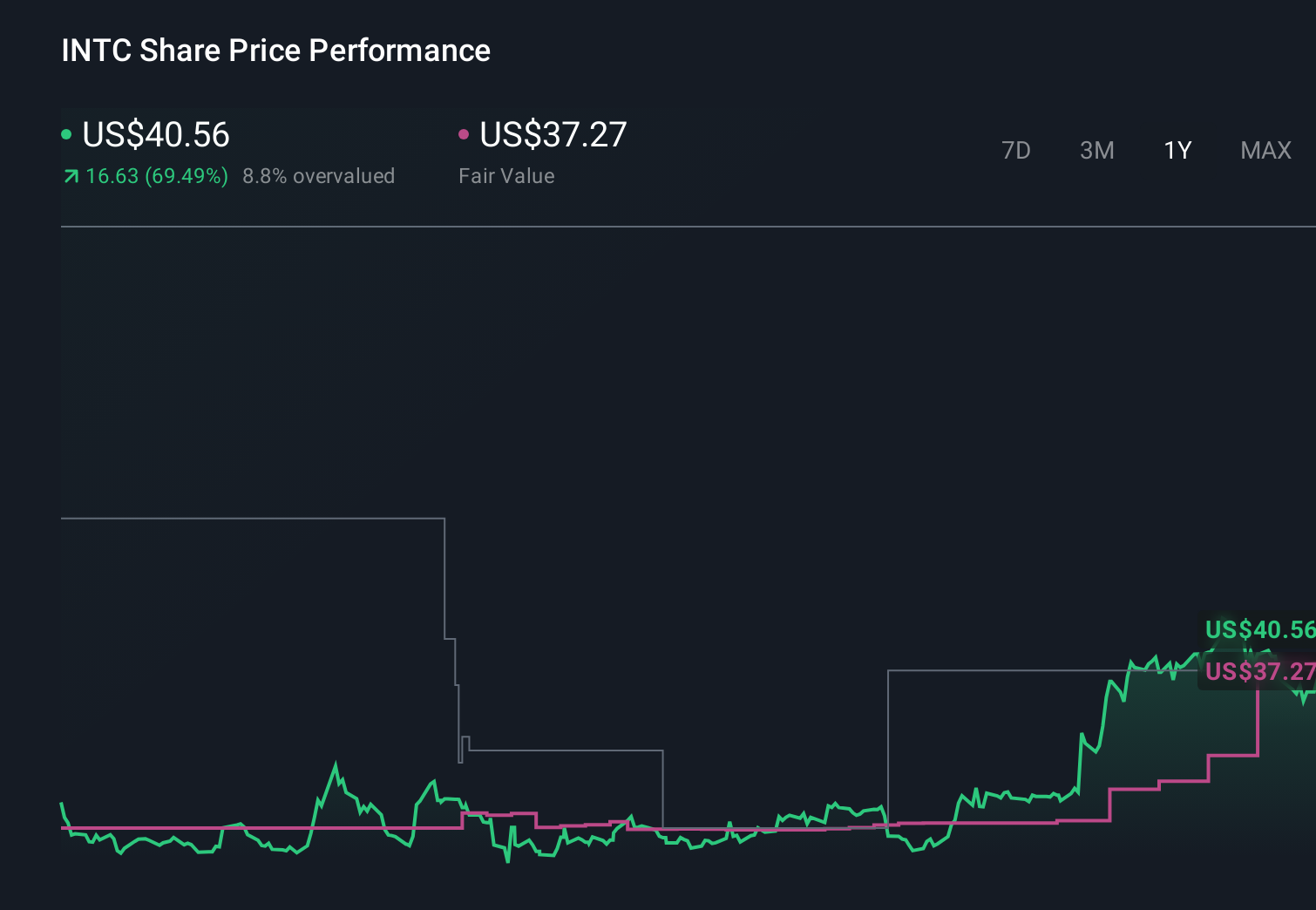
The U.S. government taking a 10% equity stake in Intel directly ties the company’s capital decisions to Washington’s supply chain and national security goals at a time when Intel is reporting net losses and forecasting a loss per share of $0.21 for Q1 2026. With Intel also filing an omnibus shelf registration for common stock, preferred stock and debt, investors may read the new stake as increasing the likelihood that future funding choices, dilution and plant build outs will be weighed not just on returns, but also on policy objectives, especially around U.S. based manufacturing capacity.
How This Fits Into The Intel Turnaround Narrative
Analyst narratives around Intel already focus on a long turnaround tied to AI centric products and the foundry business, in the face of tough competition from Nvidia, Advanced Micro Devices and Taiwan Semiconductor Manufacturing Company. Government ownership aligned with industrial policy could support Intel’s push to be a U.S. anchored foundry-focused manufacturer, but it may also tighten constraints on cash returns to shareholders and heighten scrutiny of how the company balances growth projects with profitability.
Risks and rewards investors are weighing
- ⚠️ Government influence on governance and capital allocation could limit flexibility around dividends, buybacks and cost cutting choices compared with fully private peers.
- ⚠️ The combination of recent net losses, cautious guidance and possible further equity issuance under the shelf registration raises dilution and execution risk for existing shareholders.
- 🎁 A large, policy driven shareholder may provide some funding visibility for U.S. fabs and chipmaking capacity that support Intel’s AI and foundry ambitions.
- 🎁 Strong alignment with U.S. national security priorities could help Intel compete for government backed contracts and programs that are less accessible to some rivals.
What to watch next
From here, it is worth watching for any formal changes to Intel’s governance, capital return policies or debt and equity issuance that clearly reflect the government’s new position, as well as how competitors like Nvidia, AMD and TSMC respond to a more policy linked Intel. For a broader view of how this fits into the longer term story, take a few minutes to check community narratives on Intel through investor discussions and fair value views.
This article by Simply Wall St is general in nature. We provide commentary based on historical data and analyst forecasts only using an unbiased methodology and our articles are not intended to be financial advice. It does not constitute a recommendation to buy or sell any stock, and does not take account of your objectives, or your financial situation. We aim to bring you long-term focused analysis driven by fundamental data. Note that our analysis may not factor in the latest price-sensitive company announcements or qualitative material. Simply Wall St has no position in any stocks mentioned.