

Walmart (WMT) Stock Looks Overvalued On Cash Flow But Fair On Earnings
Walmart Inc. WMT | 0.00 |
After a 146.1% total return over the past 5 years, Walmart stock now faces a valuation debate, with the Discounted Cash Flow (DCF) intrinsic value estimate indicating the shares trade at a premium while market multiples suggest the price is roughly in line with peers.
- Over 5 years, Walmart has returned 146.1%, which sets a high bar for any further upside to be supported by fundamentals.
- Partnerships that deepen Walmart’s role in areas like online returns and health and wellness can support longer term cash flow expectations. At the same time, issues such as product recalls and food safety concerns may weigh on risk perception and the multiple investors are willing to pay.
- With a valuation score of 1 out of 6, Walmart does not screen as a clear bargain on the broader checks even though its P/E and related multiples look about right.
The issue now is whether Walmart’s current share price already reflects its recent strength or still leaves room for an attractive entry point based on intrinsic value.
Has Walmart Run Too Far on Cash Flow?
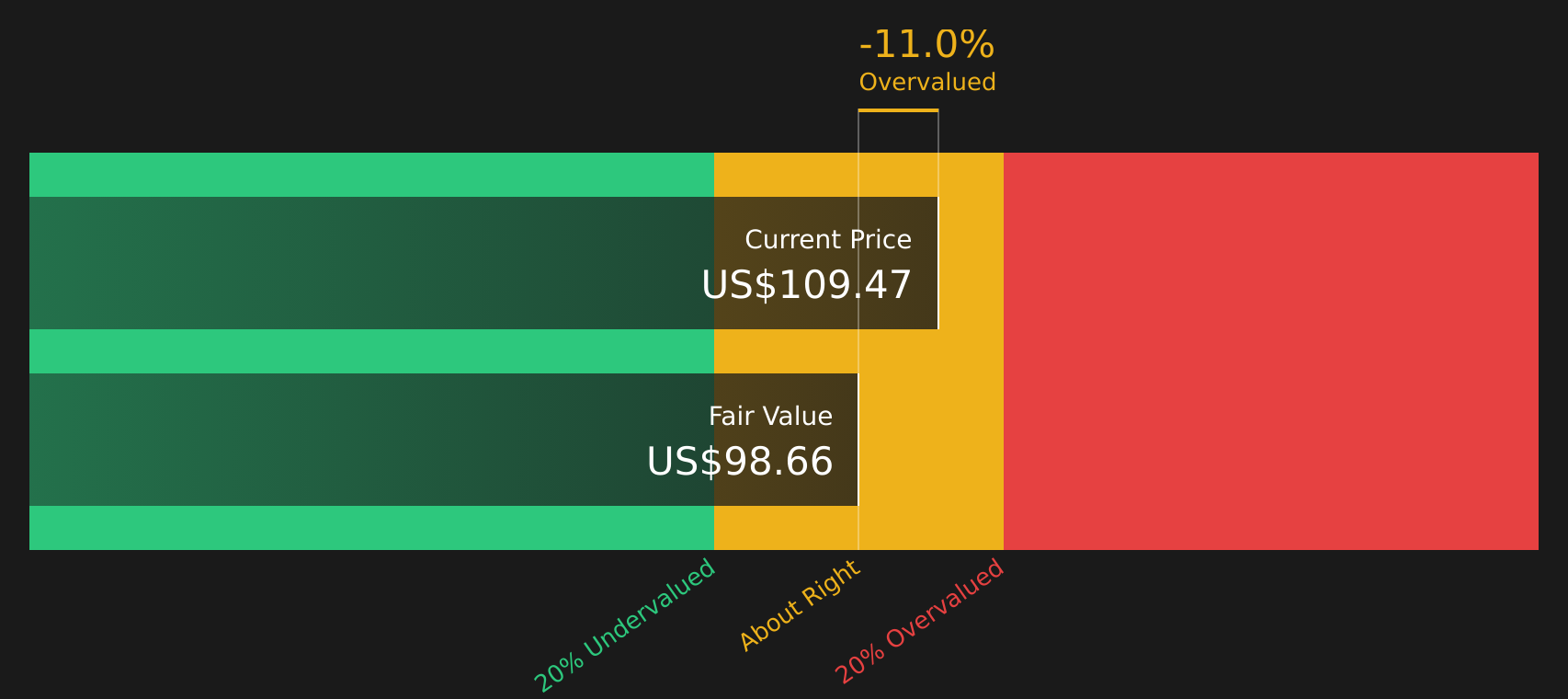
The Discounted Cash Flow (DCF) model here projects the cash Walmart can return to shareholders based on its current and future operations. For Walmart, the latest twelve month free cash flow is about $15.2b, and the model assumes these cash flows keep growing rather than shrinking, which supports an intrinsic value estimate of about $98.66 per share.
That figure sits below the current share price, implying the stock screens as roughly 10.8% overvalued on this cash flow view. The recent Taylor Farms salad recall and related food safety questions help explain why some investors may focus more on operational risks than on long run cash generation, even with Walmart pushing into areas such as wellness and returns processing.
On this DCF view, Walmart stock currently appears overvalued compared with what its projected cash flows alone would justify.
Our Discounted Cash Flow (DCF) analysis suggests Walmart may be overvalued by 10.8%. Discover 47 high quality undervalued stocks or create your own screener to find better value opportunities.
Does Walmart Look Fairly Valued on Earnings?
The P/E ratio fits Walmart well because earnings remain a core yardstick for mature retailers. Walmart currently trades at about 38.3x earnings, compared with a Consumer Retailing industry average of roughly 20.5x and a peer average near 25.1x, so the stock sits on a clear premium to both the sector and closer peers.
However, the fair P/E ratio estimated for Walmart is about 38.2x, which is almost identical to where the stock is now. This fair ratio already factors in the company’s size, margins, business mix across grocery and general merchandise, and the risks around issues such as food safety and recalls, so the small gap between current and fair multiples suggests the market is broadly pricing these in.
On the P/E view, Walmart stock currently looks roughly fairly valued, with its premium to the sector lining up closely with the model’s fair multiple.

The Walmart Narrative: What Would Justify Today's Price?
Simply Wall St Narratives take the valuation tension around Walmart and turn it into clear, alternative stories about what would need to happen with Walmart's growth, margins and earnings for the stock to be worth materially more or less than it is today. Each narrative ties its number to a specific view of how Walmart's growth, profitability and risks could evolve, giving you a reference point you can revisit as new information comes through.
One of the top community narratives on Walmart: 21% undervalued
"Bullish analysts highlight Walmart's AI driven platform work and higher margin revenue streams as key reasons the stock can support a premium P/E multiple relative to traditional retail peers..."
Do you think there's more to the story for Walmart? Head over to our Community to see what others are saying!
The Bottom Line
For Walmart, the Discounted Cash Flow (DCF) view points to an intrinsic value below the current share price, while the market multiple view suggests the stock is broadly priced in line with comparable retailers. That split reflects a tension between cash flow assumptions on one side and investor expectations and sentiment on the other. With broader valuation checks screening as weak, the key question from here is whether Walmart can sustain the earnings mix and risk profile that justify its current premium, or whether operational issues such as recalls and food safety concerns start to pressure the multiple investors are willing to pay.
This article by Simply Wall St is general in nature. We provide commentary based on historical data and analyst forecasts only using an unbiased methodology and our articles are not intended to be financial advice. It does not constitute a recommendation to buy or sell any stock, and does not take account of your objectives, or your financial situation. We aim to bring you long-term focused analysis driven by fundamental data. Note that our analysis may not factor in the latest price-sensitive company announcements or qualitative material. Simply Wall St has no position in any stocks mentioned.