
Walmart’s US$1t Milestone Recasts Retailer As Tech And Services Platform
Walmart Inc. WMT | 125.79 | +0.84% |
- Walmart became the first traditional retailer to reach a $1 trillion market capitalization, reflecting investor focus on its technology and services push.
- The company announced a leadership shift, with John Furner stepping in as CEO and prioritizing digital growth, AI use, and operational efficiency.
- Walmart is extending its reach in pharmacy-based healthcare, expanding Walmart+ membership, and building on new trade developments with India.
For investors watching NasdaqGS:WMT, the $1 trillion valuation comes with a current share price of $127.71 and a 1 year return of 27.9%. Over the past 30 days the stock is up 13.3%, matching its year to date move. This combination of size, retail heritage, and tech driven services sets Walmart apart from most traditional peers.
Looking ahead, the key questions for you are how effectively Walmart converts its digital investments, AI push, and health offerings into durable cash flows. The evolving CEO agenda, along with growing Walmart+ and deeper trade ties with India, gives investors several concrete areas to monitor as the company refines its mix of retail, technology, and services.
Stay updated on the most important news stories for Walmart by adding it to your watchlist or portfolio. Alternatively, explore our Community to discover new perspectives on Walmart.
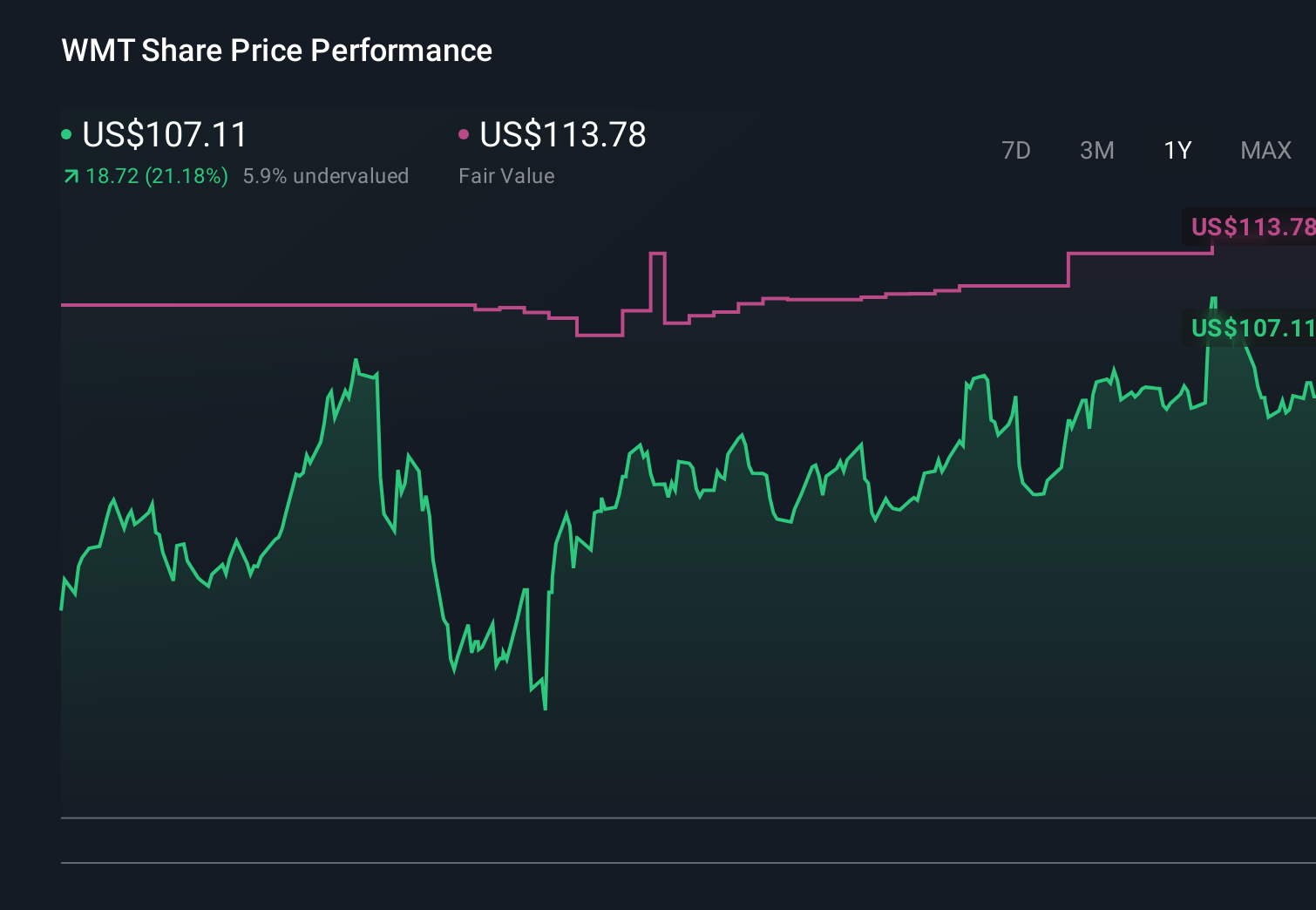
For you as an investor, the move through a US$1t market cap looks less like a one off headline and more like a reflection of how investors are treating Walmart as a tech enabled, services rich platform rather than a pure big box retailer. The leadership handover to John Furner, expansion of Walmart+ and retail media, pharmacy based healthcare growth and programs like Walmart Exports and new logistics integrations all point to a business leaning into higher margin services while still competing on everyday prices against Amazon, Costco and Target.
How this fits the Walmart AI and omni channel narrative
The latest news lines up closely with the existing Walmart narrative that focuses on omni channel retail, AI usage and new profit pools in advertising, marketplace and memberships. Investors watching that storyline now have fresh data points in CEO succession, AI partnerships, cross border shipping and health care pay upgrades that all tie back to the idea that Walmart is trying to shift more of its profit mix away from traditional in store retail and toward digital, fee based and service based income streams.
Walmart's current rewards and risks in focus
- Higher margin areas such as Walmart Connect advertising, Walmart+ and pharmacy services are increasingly visible in the story investors are reacting to.
- Growing international and marketplace initiatives, including trade links with India and cross border exports, broaden the potential customer and supplier base beyond the core U.S. store network.
- Analysts have pointed to valuation concerns and the risk that expectations around earnings guidance, margins and consumer spending could be hard to satisfy at a US$1t market cap.
- Wage inflation, international execution and ongoing capital needs for AI, logistics and health care build outs could pressure returns if these investments do not translate into stronger profitability.
What to watch next
From here, your watch list likely includes the upcoming February 19 earnings call under Furner, margin trends in services like advertising and health care, and any further updates on Walmart+ and international trade or marketplace programs, especially those linked to India. If you want to see how others are thinking about the long term story, check out community narratives on Walmart's dedicated page.
This article by Simply Wall St is general in nature. We provide commentary based on historical data and analyst forecasts only using an unbiased methodology and our articles are not intended to be financial advice. It does not constitute a recommendation to buy or sell any stock, and does not take account of your objectives, or your financial situation. We aim to bring you long-term focused analysis driven by fundamental data. Note that our analysis may not factor in the latest price-sensitive company announcements or qualitative material. Simply Wall St has no position in any stocks mentioned.