

Welltower Stock And Other Defensive REITs for Steady Income in a Slowing US Economy
Welltower, Inc. WELL | 0.00 |
Cooling inflation, softer retail sales and housing strains are pulling markets in two directions, with income investors caught between rate expectations and worries about slower growth. That mix is putting more attention on real estate linked to everyday needs and steady rent checks. This article walks through three U.S. defensive, income focused real estate stocks exposed to these macro shifts and explains why they may deserve a closer look now.
The stocks covered below are just a sample of this idea, with the full screen surfacing 12 more U.S. defensive, income focused real estate companies with equally detailed stories that are not included here. To go straight to the source and identify your own higher conviction opportunities, analyze the U.S. Defensive, Income‑Focused Real Estate (Staples and Necessities REITs) screener.
Welltower (WELL)
Overview: Welltower is a large real estate company focused on rental housing and wellness communities for aging seniors across the US, UK and Canada, providing properties that sit between traditional housing and hospitality for older adults. It partners closely with operators and uses its own data and operating platform to run this portfolio as more than a passive landlord.
Operations: Welltower generates most of its revenue from Seniors Housing Operating assets at about US$10.4b, with additional contributions from Triple Net properties of roughly US$1.5b, outpatient medical at about US$476m and around US$381m from non segment and corporate activity.
Market Cap: US$169.7b
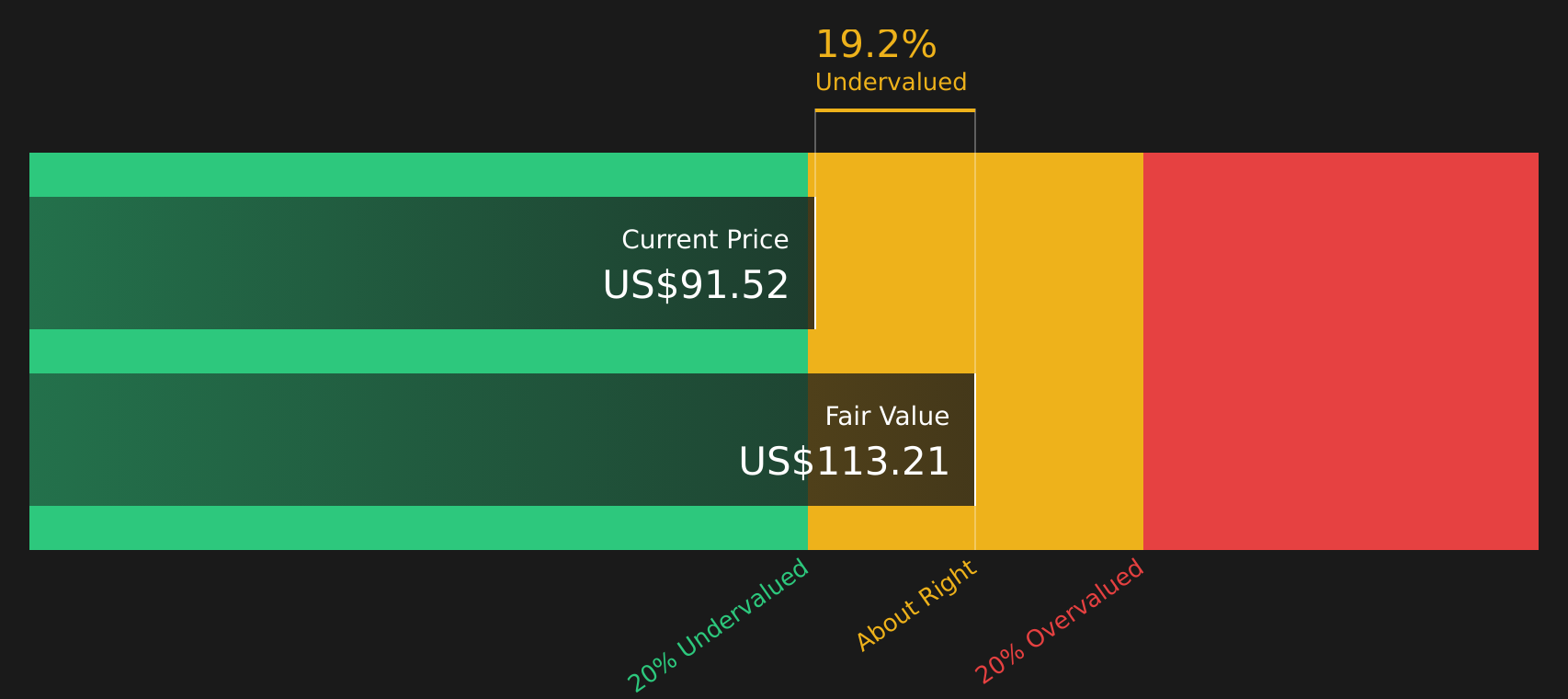
Income focused investors may want to pay attention to Welltower because it sits on one of the largest senior housing platforms in the market, tied to aging demographics and needs based rent that can look relatively resilient when consumer spending cools. Recent quarters have included strong reported funds from operations, a 15% dividend increase and continued capital deployment. However, that growth has come with a very high P/E, heavy external funding and one off gains that can blur the true earnings picture. The company highlights improving labor trends and an operating system built to extract efficiency, yet higher rates and an active acquisition pipeline keep balance sheet risk on the table.
Welltower’s large senior housing platform and data driven operations sit alongside a very high P/E and an active deal pipeline, which raises a simple question: How does that trade off really look once you unpack the 2 key rewards and 2 important warning signs?

Build your own income focused real estate shortlist
Welltower and the two other stocks in this piece all came from a simple screener, but the real value is in tailoring your own filters. Use our flexible Screener to mix valuation, income and quality checks to suit your approach, or browse our curated Investing Ideas for ready made starting points.
Sabra Health Care REIT (SBRA)
Overview: Sabra Health Care REIT owns and invests in nursing homes, senior housing, behavioral health centers and other medical facilities across the U.S. and Canada, collecting rent and income from healthcare operators that run these properties day to day.
Operations: Sabra generates its revenue primarily from about US$864 million of investments in properties across the healthcare sector.
Market Cap: US$5.2b
Income focused investors may find Sabra Health Care REIT interesting because its nursing, senior housing and behavioral health assets are tied to needs based care that can hold up when consumer spending softens. Management is working to lift cash rent and NOI through retenanting and an investment pipeline of over US$1b. At the same time, thin profit margins, high reliance on external borrowing and a dividend that is not well covered by earnings mean the stock carries meaningful financial risk. With improving normalized AFFO coverage, portfolio reshaping and an aging population as potential supports, the key question is whether Sabra’s mix of resilient tenants and higher payout risk adds up to a defensive income position or a situation that calls for more caution.
Sabra Health Care REIT sits at the crossroads of needs based care and a stretched payout. Get the full story behind its tenants, balance sheet pressure and dividend risk in the 2 key rewards and 4 important warning signs (1 is major!)

Ventas (VTR)
Overview: Ventas is a large healthcare focused real estate company with about 1,450 properties across North America and the UK, centered on more than 900 senior housing communities that serve an aging population alongside outpatient medical buildings, research centers and other healthcare facilities.
Operations: Ventas generates most of its revenue from about US$4.9b in resident fees and services, with additional contributions from roughly US$915m in outpatient medical and research properties, around US$541m in triple net leased assets and smaller amounts from non segment items and unconsolidated entities.
Market Cap: US$47.3b
Investors looking at defensive, income focused real estate may want to pay close attention to Ventas because it sits at the heart of the aging population trend with senior housing and healthcare assets that provide needs based demand even as retail spending and housing activity soften. Recent quarters have included senior housing operating performance, index additions and raised guidance, but that growth profile comes with trade offs around a fragile dividend record, reliance on external funding and interest costs that are not yet well covered by earnings. With same store NOI growth, data driven operations and an evolving balance sheet on one side and financing risk and operator execution on the other, the key question is whether current pricing already reflects this mix of defensiveness and complexity or still leaves room for further repricing.
Ventas sits at the intersection of defensive rent rolls and fragile funding costs, yet the real story may be how its income profile and balance sheet pressures intersect in the 3 key rewards and 3 important warning signs (1 is major!)
Seeking Fresh Alternatives With Real Upside?
New ideas move fast. Some stocks are building breakout momentum while others get caught dropping off radars. Scan these fresh lists before the crowd and act now.
- Spot under the radar quality as you review the 20 high quality undiscovered gems that pair solid fundamentals with businesses still flying below most investors’ screens.
- Lock in stronger income candidates by scanning the 10 dividend fortresses that focus on higher yields with an emphasis on balance sheet support while it still matters.
- Position ahead of the next infrastructure wave by checking the 38 power grid technology and infrastructure stocks featuring companies tied to grid upgrades and electrical backbone projects before momentum fully prices in the story.
This article by Simply Wall St is general in nature. We provide commentary based on historical data and analyst forecasts only using an unbiased methodology and our articles are not intended to be financial advice. It does not constitute a recommendation to buy or sell any stock, and does not take account of your objectives, or your financial situation. We aim to bring you long-term focused analysis driven by fundamental data. Note that our analysis may not factor in the latest price-sensitive company announcements or qualitative material. Simply Wall St has no position in any stocks mentioned.