

What Copart (CPRT)'s CEO Transition and Index Reclassification Means For Shareholders
Copart, Inc. CPRT | 0.00 |
- In late June 2026, Copart announced that CEO Jeff Liaw will step down on July 31, 2026, with Executive Chairman and former CEO Jay Adair resuming the chief executive role and a special investor call arranged for shareholders to hear his leadership priorities and long-term outlook.
- At the same time, Copart was removed from several Russell large‑cap growth and value indices and added to the Russell Midcap and Midcap Value benchmarks, potentially reshaping how institutional investors classify and hold the stock.
- Against this backdrop, we'll explore how Adair’s return as CEO could influence Copart's existing investment narrative and long-term positioning.
Uncover the next big thing with 20 elite penny stocks that balance risk and reward.
Copart Investment Narrative Recap
To own Copart, you need to believe its global salvage marketplace can keep converting accident and total loss trends into resilient volumes and high quality earnings, despite slower recent growth and a tough share price history. Right now, the key catalyst is whether Jay Adair’s return as CEO reassures investors that Copart can protect margins while continuing to invest in yards and technology. The leadership change and index reclassification do not appear to alter the core business risks in a material way.
The most relevant recent announcement is Adair’s appointment as principal executive officer and CEO, with a dedicated investor call to outline his priorities and long term strategy. For a business so dependent on long standing insurer relationships and continued investment in capacity, hearing directly from the returning leader matters for how investors assess both execution on growth opportunities and the risk of margin pressure if volume, pricing or partner behavior were to shift unfavorably.
Yet beneath this reassuring continuity in leadership, one risk investors should be aware of is how rising operational and facility costs could intersect with ...
Copart's narrative projects $5.8 billion revenue and $1.8 billion earnings by 2029.
Uncover how Copart's forecasts yield a $41.44 fair value, a 42% upside to its current price.
Exploring Other Perspectives
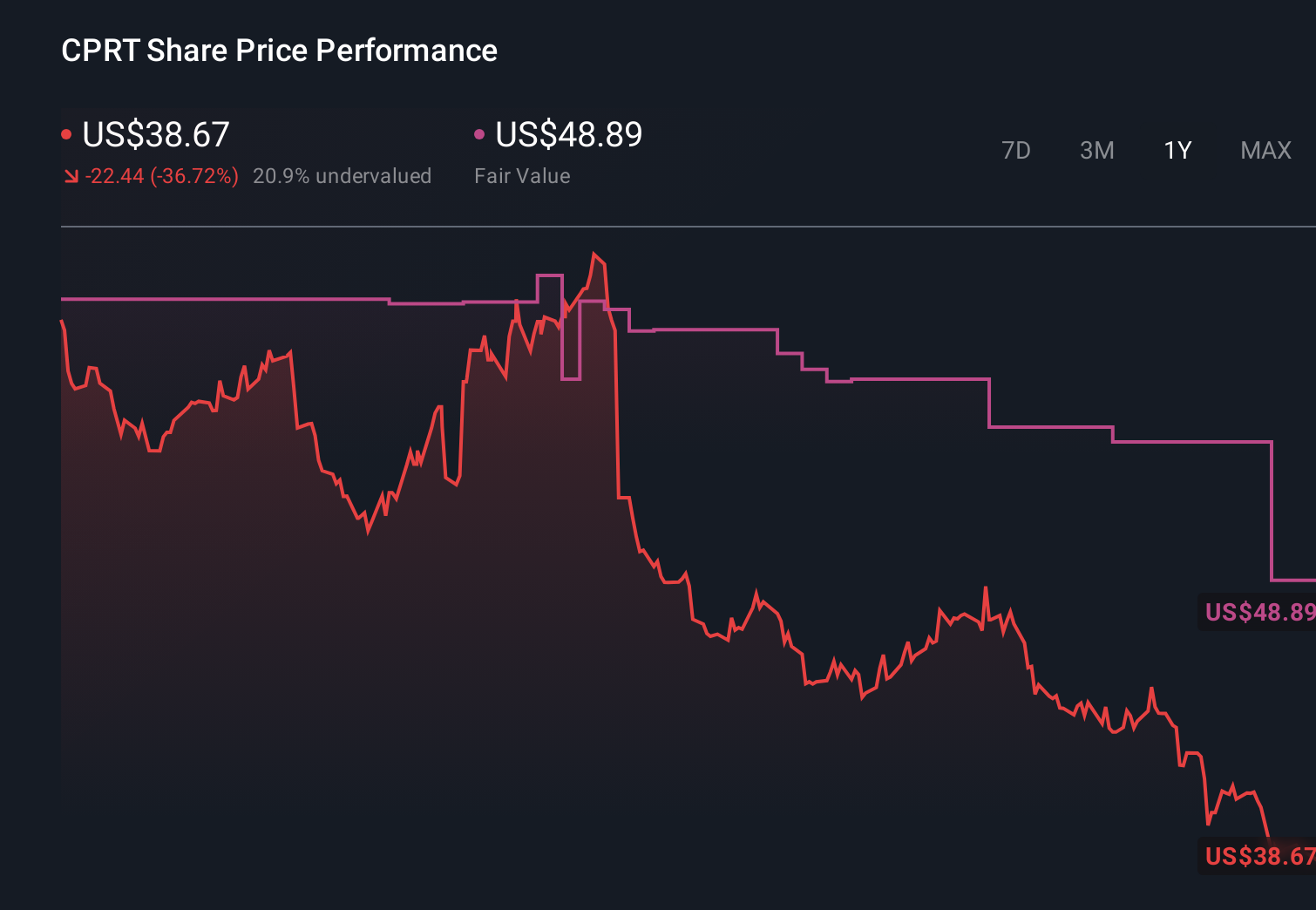
Before this leadership news, the most optimistic analysts were assuming Copart could reach about US$6.0 billion in revenue and US$1.9 billion in earnings by 2028, which is far more upbeat than consensus. If insurer mediated volumes soften or mix shifts outside traditional channels, that bullish path could look very different, so it is worth comparing these best case assumptions with other viewpoints on what Copart’s next chapter might look like.
Explore 11 other fair value estimates on Copart - why the stock might be worth just $30.00!
The Verdict Is Yours
Don't just follow the ticker - dig into the data and build a conviction that's truly your own.
- A great starting point for your Copart research is our analysis highlighting 4 key rewards that could impact your investment decision.
- Our free Copart research report provides a comprehensive fundamental analysis summarized in a single visual - the Snowflake - making it easy to evaluate Copart's overall financial health at a glance.
Contemplating Other Strategies?
Early movers are already taking notice. See the stocks they're targeting before they've flown the coop:
- AI is about to change healthcare. These 40 stocks are working on everything from early diagnostics to drug discovery. The best part - they are all under $10b in market cap - there's still time to get in early.
- Capitalize on the AI infrastructure supercycle with our selection of the 52 best 'picks and shovels' of the AI gold rush converting record-breaking demand into massive cash flow.
- We've uncovered the 9 dividend fortresses yielding 5%+ that don't just survive market storms, but thrive in them.
This article by Simply Wall St is general in nature. We provide commentary based on historical data and analyst forecasts only using an unbiased methodology and our articles are not intended to be financial advice. It does not constitute a recommendation to buy or sell any stock, and does not take account of your objectives, or your financial situation. We aim to bring you long-term focused analysis driven by fundamental data. Note that our analysis may not factor in the latest price-sensitive company announcements or qualitative material. Simply Wall St has no position in any stocks mentioned.