

What Costco Wholesale (COST)'s Rotisserie Chicken Contamination Lawsuits Mean For Shareholders
Costco Wholesale Corporation COST | 984.75 984.00 | +1.02% -0.08% Post |
- Costco Wholesale recently became the target of proposed class action lawsuits alleging undisclosed salmonella contamination risks at its Nebraska chicken processing facility, focusing on its popular Kirkland Signature rotisserie chickens and related raw parts sold since 2019.
- Because rotisserie chicken is a key traffic driver and brand symbol for Costco, heightened concerns about food safety and transparency could influence customer trust, operational practices, and legal costs across its fresh food business.
- With these lawsuits raising questions about food safety controls in a core product line, we'll examine how this development affects Costco's investment narrative.
Rare earth metals are the new gold rush. Find out which 30 stocks are leading the charge.
Costco Wholesale Investment Narrative Recap
To own Costco, you need to believe its membership model, cost leadership, and disciplined expansion can keep driving steady traffic and fee income, even with periodic operational hiccups. Right now, the key near term catalyst is continued warehouse and digital growth, while the most immediate risk is reputational and legal exposure around food safety, highlighted by the salmonella class action; based on what is known so far, the financial impact appears limited but the trust impact bears watching.
The most relevant recent development is Costco’s stricter enforcement of its return policy, including spoiled food items, alongside tighter digital tracking of returns. In the context of the salmonella allegations, this shift puts an even brighter spotlight on how Costco balances fraud prevention with customer goodwill, which matters for protecting its brand, membership renewal rates, and the pricing power embedded in its fee-based model.
Yet beneath Costco’s strong membership and sales metrics, investors should be aware that its reliance on trust and renewal fees could be tested if...
Costco Wholesale’s narrative projects $329.0 billion revenue and $10.4 billion earnings by 2028. This requires 7.0% yearly revenue growth and about a $2.6 billion earnings increase from $7.8 billion today.
Uncover how Costco Wholesale's forecasts yield a $1048 fair value, a 3% upside to its current price.
Exploring Other Perspectives
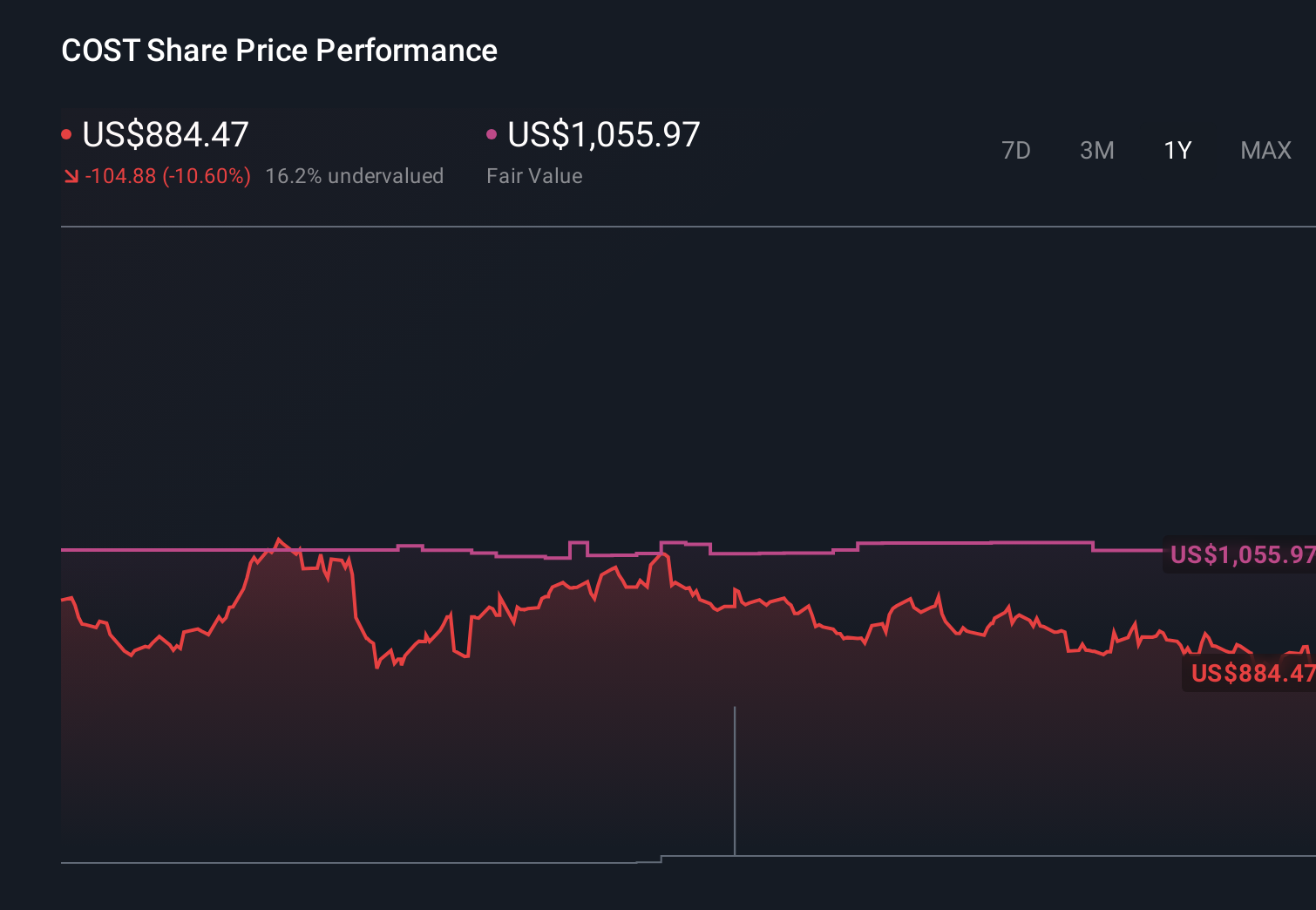
Some of the most optimistic analysts were assuming revenue could reach about US$347,000,000,000 and earnings US$11,900,000,000 by 2028, but if membership renewal or trust is dented by issues like food safety, that far more bullish narrative could diverge sharply from more cautious views, reminding you that even among professionals, expectations can vary widely and may need to be revisited as this story unfolds.
Explore 27 other fair value estimates on Costco Wholesale - why the stock might be worth 29% less than the current price!
Reach Your Own Conclusion
Disagree with existing narratives? Extraordinary investment returns rarely come from following the herd, so go with your instincts.
- A great starting point for your Costco Wholesale research is our analysis highlighting 2 key rewards and 1 important warning sign that could impact your investment decision.
- Our free Costco Wholesale research report provides a comprehensive fundamental analysis summarized in a single visual - the Snowflake - making it easy to evaluate Costco Wholesale's overall financial health at a glance.
Interested In Other Possibilities?
Don't miss your shot at the next 10-bagger. Our latest stock picks just dropped:
- AI is about to change healthcare. These 25 stocks are working on everything from early diagnostics to drug discovery. The best part - they are all under $10b in market cap - there's still time to get in early.
- Uncover the next big thing with 29 elite penny stocks that balance risk and reward.
- Find 55 companies with promising cash flow potential yet trading below their fair value.
This article by Simply Wall St is general in nature. We provide commentary based on historical data and analyst forecasts only using an unbiased methodology and our articles are not intended to be financial advice. It does not constitute a recommendation to buy or sell any stock, and does not take account of your objectives, or your financial situation. We aim to bring you long-term focused analysis driven by fundamental data. Note that our analysis may not factor in the latest price-sensitive company announcements or qualitative material. Simply Wall St has no position in any stocks mentioned.