

What Procter & Gamble (PG)'s New Premium Launches and Brand Partnerships Mean For Shareholders
Procter & Gamble Company PG | 0.00 |
- In mid-March 2026, Procter & Gamble expanded its product lineup with upgraded Swiffer PowerMop pads, a new premium Pampers AMORE diaper range, and BEVEL’s first body cream, while also rolling out an improved Dawn refill jug and formula and launching a Head & Shoulders partnership with Major League Soccer.
- These moves highlight how P&G is using premiumization, product innovation, and targeted brand extensions across home care, baby care, grooming, and dish care to reinforce its position in everyday consumer categories.
- We’ll now examine how P&G’s premium launches and innovation push intersect with tariff headwinds and analyst concerns in its investment narrative.
Outshine the giants: these 21 early-stage AI stocks could fund your retirement.
Procter & Gamble Investment Narrative Recap
To own Procter & Gamble, you need to believe its broad everyday brands, steady cash generation, and ongoing product innovation can offset near term pressures from tariffs, energy costs, and softer consumer confidence. The latest upgrades across Swiffer, Pampers, Dawn, and BEVEL support the innovation story, while the sharp share pullback, tariff headwind of about US$400 million after tax, and CEO transition keep margin resilience and execution as the key short term catalyst and risk.
The launch of Pampers AMORE, P&G’s most premium and most absorbent diaper, is especially relevant here because it reflects the company’s push into higher value tiers that can help counter input cost and tariff pressures. As P&G leans on premium offerings in baby care and home care, the big question is how far this innovation and pricing power can go in offsetting higher energy and material costs without straining volumes in weaker consumer markets.
Yet investors should not ignore the risk that rising tariffs and energy costs could pressure margins just as...
Procter & Gamble's narrative projects $94.0 billion revenue and $18.2 billion earnings by 2029. This requires 3.3% yearly revenue growth and a $2.0 billion earnings increase from $16.2 billion.
Uncover how Procter & Gamble's forecasts yield a $168.00 fair value, a 17% upside to its current price.
Exploring Other Perspectives
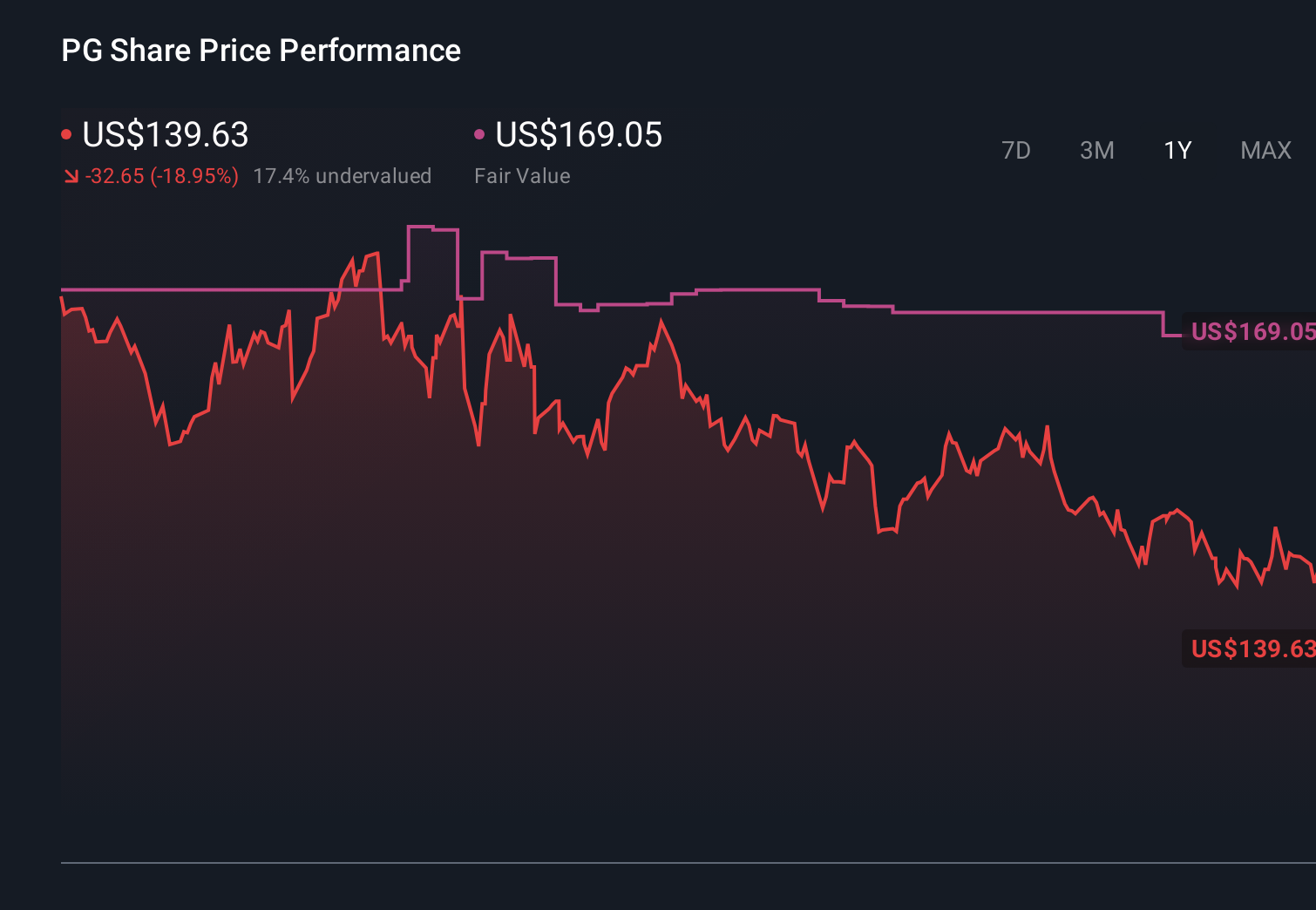
Twenty fair value estimates from the Simply Wall St Community span roughly US$121 to US$204 per share, showing how far apart individual views can be. Against that wide range, the current tariff and input cost headwinds remind you to weigh how resilient P&G’s margins and earnings could be under different scenarios before deciding which camp you align with.
Explore 20 other fair value estimates on Procter & Gamble - why the stock might be worth as much as 42% more than the current price!
Reach Your Own Conclusion
Disagree with existing narratives? Extraordinary investment returns rarely come from following the herd, so go with your instincts.
- A great starting point for your Procter & Gamble research is our analysis highlighting 4 key rewards and 2 important warning signs that could impact your investment decision.
- Our free Procter & Gamble research report provides a comprehensive fundamental analysis summarized in a single visual - the Snowflake - making it easy to evaluate Procter & Gamble's overall financial health at a glance.
Curious About Other Options?
These stocks are moving-our analysis flagged them today. Act fast before the price catches up:
- This technology could replace computers: discover 24 stocks that are working to make quantum computing a reality.
- Invest in the nuclear renaissance through our list of 88 elite nuclear energy infrastructure plays powering the global AI revolution.
- Uncover the next big thing with 29 elite penny stocks that balance risk and reward.
This article by Simply Wall St is general in nature. We provide commentary based on historical data and analyst forecasts only using an unbiased methodology and our articles are not intended to be financial advice. It does not constitute a recommendation to buy or sell any stock, and does not take account of your objectives, or your financial situation. We aim to bring you long-term focused analysis driven by fundamental data. Note that our analysis may not factor in the latest price-sensitive company announcements or qualitative material. Simply Wall St has no position in any stocks mentioned.