

What To Do If Your Stock Is Underperforming: Buy, Sell, Or Hold?
Introduction
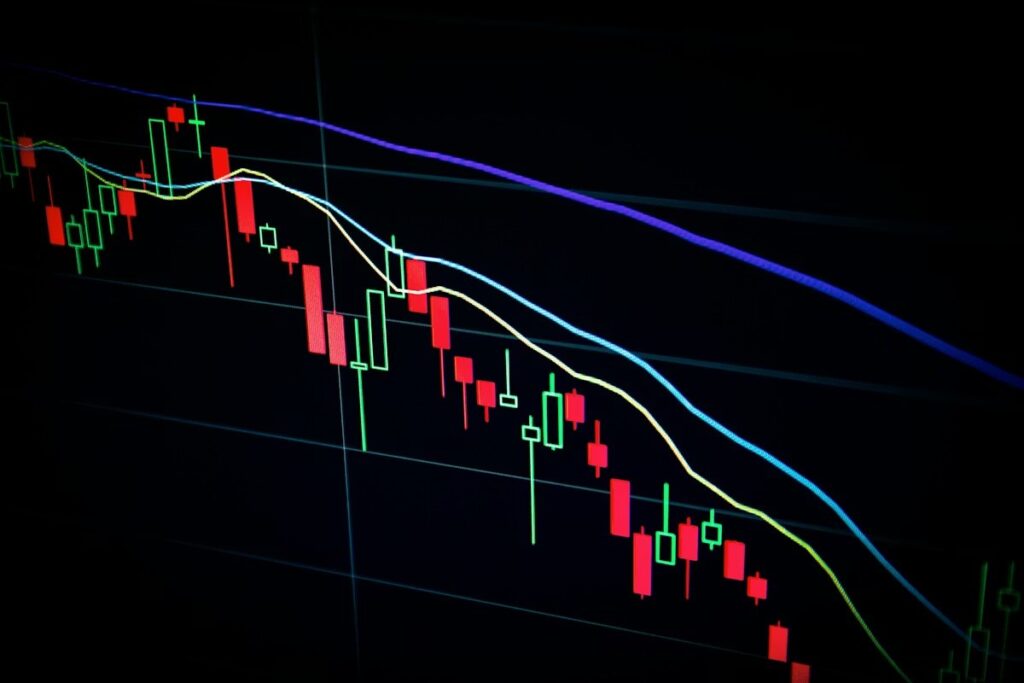
Seeing a stock underperform can be frustrating, especially if you believed strongly in the investment when you first bought it. Many investors face the same question at some point in their journey: Should I buy more, sell, or simply hold and wait?
An underperforming stock does not always mean a bad investment. Sometimes, it reflects short-term market conditions rather than long-term weakness. In other cases, it may signal deeper issues that require action. Understanding the difference is key to making a sound decision.
This guide explains how to evaluate an underperforming stock and decide whether to buy more, hold, or sell based on facts rather than emotion.
Highlights and Key Takeaways
- Underperformance does not automatically mean a stock should be sold.
- Investors should review company fundamentals before making a decision.
- Market conditions and time horizon play a major role in stock performance.
- Emotional reactions often lead to poor investment outcomes.
- A clear framework helps investors decide whether to buy, sell, or hold.
Understanding What “Underperforming” Really Means
Before making any decision, it is important to define what underperformance means in your situation.
A stock may be considered underperforming if:
- It has declined in price since you bought it.
- It is lagging behind the broader market or its sector.
- It has failed to meet your expected return over a certain period.
However, underperformance should always be measured against time and expectations. A stock that is down 10% in three months may still be performing well over a three-year horizon. Long-term investors often experience periods of temporary weakness before seeing gains.
Step One: Review the Company’s Fundamentals
The first and most important step is to review the company itself.
Ask yourself:
- Has the company’s revenue changed significantly?
- Are earnings improving or declining?
- Has debt increased to worrying levels?
- Is management still executing its strategy effectively?
If the company’s fundamentals remain strong, short-term price weakness may not be a reason to sell. Markets often react to news, economic data, or sentiment, even when the underlying business is stable.
On the other hand, if revenue is falling, margins are shrinking, or the company is losing its competitive position, the stock’s underperformance may reflect real problems.
When It May Make Sense to Hold
Holding an underperforming stock can be reasonable if:
- The company’s fundamentals are intact.
- The stock is part of a diversified portfolio.
- The decline is driven by temporary market conditions.
- Your original investment thesis still holds.
Many quality stocks experience periods of underperformance during economic slowdowns, interest rate changes, or sector rotations. In such cases, selling too early can result in unnecessary losses.
Holding requires patience and confidence in your research. It also requires discipline, as price volatility can test even experienced investors.
When Buying More Could Be the Right Move
Buying more of an underperforming stock, often called “averaging down,” should be done carefully.
It may make sense if:
- The company’s fundamentals have improved or remained stable.
- The stock appears undervalued based on earnings or cash flow.
- The decline is due to short-term sentiment rather than business weakness.
- You have a long-term investment horizon.
However, buying more simply because the price has fallen is risky. Investors should avoid adding to positions where the original investment thesis is no longer valid. Averaging down works best when the business is strong but temporarily mispriced.
When Selling Is the Better Option
Selling an underperforming stock is often the hardest decision, but sometimes it is the right one.
Selling may be appropriate if:
- The company’s fundamentals have deteriorated.
- Management has lost credibility.
- The business model is no longer competitive.
- The stock no longer fits your investment goals.
- You need capital for better opportunities.
Holding onto a stock solely to avoid realizing a loss can be damaging over time. Capital tied up in a weak investment could potentially be deployed more effectively elsewhere.
The Role of Market Conditions
Broader market conditions play a significant role in stock performance.
Factors that can affect stocks include:
- Interest rate changes
- Inflation trends
- Economic growth or slowdown
- Sector-specific cycles
- Geopolitical events
An underperforming stock during a market-wide downturn may recover when conditions improve. Understanding whether weakness is company-specific or market-wide helps guide decision-making.
Managing Emotions and Avoiding Common Mistakes
Emotional decision-making is one of the biggest challenges for investors.
Common mistakes include:
- Panic selling after short-term losses
- Holding indefinitely out of hope rather than analysis
- Buying more without reassessing fundamentals
- Ignoring portfolio balance and risk exposure
A structured approach reduces emotional bias. Writing down your investment thesis and revisiting it periodically can help you stay disciplined.
Reassessing Your Time Horizon
Your time horizon matters greatly when evaluating underperformance.
Short-term investors may need to react more quickly to changes, while long-term investors can often afford to wait. A stock that underperforms over six months may still deliver strong returns over five years.
Be honest about your goals and timeline. This clarity makes decision-making easier and more consistent.
Portfolio Perspective Matters
No stock should be evaluated in isolation.
Consider:
- How much of your portfolio the stock represents
- Whether it adds diversification or concentration
- How it affects overall risk exposure
An underperforming stock that represents a small portion of a diversified portfolio may not require immediate action. Larger positions deserve closer scrutiny.
Conclusion
An underperforming stock does not automatically require action, but it does demand attention. The decision to buy, sell, or hold should be based on careful analysis rather than emotion.
By reviewing fundamentals, understanding market conditions, reassessing your investment thesis, and considering your time horizon, you can make more informed decisions. Investing is not about avoiding losses entirely, but about managing risk and allocating capital wisely over time.
FAQ
Should I sell a stock just because it is down?
Not necessarily. A price decline alone does not mean a stock is a bad investment. Investors should review fundamentals before deciding.
Is averaging down always a good strategy?
No. Averaging down works only if the company remains fundamentally strong. Adding to a weak business can increase losses.
How long should I wait before selling an underperforming stock?
There is no fixed timeline. The decision should depend on changes in fundamentals, market conditions, and your investment goals.
Can underperforming stocks recover?
Yes, many stocks recover after periods of underperformance, especially if the business remains healthy and market conditions improve.
What is the biggest mistake investors make with underperforming stocks?
Letting emotions drive decisions instead of relying on research, discipline, and long-term planning.
Benzinga Disclaimer: This article is from an unpaid external contributor. It does not represent Benzinga’s reporting and has not been edited for content or accuracy.