

Whirlpool Credit Downgrade Puts Leverage Tariffs And Dividend Under Scrutiny
Whirlpool Corporation WHR | 0.00 |
- S&P recently cut Whirlpool's credit rating to BB, moving it below investment grade.
- The downgrade reflects margin pressures, higher leverage and tariff uncertainty weighing on the business.
- Presidential financial disclosures showing President Trump holds Whirlpool debt have brought extra attention to the company’s balance sheet.
Whirlpool, traded as NYSE:WHR, is under a brighter spotlight as credit quality and capital structure move to the forefront. The stock closed at $84.71, with a 30 day return of 17.5% and a 7 day return of 2.8% decline, while the 1 year return stands at a 32.4% decline. Over 3 and 5 years, returns are 33.7% and 41.7% decline, which frames how investors have treated the name through recent cycles.
The key questions now are how Whirlpool addresses leverage, margins and tariff exposure, and how that may influence future credit decisions. The BB rating and the public focus on its debt profile mean that any balance sheet moves, refinancing steps or shifts in operating performance are likely to draw sharper market reactions.
Stay updated on the most important news stories for Whirlpool by adding it to your watchlist or portfolio. Alternatively, explore our Community to discover new perspectives on Whirlpool.
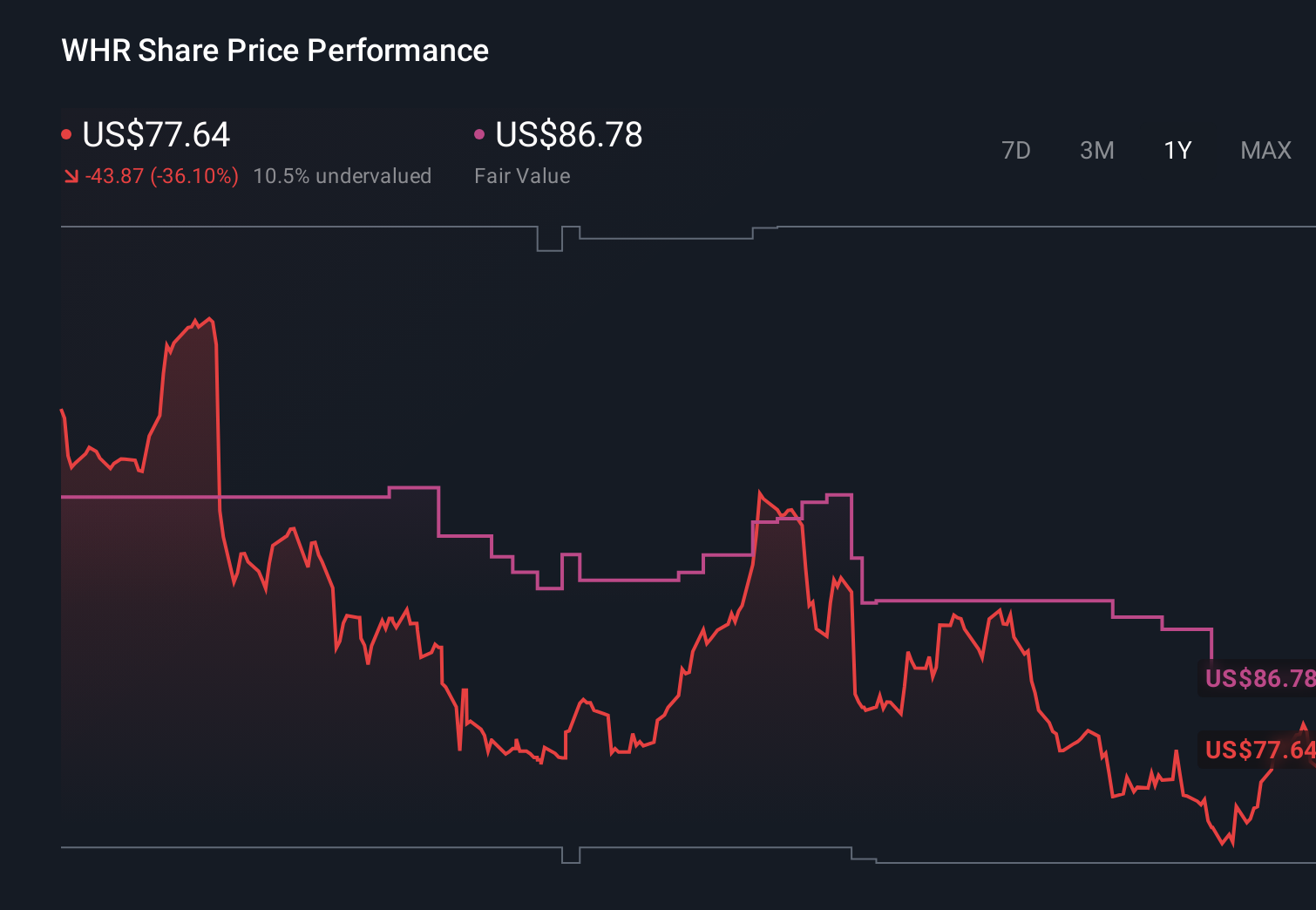
The S&P downgrade to BB puts Whirlpool's credit quality clearly below investment grade, which can influence borrowing costs, refinancing options and how much flexibility the company has to invest or defend margins in a tougher operating backdrop. The added attention from Presidential financial disclosures and public commentary from high profile market voices keeps its leverage, tariff exposure and margin trajectory firmly in focus for regulators, rating agencies and investors.
Whirlpool's narrative under the microscope
With no established narrative track to reference, this rating move and the scrutiny on Whirlpool's debt can be a starting point for investors to frame their own story around balance sheet strength, tariff sensitivity and the trade off between shareholder returns and financial resilience.
Risks and rewards in the spotlight
- ⚠️ S&P's BB rating and comments on higher leverage highlight concerns that debt is not comfortably covered by operating cash flows.
- ⚠️ A 4.25% dividend that is not well covered by earnings or free cash flows could face pressure if credit conditions tighten or margins stay weak.
- 🎁 S&P's focus on margins and tariff related costs may prompt tighter cost discipline and more conservative capital allocation.
- 🎁 Market volatility around tariff headlines and the downgrade can create entry and exit points for investors with different risk appetites.
What to watch next
From here, keep an eye on any updates to Whirlpool's financing plans, commentary around tariff related costs and whether management signals changes to dividend policy or capital spending in response to the downgrade. If you want to see how other investors are framing Whirlpool's story, you can check out opinions and debate in the community narratives.
This article by Simply Wall St is general in nature. We provide commentary based on historical data and analyst forecasts only using an unbiased methodology and our articles are not intended to be financial advice. It does not constitute a recommendation to buy or sell any stock, and does not take account of your objectives, or your financial situation. We aim to bring you long-term focused analysis driven by fundamental data. Note that our analysis may not factor in the latest price-sensitive company announcements or qualitative material. Simply Wall St has no position in any stocks mentioned.