

Why AAR (AIR) Is Up 5.6% After Russell Index Exit And Woodward Deal Expansion
AAR CORP. AIR | 0.00 |
- In late June 2026, AAR Corp. (NYSE:AIR) was removed from multiple Russell value and small-cap-related benchmarks after reporting quarterly results that surpassed analyst expectations and announcing an expanded preferred parts distribution agreement with Woodward.
- This combination of index exclusion alongside earnings outperformance and a broader distribution footprint highlights a company whose operational progress is evolving faster than its benchmark classifications.
- We’ll now examine how AAR’s stronger-than-expected earnings and expanded Woodward distribution agreement may influence its existing investment narrative.
The latest GPUs need a type of rare earth metal called Dysprosium and there are only 30 companies in the world exploring or producing it. Find the list for free.
AAR Investment Narrative Recap
To own AAR, you need to believe in its role as a scaled, integrated aviation services provider with both commercial and defense exposure, and in the durability of its higher quality distribution and digital revenues. The most important near term catalyst remains execution on new contracts and distribution agreements, while the biggest current risk is prolonged pressure on commercial airline spending. The recent index removals do not appear to materially change either the key catalyst or this core risk.
The expanded preferred parts distribution agreement with Woodward is the clearest link to that catalyst, because it deepens AAR’s access to high demand engine platforms and supports recurring distribution revenue. For investors, this sits alongside recent defense contract wins and digital tools like Airvoyant as evidence that the company is leaning further into differentiated, less cyclical revenue streams, even as competitive pressure from OEMs in the aftermarket continues to loom in the background.
Yet while these contracts and tools strengthen the story, investors should also be aware that growing OEM aftermarket pressure could...
AAR's narrative projects $4.1 billion revenue and $228.5 million earnings by 2029. This requires 9.0% yearly revenue growth and a $57.5 million earnings increase from $171.0 million today.
Uncover how AAR's forecasts yield a $131.67 fair value, a 7% downside to its current price.
Exploring Other Perspectives
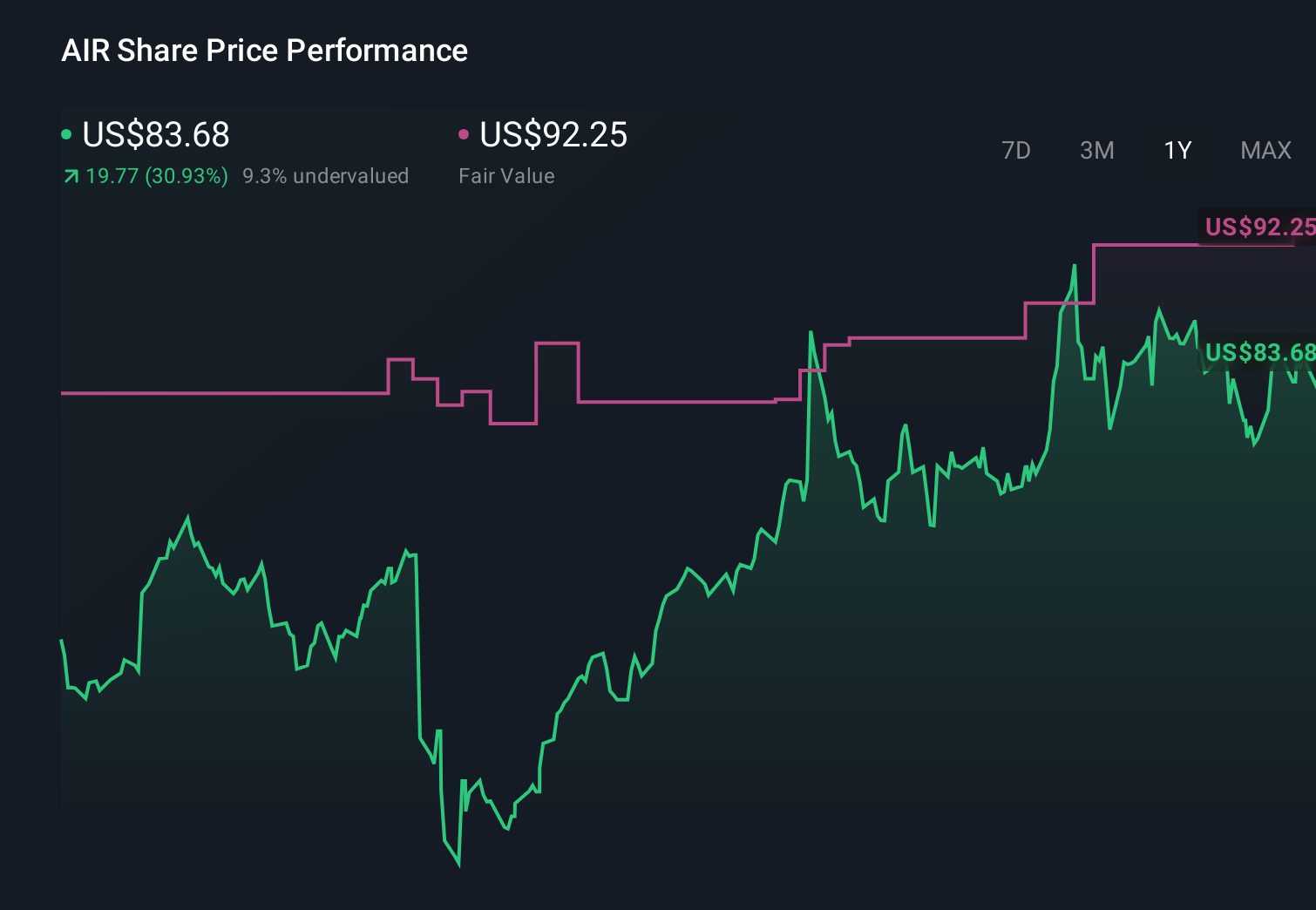
Three Simply Wall St Community fair value estimates for AAR range from US$60.98 to US$131.67, underscoring how far apart individual views can sit. Against that wide spread, AAR’s growing dependence on commercial aviation demand remains a central issue that could materially affect how each of these scenarios plays out, so it is worth comparing several viewpoints before forming a view.
Explore 3 other fair value estimates on AAR - why the stock might be worth less than half the current price!
The Verdict Is Yours
Disagree with existing narratives? Extraordinary investment returns rarely come from following the herd, so go with your instincts.
- A great starting point for your AAR research is our analysis highlighting 3 key rewards and 1 important warning sign that could impact your investment decision.
- Our free AAR research report provides a comprehensive fundamental analysis summarized in a single visual - the Snowflake - making it easy to evaluate AAR's overall financial health at a glance.
Seeking Other Investments?
Don't miss your shot at the next 10-bagger. Our latest stock picks just dropped:
- Invest in the nuclear renaissance through our list of 89 elite nuclear energy infrastructure plays powering the global AI revolution.
- Uncover the next big thing with 22 elite penny stocks that balance risk and reward.
- Explore 26 top quantum computing companies leading the revolution in next-gen technology and shaping the future with breakthroughs in quantum algorithms, superconducting qubits, and cutting-edge research.
This article by Simply Wall St is general in nature. We provide commentary based on historical data and analyst forecasts only using an unbiased methodology and our articles are not intended to be financial advice. It does not constitute a recommendation to buy or sell any stock, and does not take account of your objectives, or your financial situation. We aim to bring you long-term focused analysis driven by fundamental data. Note that our analysis may not factor in the latest price-sensitive company announcements or qualitative material. Simply Wall St has no position in any stocks mentioned.