

Why Figma (FIG) Is Up 29.1% After Insider Buying And New AI Credit Monetization Plans
Figma FIG | 0.00 |
- Earlier in February 2026, Figma reported fourth-quarter 2025 sales of US$303.78 million and full-year 2025 sales of US$1.06 billion, alongside a shift from a quarterly net income of US$33.07 million a year ago to a net loss of US$226.56 million and full-year net loss of US$1.25 billion, while issuing 2026 revenue guidance of up to US$1.37 billion and filing a US$744.63 million shelf registration for ESOP-related Class A stock.
- The earnings release was followed by heavy insider and institutional buying, AI credit monetization plans, and increased analyst attention on Figma’s expanding AI-powered product suite and customer adoption.
- Now we’ll examine how Figma’s insider buying and AI credit monetization plans may influence its pre-existing investment narrative and risk profile.
The latest GPUs need a type of rare earth metal called Terbium and there are only 31 companies in the world exploring or producing it. Find the list for free.
Figma Investment Narrative Recap
To own Figma, you need to believe its AI powered design platform can stay central to how digital products are built, even as general purpose AI tools encroach on design workflows. The key near term catalyst is whether paid AI credits meaningfully convert heavy usage into higher revenue, while the biggest risk is that rising AI and stock based compensation costs keep losses elevated. The latest results and insider buying reinforce this trade off but do not remove it.
The move to start charging for AI credits from March 2026 is the most relevant new development here, because it directly addresses the earlier concern that AI investments might outpace monetization. With about three quarters of customers already using AI credits weekly, the shift toward a pay for usage model could test how willing enterprises are to pay more for these features and how quickly Figma can offset higher AI infrastructure costs.
Yet, even with strong AI adoption, investors should be aware that...
Figma’s narrative projects $1.7 billion revenue and $214.1 million earnings by 2028. This requires 21.2% yearly revenue growth and an earnings increase of about $1.14 billion from -$926.1 million today.
Uncover how Figma's forecasts yield a $65.25 fair value, a 109% upside to its current price.
Exploring Other Perspectives
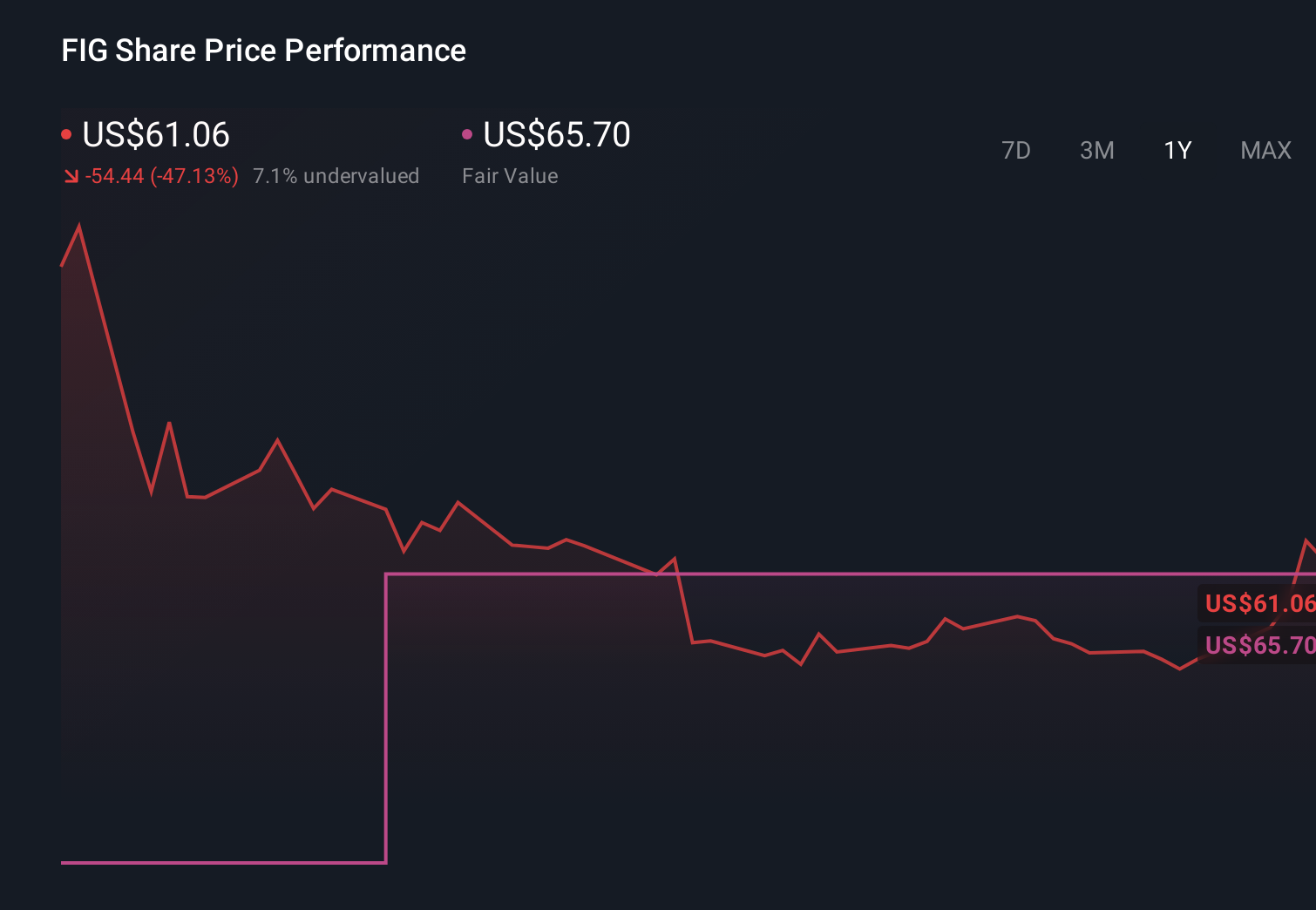
Some of the most optimistic analysts were already assuming about 24 percent annual revenue growth and future earnings of roughly US$229.1 million, which paints a far more upbeat picture than the baseline narrative and highlights how differently you and other shareholders might weigh AI monetization risk versus the upside from Figma’s expanding role in product development after this latest news.
Explore 28 other fair value estimates on Figma - why the stock might be worth 45% less than the current price!
Reach Your Own Conclusion
Don't just follow the ticker - dig into the data and build a conviction that's truly your own.
- A great starting point for your Figma research is our analysis highlighting 2 key rewards and 2 important warning signs that could impact your investment decision.
- Our free Figma research report provides a comprehensive fundamental analysis summarized in a single visual - the Snowflake - making it easy to evaluate Figma's overall financial health at a glance.
Want Some Alternatives?
Markets shift fast. These stocks won't stay hidden for long. Get the list while it matters:
- The future of work is here. Discover the 31 top robotics and automation stocks leading the charge in AI-driven automation and industrial transformation.
- Uncover the next big thing with 30 elite penny stocks that balance risk and reward.
- We've uncovered the 15 dividend fortresses yielding 5%+ that don't just survive market storms, but thrive in them.
This article by Simply Wall St is general in nature. We provide commentary based on historical data and analyst forecasts only using an unbiased methodology and our articles are not intended to be financial advice. It does not constitute a recommendation to buy or sell any stock, and does not take account of your objectives, or your financial situation. We aim to bring you long-term focused analysis driven by fundamental data. Note that our analysis may not factor in the latest price-sensitive company announcements or qualitative material. Simply Wall St has no position in any stocks mentioned.