

Why Peabody Energy (BTU) Is Down 6.2% After Deeper Q2 Losses Amid Dividends And Buybacks
Peabody Energy BTU | 0.00 |
- Peabody Energy reported past second-quarter 2026 results showing sales rising to US$1,003.2 million but a wider net loss of US$90.6 million, while also announcing a US$0.075 quarterly dividend and ongoing share repurchases.
- The combination of deeper losses alongside continued cash returns through dividends and a buyback that has retired over one-fifth of shares raises important questions about the company’s capital allocation priorities and financial resilience.
- We’ll now consider how Peabody’s wider quarterly loss, yet continued dividend and buybacks, may reshape its investment narrative and risk profile.
AI is about to change healthcare. These 41 stocks are working on everything from early diagnostics to drug discovery. The best part - they are all under $10b in market cap - there's still time to get in early.
Peabody Energy Investment Narrative Recap
To own Peabody Energy today, you have to accept a coal-focused business facing long-term decarbonization pressures while still counting on policy support and met coal demand. The latest quarter’s wider net loss, despite higher sales, has made near term earnings recovery more uncertain, and the key risk now is whether ongoing operational issues and coal price volatility keep Peabody in the red for longer than expected. The Q2 results are material to how investors weigh that earnings risk.
The most relevant recent announcement is Peabody’s continued capital returns through its US$0.075 dividend and sizable buybacks that have retired over 21% of shares. Against a backdrop of quarterly net losses, this mix of shareholder payouts and fresh financing moves puts a sharper focus on the company’s cash generation and balance sheet strength as near term catalysts, particularly around the Centurion mine ramp up and any improvement in operating cash flow.
Yet beneath the dividend and buybacks, a less visible risk that investors should be aware of is how Peabody’s environmental and reclamation obligations could eventually constrain...
Peabody Energy’s narrative projects $5.2 billion revenue and $729.0 million earnings by 2029. This requires 10.1% yearly revenue growth and a $848.6 million earnings increase from -$119.6 million today.
Uncover how Peabody Energy's forecasts yield a $32.83 fair value, a 51% upside to its current price.
Exploring Other Perspectives
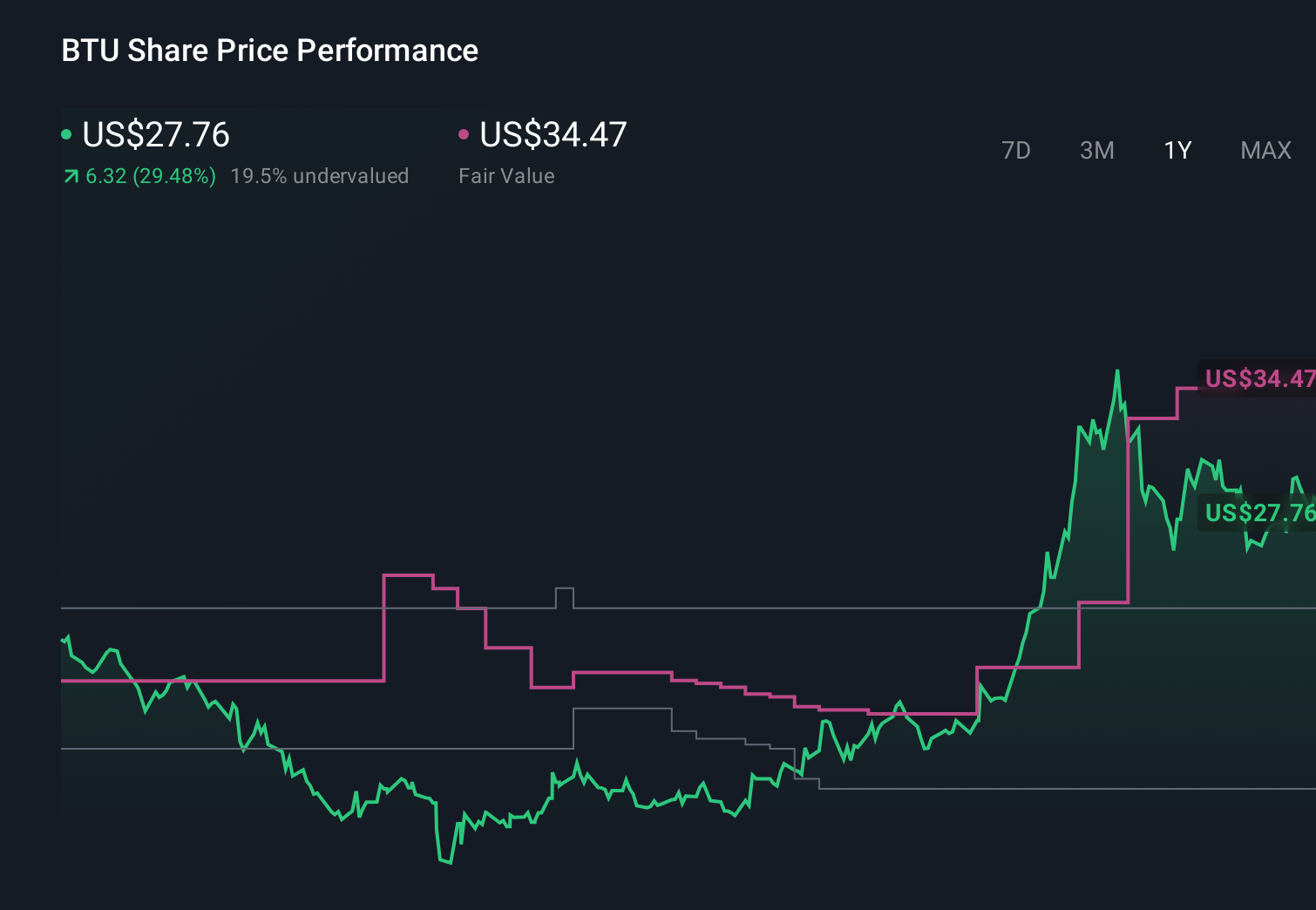
Lowest estimate analysts were already cautious, assuming only about 5.1% annual revenue growth and US$436.1 million in earnings by 2029, and Q2’s deeper loss may push that more pessimistic narrative further, so it is worth comparing these views with your own expectations.
Explore 6 other fair value estimates on Peabody Energy - why the stock might be worth over 2x more than the current price!
The Verdict Is Yours
Disagree with existing narratives? Extraordinary investment returns rarely come from following the herd, so go with your instincts.
- A great starting point for your Peabody Energy research is our analysis highlighting 4 key rewards and 1 important warning sign that could impact your investment decision.
- Our free Peabody Energy research report provides a comprehensive fundamental analysis summarized in a single visual - the Snowflake - making it easy to evaluate Peabody Energy's overall financial health at a glance.
Contemplating Other Strategies?
The market won't wait. These fast-moving stocks are hot now. Grab the list before they run:
- Find 53 companies with promising cash flow potential yet trading below their fair value.
- Uncover the next big thing with 21 elite penny stocks that balance risk and reward.
- We've uncovered the 7 dividend fortresses yielding 5%+ that don't just survive market storms, but thrive in them.
This article by Simply Wall St is general in nature. We provide commentary based on historical data and analyst forecasts only using an unbiased methodology and our articles are not intended to be financial advice. It does not constitute a recommendation to buy or sell any stock, and does not take account of your objectives, or your financial situation. We aim to bring you long-term focused analysis driven by fundamental data. Note that our analysis may not factor in the latest price-sensitive company announcements or qualitative material. Simply Wall St has no position in any stocks mentioned.