

Why Pfizer (PFE) Is Up 5.2% After Raising 2026 Guidance Despite a Q2 Net Loss
Pfizer Inc. PFE | 0.00 |
- In the second quarter of 2026, Pfizer reported revenue of US$15,034 million, up from US$14,653 million a year earlier, but swung from net income of US$2,910 million to a net loss of US$248 million after recording US$4.30 billion in non-cash intangible asset impairments.
- Despite these impairments, Pfizer raised its 2026 revenue guidance midpoint to US$61.50 billion and highlighted encouraging late-stage pipeline progress, including positive Phase 3 results for its vitiligo therapy LITFULO.
- We’ll now examine how Pfizer’s higher full-year revenue guidance, despite reporting a quarterly net loss, affects the company’s broader investment narrative.
Capitalize on the AI infrastructure supercycle with our selection of the 56 best 'picks and shovels' of the AI gold rush converting record-breaking demand into massive cash flow.
Pfizer Investment Narrative Recap
To own Pfizer today, you need to believe that non COVID products and the late stage pipeline can offset patent headwinds and one off hits like Q2’s US$4.30 billion impairment. The raised 2026 revenue midpoint to US$61.50 billion supports that view, but the quarter also underlines how dependent the story is on successful execution in oncology and immunology, while the patent cliff for drugs like Ibrance and XTANDI remains the key overhang.
The most relevant recent update here is the higher 2026 revenue guidance range of US$60.5 billion to US$62.5 billion. It sits awkwardly beside a GAAP net loss, but points to stronger underlying demand for non COVID assets and supports the idea that pipeline and recent launches, including dermatology assets like LITFULO, are increasingly central to the near term catalyst path as investors watch how quickly they can backfill expiring revenue.
Yet even with stronger guidance, investors should be aware that the looming patent cliff and execution risk around replacing those revenues could still...
Pfizer’s narrative projects $54.9 billion revenue and $9.2 billion earnings by 2029.
Uncover how Pfizer's forecasts yield a $29.19 fair value, a 11% upside to its current price.
Exploring Other Perspectives
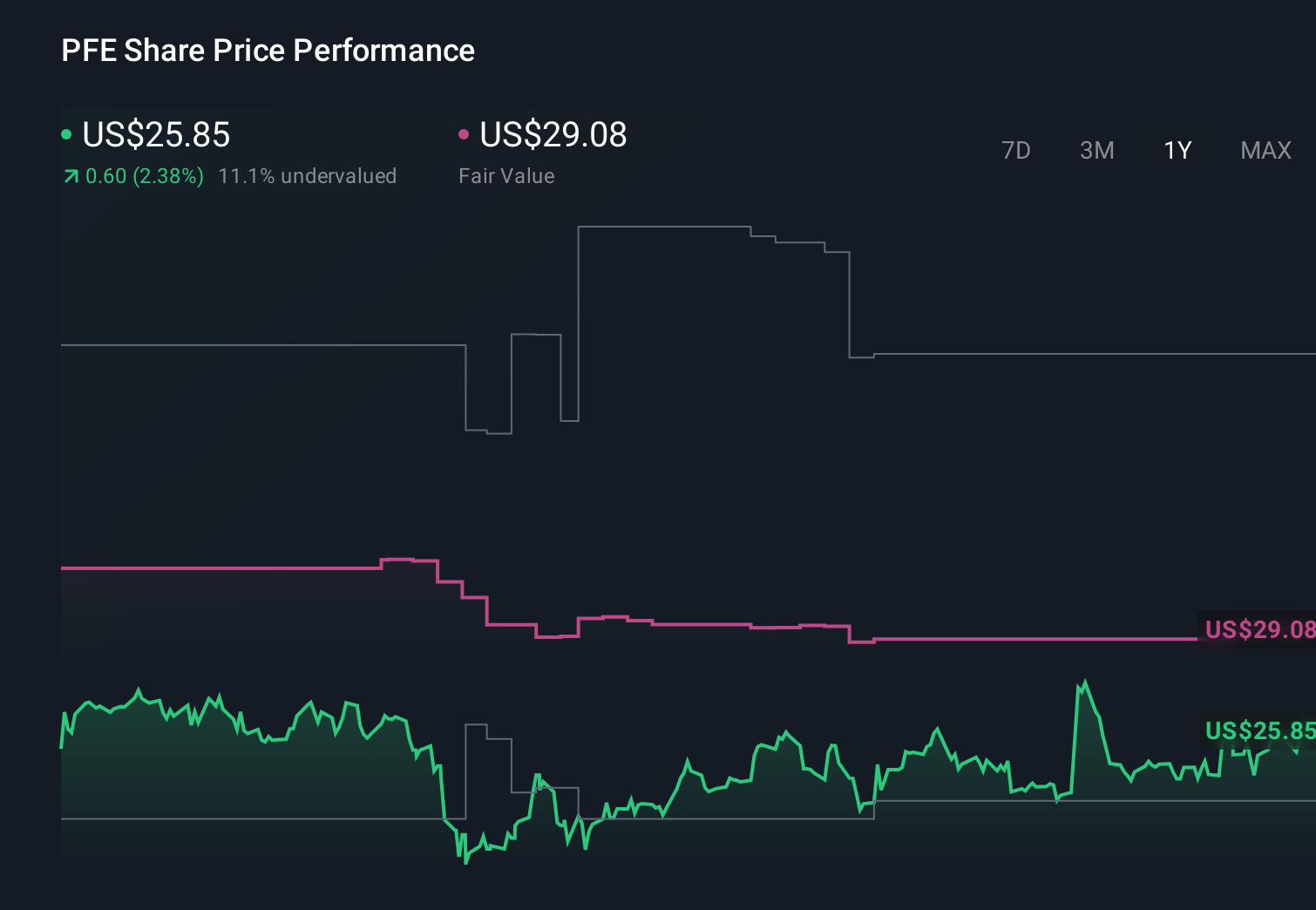
Before this update, the most optimistic analysts were banking on about US$57.5 billion of revenue and US$11.3 billion of earnings by 2029, so compared with the baseline focus on impairments and patent risk they are clearly painting a far more optimistic picture of what Pfizer’s oncology and obesity pipeline could deliver, and you should expect those views to evolve as this latest quarter is fully digested.
Explore 20 other fair value estimates on Pfizer - why the stock might be worth just $25.00!
Decide For Yourself
Don't just follow the ticker - dig into the data and build a conviction that's truly your own.
- A great starting point for your Pfizer research is our analysis highlighting 2 key rewards and 4 important warning signs that could impact your investment decision.
- Our free Pfizer research report provides a comprehensive fundamental analysis summarized in a single visual - the Snowflake - making it easy to evaluate Pfizer's overall financial health at a glance.
No Opportunity In Pfizer?
Right now could be the best entry point. These picks are fresh from our daily scans. Don't delay:
- AI is about to change healthcare. These 42 stocks are working on everything from early diagnostics to drug discovery. The best part - they are all under $10b in market cap - there's still time to get in early.
- This technology could replace computers: discover 26 stocks that are working to make quantum computing a reality.
- The best AI stocks today may lie beyond giants like Nvidia and Microsoft. Find the next big opportunity with these 16 smaller AI-focused companies with strong growth potential through early-stage innovation in machine learning, automation, and data intelligence that could fund your retirement.
This article by Simply Wall St is general in nature. We provide commentary based on historical data and analyst forecasts only using an unbiased methodology and our articles are not intended to be financial advice. It does not constitute a recommendation to buy or sell any stock, and does not take account of your objectives, or your financial situation. We aim to bring you long-term focused analysis driven by fundamental data. Note that our analysis may not factor in the latest price-sensitive company announcements or qualitative material. Simply Wall St has no position in any stocks mentioned.