

Why Robinhood (HOOD) Is Down 6.1% After Crypto Revenue Plunges 47% But Subscriptions Grow
Robinhood HOOD | 0.00 |
- In late April 2026, Robinhood Markets reported first-quarter revenue of US$1,067 million and net income of US$350 million, while continuing to repurchase shares under its ongoing buyback programs.
- The quarter highlighted a sharp 47% drop in crypto-related revenue even as prediction markets, subscriptions like Robinhood Gold, and other trading segments expanded their contribution to the business mix.
- We’ll now examine how the sharp 47% crypto revenue decline, alongside growing subscriptions and prediction markets, shapes Robinhood’s investment narrative.
Capitalize on the AI infrastructure supercycle with our selection of the 39 best 'picks and shovels' of the AI gold rush converting record-breaking demand into massive cash flow.
Robinhood Markets Investment Narrative Recap
To own Robinhood today, you need to believe it can shift from volatile trading toward a broader, recurring-revenue platform built on subscriptions, prediction markets, and deeper customer relationships. The latest quarter’s 47% drop in crypto revenue directly tests that narrative, because trading still matters for growth, while the key short term catalyst is continued traction in Gold and prediction markets. The biggest risk right now is that weaker or more volatile trading activity keeps undercutting overall revenue momentum.
The most relevant recent announcement here is Robinhood’s first quarter 2026 earnings: revenue rose to US$1,067 million and net income to US$350 million, but overall growth slowed to about 15% year over year as crypto revenue fell sharply. At the same time, Gold subscribers increased 36% to 4.3 million and prediction markets set new records, which ties directly into the idea that Robinhood’s near term story depends on whether these newer lines can offset trading swings.
Yet beneath this shift toward subscriptions and prediction markets, investors should be aware that Robinhood still faces concentrated risks if...
Robinhood Markets' narrative projects $6.9 billion revenue and $2.8 billion earnings by 2029. This requires 15.4% yearly revenue growth and a roughly $0.9 billion earnings increase from $1.9 billion today.
Uncover how Robinhood Markets' forecasts yield a $101.15 fair value, a 31% upside to its current price.
Exploring Other Perspectives
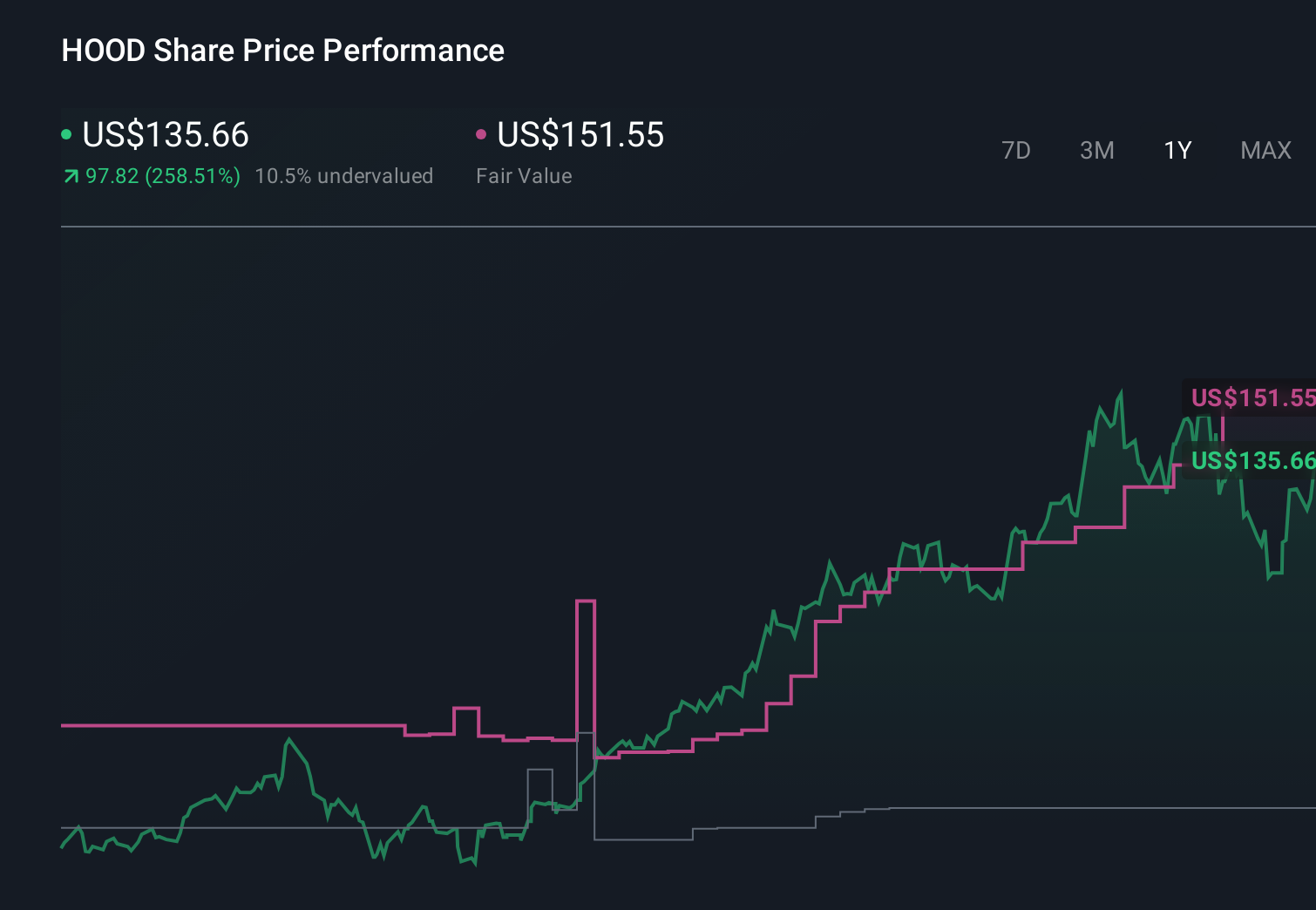
Before this crypto-driven earnings miss, the most optimistic analysts were penciling in roughly US$8.1 billion of revenue and US$4.0 billion of earnings by 2029, which is a far more aggressive path than consensus. If you lean toward that bullish view, you are also assuming that competitive and regulatory risks will not derail Robinhood’s push into futures, options and prediction markets, even though this latest quarter suggests those assumptions may need a fresh look.
Explore 35 other fair value estimates on Robinhood Markets - why the stock might be worth over 2x more than the current price!
Decide For Yourself
Don't just follow the ticker - dig into the data and build a conviction that's truly your own.
- A great starting point for your Robinhood Markets research is our analysis highlighting 3 key rewards that could impact your investment decision.
- Our free Robinhood Markets research report provides a comprehensive fundamental analysis summarized in a single visual - the Snowflake - making it easy to evaluate Robinhood Markets' overall financial health at a glance.
Ready For A Different Approach?
The market won't wait. These fast-moving stocks are hot now. Grab the list before they run:
- Invest in the nuclear renaissance through our list of 91 elite nuclear energy infrastructure plays powering the global AI revolution.
- Outshine the giants: these 19 early-stage AI stocks could fund your retirement.
- Uncover the next big thing with 22 elite penny stocks that balance risk and reward.
This article by Simply Wall St is general in nature. We provide commentary based on historical data and analyst forecasts only using an unbiased methodology and our articles are not intended to be financial advice. It does not constitute a recommendation to buy or sell any stock, and does not take account of your objectives, or your financial situation. We aim to bring you long-term focused analysis driven by fundamental data. Note that our analysis may not factor in the latest price-sensitive company announcements or qualitative material. Simply Wall St has no position in any stocks mentioned.