

Why United Airlines (UAL) Is Up 11.2% After Massive $20 Billion Dulles Hub Modernization Plan
United Airlines Holdings UAL | 0.00 |
- In July 2026, the Metropolitan Washington Airports Authority, United Airlines, and the U.S. Department of Transportation announced a more than US$20.00 billion, decade-long modernization of Washington Dulles International Airport, adding over 5.00 million square feet of new and upgraded facilities while retiring the airport’s mobile lounge vehicles.
- This large-scale capital program deepens United’s role at a key U.S. gateway, with new United gates, expanded lounge capacity, and upgraded international connectivity potentially reinforcing its premium, long-haul positioning.
- Next, we’ll examine how United’s deepened role at a massively upgraded Dulles hub could reshape its premium-focused investment narrative.
The future of work is here. Discover the 36 top robotics and automation stocks leading the charge in AI-driven automation and industrial transformation.
United Airlines Holdings Investment Narrative Recap
To own United today, you need to believe its premium and international focus can offset industry cyclicality, high debt, and structurally shifting travel demand. The more than US$20.00 billion Dulles modernization is a long-term capacity and product upgrade, not a near term earnings driver, so it does little to change the immediate catalyst around delivering on 2026 EPS guidance or the key risk that leverage and capital spending could weigh on flexibility in a downturn.
The most relevant recent update alongside the Dulles news is United’s July 2026 guidance, which tightened full year 2026 EPS expectations to the high end of the US$9 to US$11 range. Together, the guidance and Dulles investment frame a story in which execution on premium-focused growth and cost discipline becomes critical, because the combination of big capital projects and already high debt levels leaves less room for error if demand or costs move against United.
Yet investors should also weigh how this ambitious airport build out could interact with United’s already high leverage and the risk that...
United Airlines Holdings' narrative projects $74.3 billion revenue and $4.2 billion earnings by 2029.
Uncover how United Airlines Holdings' forecasts yield a $162.15 fair value, a 22% upside to its current price.
Exploring Other Perspectives
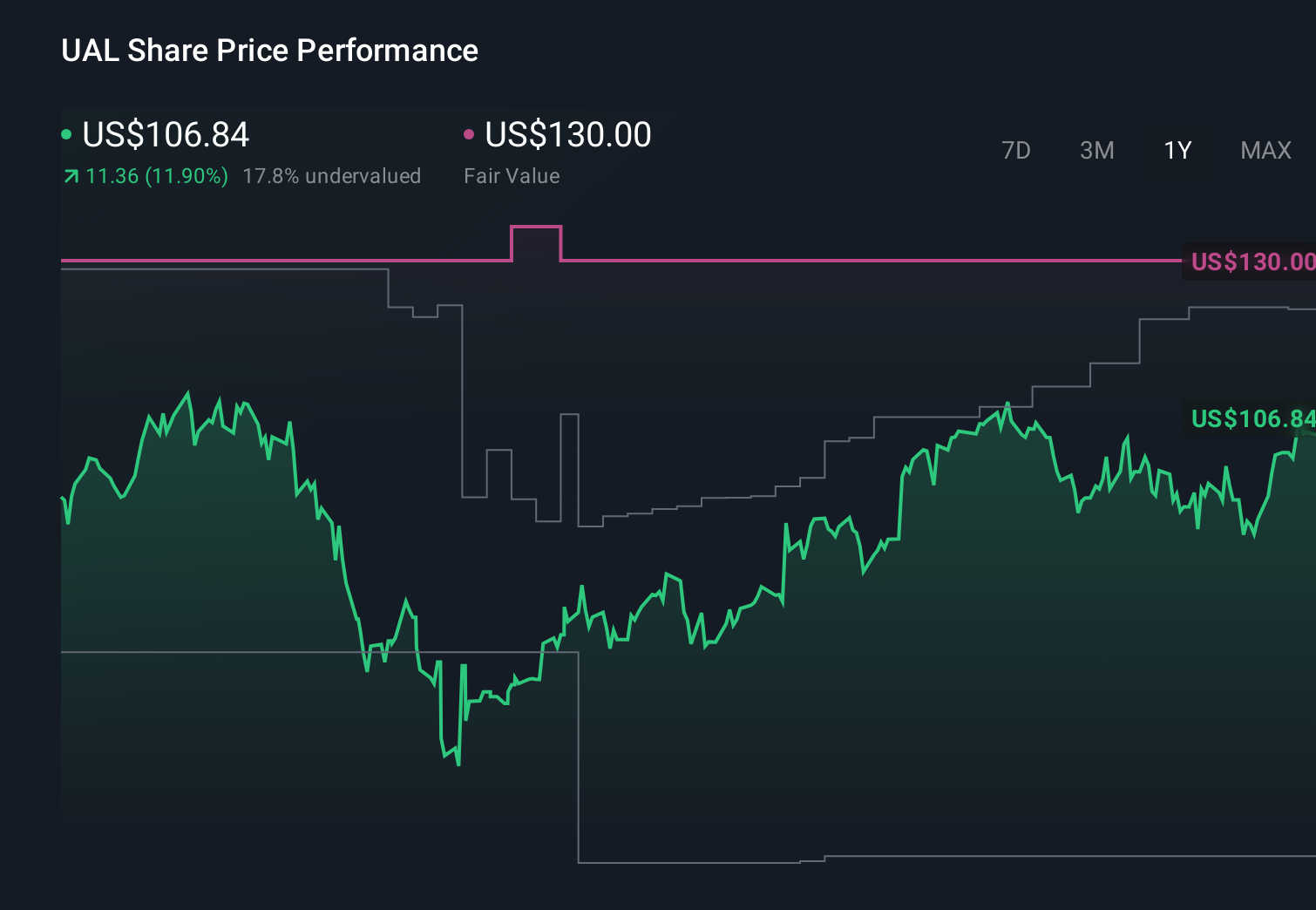
Some of the lowest estimate analysts were already cautious, assuming revenue of about US$67.0 billion and earnings near US$4.3 billion by 2029, so you should recognize that their view of rising climate and capital costs paints a much more pessimistic picture than the consensus and may look very different once the full implications of the Dulles plan are reflected.
Explore 3 other fair value estimates on United Airlines Holdings - why the stock might be worth just $132.68!
The Verdict Is Yours
Disagree with existing narratives? Extraordinary investment returns rarely come from following the herd, so go with your instincts.
- A great starting point for your United Airlines Holdings research is our analysis highlighting 4 key rewards and 2 important warning signs that could impact your investment decision.
- Our free United Airlines Holdings research report provides a comprehensive fundamental analysis summarized in a single visual - the Snowflake - making it easy to evaluate United Airlines Holdings' overall financial health at a glance.
No Opportunity In United Airlines Holdings?
Every day counts. These free picks are already gaining attention. See them before the crowd does:
- Uncover the next big thing with 19 elite penny stocks that balance risk and reward.
- AI is about to change healthcare. These 42 stocks are working on everything from early diagnostics to drug discovery. The best part - they are all under $10b in market cap - there's still time to get in early.
- Capitalize on the AI infrastructure supercycle with our selection of the 56 best 'picks and shovels' of the AI gold rush converting record-breaking demand into massive cash flow.
This article by Simply Wall St is general in nature. We provide commentary based on historical data and analyst forecasts only using an unbiased methodology and our articles are not intended to be financial advice. It does not constitute a recommendation to buy or sell any stock, and does not take account of your objectives, or your financial situation. We aim to bring you long-term focused analysis driven by fundamental data. Note that our analysis may not factor in the latest price-sensitive company announcements or qualitative material. Simply Wall St has no position in any stocks mentioned.