

Why Whirlpool (WHR) Is Down 15.3% After Dividend Suspension And Sharp Earnings Downgrade
Whirlpool Corporation WHR | 0.00 |
- In the first quarter of 2026, Whirlpool Corporation reported sales of US$3,273 million, shifting from net income of US$71 million a year ago to a net loss of US$82 million and recording basic and diluted losses of US$1.43 per share from continuing operations.
- The company blamed a recession-level decline in U.S. appliance demand linked to the Iran war, slashed its full-year earnings outlook, suspended its dividend for the first time in 55 years to prioritize debt reduction, and announced its largest price increases in over a decade alongside cost-cutting and factory investments.
- We’ll now examine how Whirlpool’s dividend suspension and sharp earnings downgrade reshape the earlier investment narrative built on gradual margin recovery.
Uncover the next big thing with 24 elite penny stocks that balance risk and reward.
Whirlpool Investment Narrative Recap
To own Whirlpool today, you need to believe it can work through a recession-level demand shock in U.S. appliances and rebuild margins despite weaker volumes. The immediate catalyst is management’s plan to restore profitability through price increases and cost cuts, while the biggest risk is that depressed consumer sentiment and higher prices further weigh on already fragile demand. The Q1 loss, dividend suspension, and guidance cut materially heighten that near term demand and execution risk.
Among recent announcements, the decision to suspend Whirlpool’s dividend for the first time in 55 years stands out as most relevant. It signals a clear shift from returning cash to shareholders toward paying down more than US$900 million of debt, just months after raising US$475 million in equity. For investors who previously saw the dividend as a core part of the thesis, this change directly intersects with both the near term margin recovery catalyst and balance sheet risk.
But behind Whirlpool’s push to protect margins, investors should be aware that mounting competitive and pricing pressure could...
Whirlpool's narrative projects $16.3 billion revenue and $406.5 million earnings by 2029. This requires 1.7% yearly revenue growth and about a $88.5 million earnings increase from $318.0 million today.
Uncover how Whirlpool's forecasts yield a $68.73 fair value, a 53% upside to its current price.
Exploring Other Perspectives
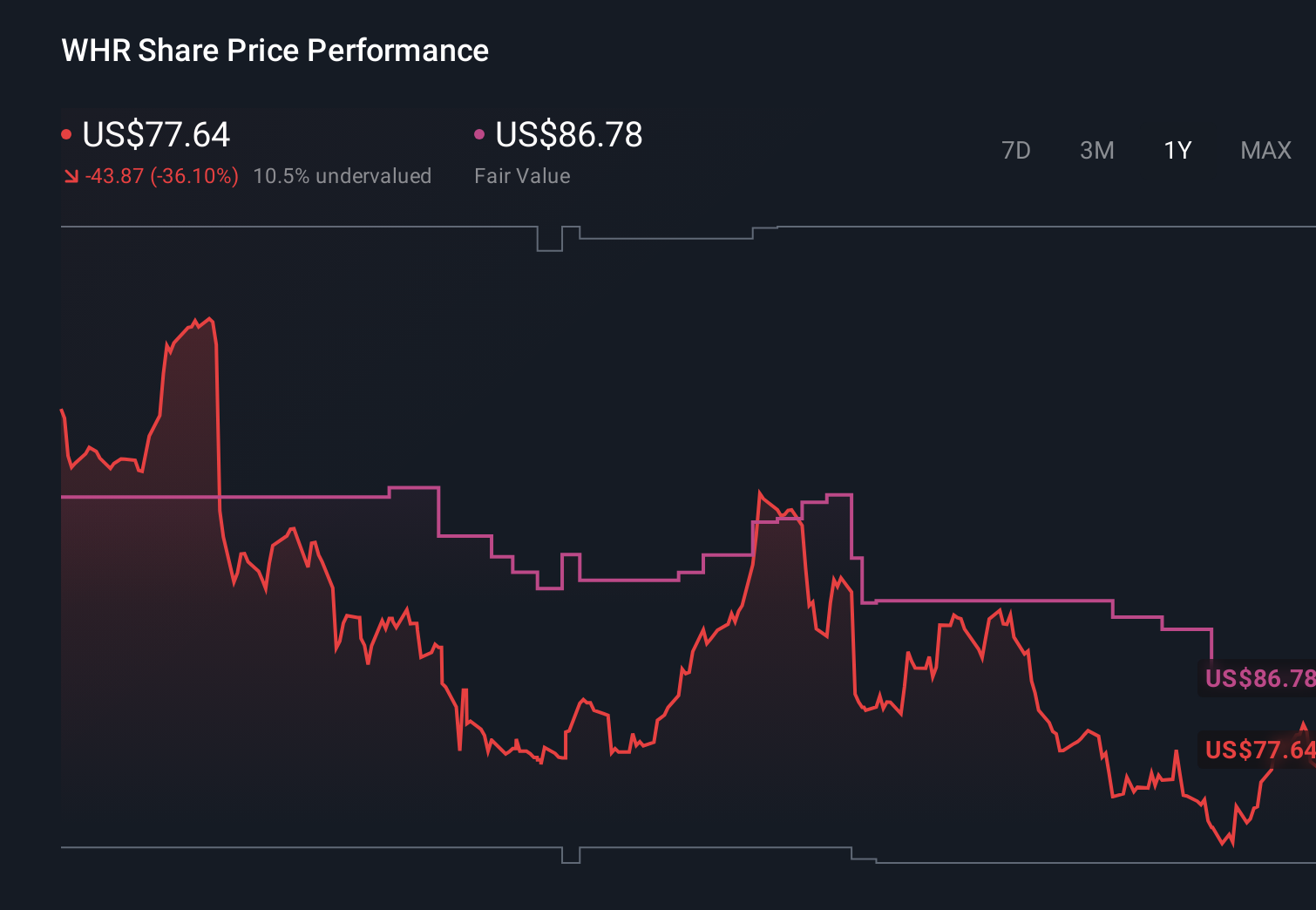
Before this shock, the most pessimistic analysts already assumed flat to slightly declining sales around US$15.7 billion and only gradual margin repair, so their risk case around higher costs, tougher regulation, and weaker demand now looms larger. Those low end forecasts show how differently you and other shareholders might view Whirlpool’s future earnings power, and why it is worth exploring several competing narratives rather than relying on a single outlook.
Explore 3 other fair value estimates on Whirlpool - why the stock might be worth just $68.73!
Form Your Own Verdict
Disagree with existing narratives? Extraordinary investment returns rarely come from following the herd, so go with your instincts.
- A great starting point for your Whirlpool research is our analysis highlighting 3 key rewards and 4 important warning signs that could impact your investment decision.
- Our free Whirlpool research report provides a comprehensive fundamental analysis summarized in a single visual - the Snowflake - making it easy to evaluate Whirlpool's overall financial health at a glance.
Looking For Alternative Opportunities?
The market won't wait. These fast-moving stocks are hot now. Grab the list before they run:
- We've uncovered the 12 dividend fortresses yielding 5%+ that don't just survive market storms, but thrive in them.
- Outshine the giants: these 16 early-stage AI stocks could fund your retirement.
- Invest in the nuclear renaissance through our list of 91 elite nuclear energy infrastructure plays powering the global AI revolution.
This article by Simply Wall St is general in nature. We provide commentary based on historical data and analyst forecasts only using an unbiased methodology and our articles are not intended to be financial advice. It does not constitute a recommendation to buy or sell any stock, and does not take account of your objectives, or your financial situation. We aim to bring you long-term focused analysis driven by fundamental data. Note that our analysis may not factor in the latest price-sensitive company announcements or qualitative material. Simply Wall St has no position in any stocks mentioned.