

Pre-Market Options Trading Guidance
Introduction to Pre-Market Options Trading:
Pre-market options trading is an independent trading session outside of regular trading hours. Currently, pre-market trading services are only available for highly liquid options. It’s important to note that this service is provided by a third party, which means there are more restrictions, so investors should be aware of the associated risks.
Pre-Market Options Trading Hours:
Eastern Time (ET): Monday to Friday, 4:00 AM – 9:30 AM
| Time zone | Session | Full Day | Half Day | |
| Eastern Time | Regular Trading (RTH) | 09:30 - 16:00 | 09:30 - 13:00 | |
| Pre-Market + RTH | 04:00 - 16:00 | 04:00 - 13:00 | ||
| KSA Time | Daylight Saving Time | Regular Trading (RTH) | 16:30 - 23:00 | 16:30 - 20:00 |
| Pre-Market + RTH | 11:00 - 23:00 | 11:00 - 20:00 | ||
| Standard Time | Regular Trading (RTH) | 17:30 - 00:00 (+1) | 17:30 - 21:00 | |
| Pre-Market + RTH | 12:00 - 00:00 (+1) | 12:00 - 21:00 | ||
How to Identify Options Available for Pre-Market Trading on Sahm:
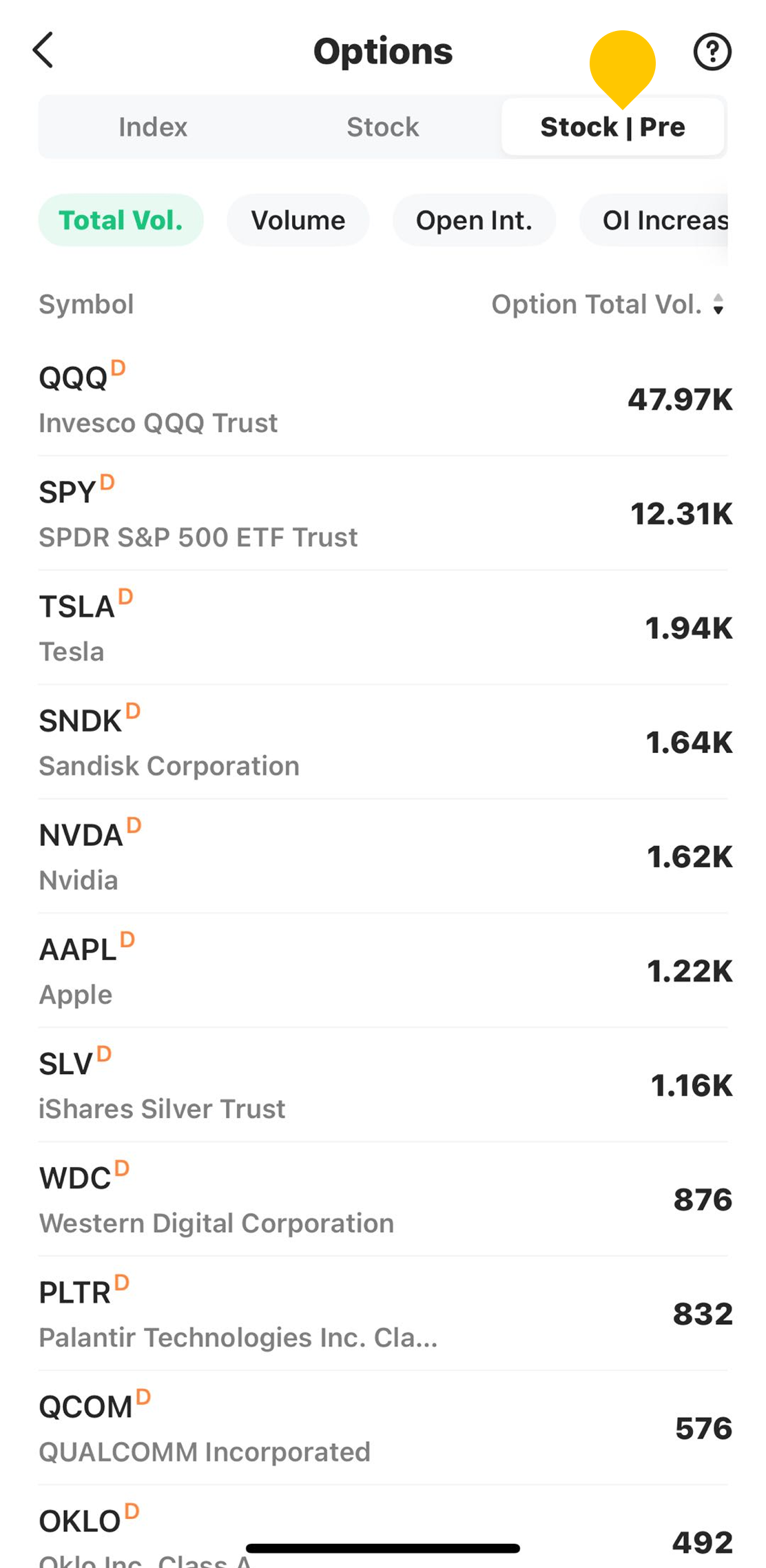
Step 1:
Navigate to the "Stock | Pre" page.
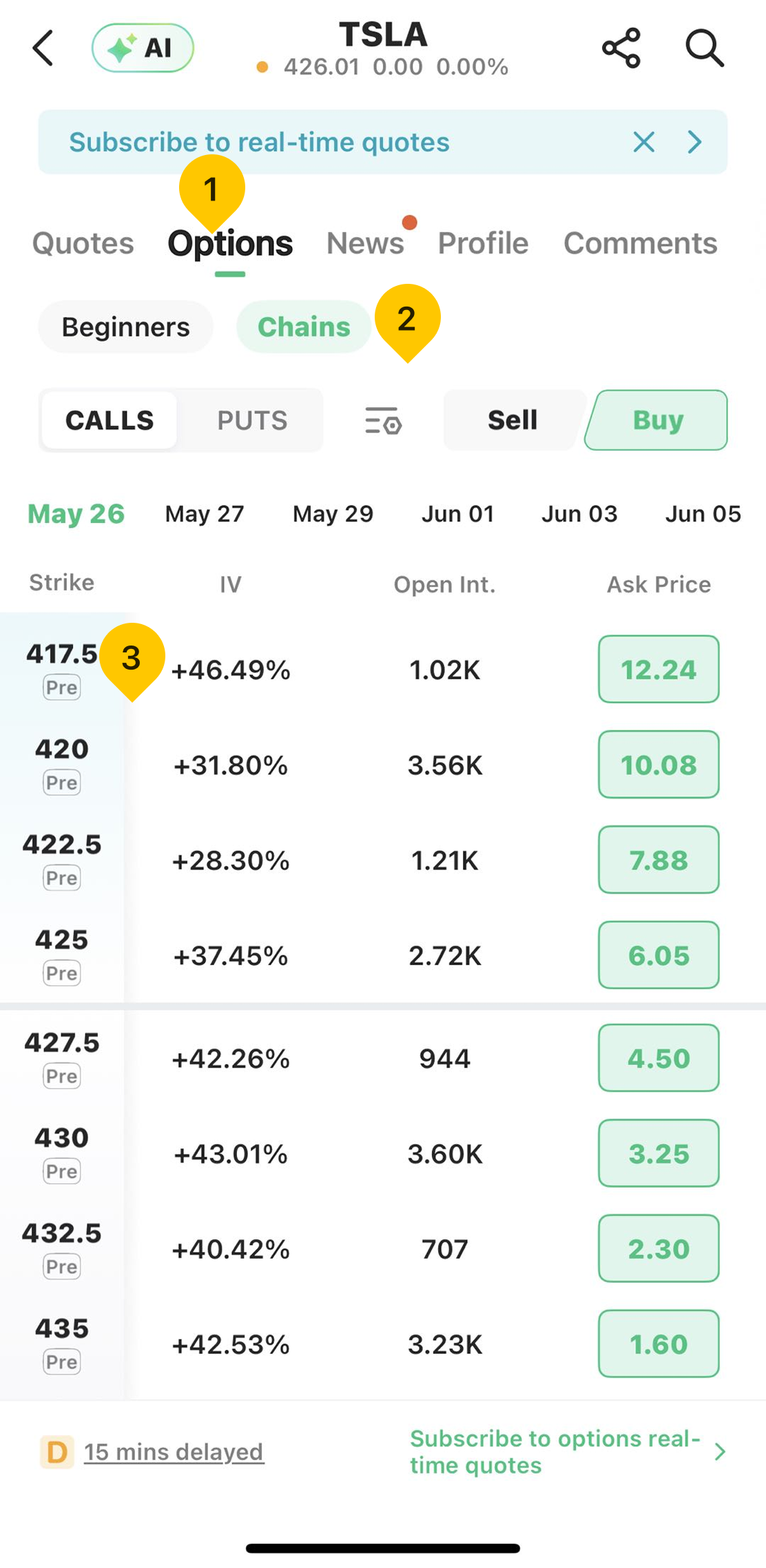
Step 2:
Go to the individual stock page, click "Options" > "Chains", and select options marked with the "Pre" label for pre-market trading.
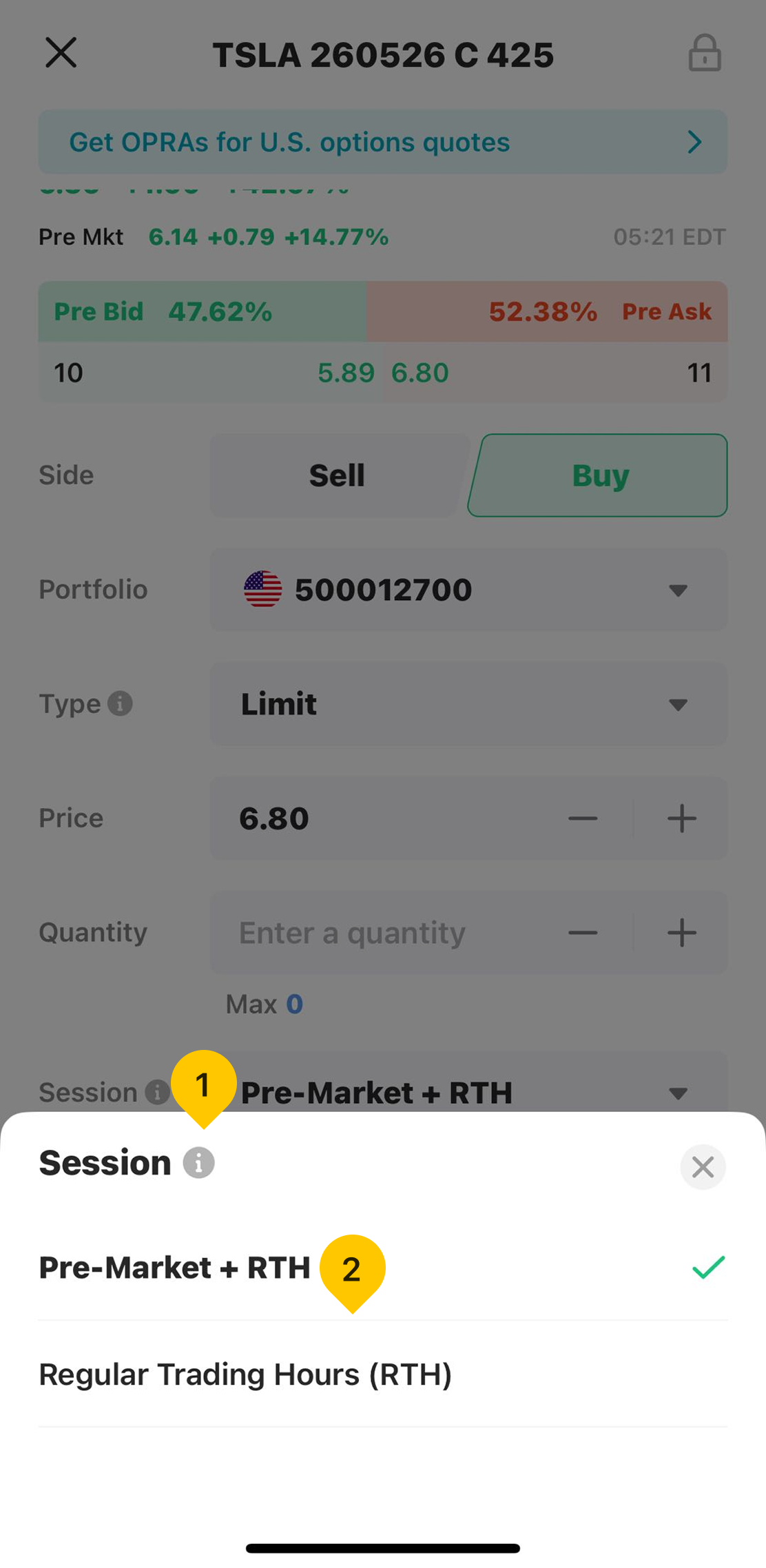
Step 3:
On the order placement page, select "Session" as "Pre-Market + RTH" to enable pre-market options trading.
Advantages of Pre-Market Trading:
1. Faster Response to Major Market News:
Earnings reports, guidance updates, macroeconomic data, and other significant announcements are often released before the regular trading session begins. Pre-market options trading can help investors to react more quickly to this information and adjust their trading strategies or positions ahead of the official market open.
2. Opportunities to Capture Pre-Market Volatility:
Influenced by overnight news, market sentiment, and performance in overseas markets, the prices of underlying assets may experience significant fluctuations during the pre-market session. Pre-market options trading gives investors the chance to participate in these price movements earlier.
3. Enhanced Flexibility in Trading and Risk Management:
For investors holding related stock or options positions, pre-market options trading provides an opportunity to hedge, reduce exposure, or adjust positions before the regular market opens, enabling more timely risk management.
Risks of Pre-Market Options Trading:
1. Unexecuted Orders May Be Canceled:
If pre-market options orders are not fully executed during the pre-market session, the unexecuted portion will be canceled.
2. Daily Adjustments to Tradable Options:
Options eligible for pre-market trading may change daily. If an option ordered the previous day is no longer eligible for pre-market trading, orders with "Session=Pre-Market + RTH" will be rejected.
3. Execution Is Not Guaranteed:
Pre-market trading orders are not guaranteed to be executed. If an execution is canceled, Sahm will notify investors.
4. Lower Liquidity:
Market participants during the pre-market session are typically fewer than during regular trading hours. As a result, the number of contracts available and trading activity may be lower, making it harder to execute orders or achieve favorable prices.
5. Wider Bid-Ask Spreads:
Due to limited market depth, bid-ask spreads in pre-market options trading are often wider than during regular trading hours, increasing transaction costs.
6. Higher Price Volatility:
The pre-market session is often accompanied by the release of significant news. In a less liquid environment, options prices may experience more dramatic fluctuations. Given the leveraged nature of options, such volatility can amplify the impact on position profitability.
7. Temporary Pricing Discrepancies:
In the pre-market trading environment, temporary mismatches may occur between the underlying price, implied volatility, and options quotes. This can expose investors to higher pricing deviations and execution risks.
Strategies for Pre-Market Options Trading:
Earnings Event Strategy:
Applicable Scenarios:
Earnings releases, guidance updates, and other significant pre-market announcements.
Strategy:
1. Before Earnings Release:
Assess whether the company’s performance is likely to exceed or fall short of expectations and evaluate the potential reaction of the stock price. Also, monitor implied volatility levels to determine whether the options prices already reflect expected volatility.
2. After Earnings Release (Pre-Market Session):
- If results exceed expectations: Consider establishing bullish positions, reducing existing hedges, or taking profits on existing positions.
- If results fall short of expectations: Consider reducing risk exposure, adding protective positions, or waiting until the regular trading session to make further adjustments based on market stability.
Risk Control:
Options prices are influenced not only by changes in the underlying price but also by changes in implied volatility. Therefore, position sizes should be controlled, and exit plans should be set in advance to avoid significant losses caused by event-driven price volatility.
Trend Continuation / Reversal Strategy:
Applicable Scenarios:
The underlying asset has shown a clear trend during regular trading hours, which may either continue or reverse in the pre-market session.
Strategy:
1. Trend Continuation:
If the underlying asset experienced significant upward or downward movement during regular trading hours and pre-market news supports the original direction, investors may consider participating using call or put options. Due to weaker liquidity in the pre-market session, smaller position sizes and pre-set stop-loss/take-profit levels are preferable.
2. Trend Reversal:
If pre-market news contradicts the previous trading day’s trend (e.g., regulatory changes, lawsuits, or negative company news), investors may consider reducing directional exposure, taking partial profits, or using options to hedge against potential reversal risks.
Volatility Trading Strategy:
Applicable Scenarios:
Significant price volatility, wider bid-ask spreads, and unclear direction during the pre-market session.
Strategy:
When the underlying asset experiences rapid upward movement followed by a pullback, or rapid downward movement followed by a rebound, option prices may fluctuate due to both underlying price changes and implied volatility shifts. In such cases, consider:
- Using smaller position sizes and building or reducing positions in stages.
- Using limit orders to reduce the risk of unfavorable execution due to wide spreads.
- Avoiding chasing trades when quotes are unstable or spreads are significantly widened.
This strategy is suitable for capturing short-term volatility opportunities but requires strict trading discipline and execution.
Hedging and Risk Management Strategy:
Applicable Scenarios:
Investors who already hold stock or options positions and wish to manage event risks during the pre-market session.
Strategy:
When significant macroeconomic data, geopolitical events, industry-specific negatives, or company announcements occur during the pre-market session, investors can use pre-market options trading to adjust risk exposure earlier. For example:
- Reducing existing stock or options positions.
- Adding protective put options for hedging purposes.
- Partially closing positions to lower directional risk before the regular trading session opens.
This strategy is primarily used to respond to sudden market shocks and enhance portfolio risk management flexibility.