

Apple Earnings Preview: Four Key Things to Watch and Three Strategies to Consider
Apple Inc. AAPL | 0.00 | |
Direxion Daily AAPL Bull 2X Shares AAPU | 0.00 | |
Direxion Shares ETF Trust Direxion Daily AAPL Bear 1X Shares AAPD | 0.00 | |
Leverage Shares 2X Long AAPL Daily ETF AAPE | 0.00 | |
GraniteShares ETF Trust GraniteShares 2x Long AAPL Daily ETF AAPB | 0.00 |
Apple Inc.(AAPL.US) is scheduled to report its fiscal Q3 2026 earnings after the market close on July 30 ET, with Wall Street expecting revenue of $108.95 billion, up 15.8% year over year, and net income of $27.7 billion, up 18.2%. While resilient iPhone demand and enthusiasm around Apple’s AI roadmap have supported the stock, expectations appear elevated.
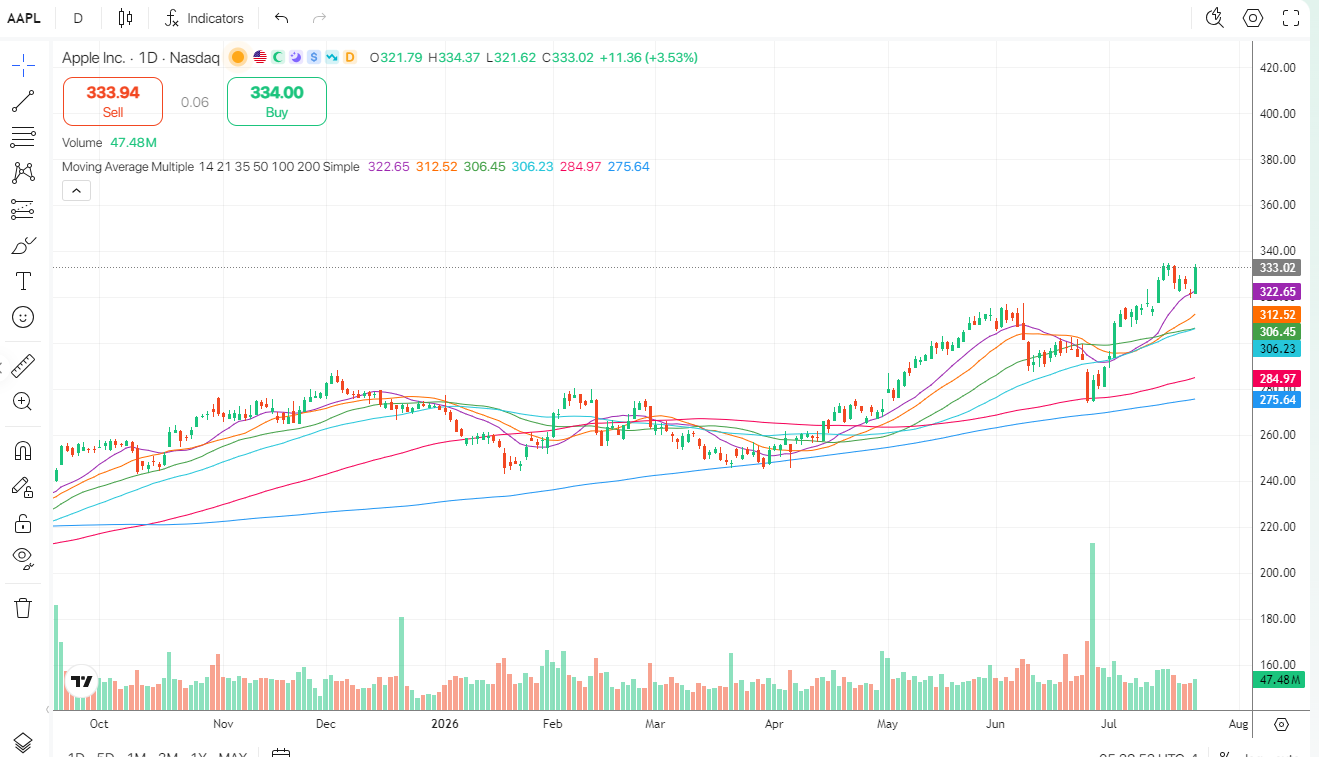
Trading near $333 at roughly 36 times forward earnings, Apple may have already priced in a strong quarter, resilient pricing power, and the benefits of a relatively capex-light AI strategy. That leaves the stock vulnerable to a “sell-the-news” reaction if gross margins disappoint or if Services growth continues to slow.
The Fundamental Setup: Four Key Variables to Watch
Market participants are balancing optimism with caution across four key areas:
- iPhone Demand: Expected to hit ~$53 billion (aided by channel restocking), but needs to firmly beat $54 billion to trigger upward revisions.
- Margin Pressures: Q3 gross margin guidance dipped to 47.5%–48.5% as rising AI-driven memory chip costs pressure hardware profitability.
- Services Deceleration: Some third-party data suggests App Store growth may be slowing.
- AI Monetization: The market is demanding concrete timelines and revenue models for "Apple Intelligence," moving past the honeymoon phase of Apple's "capex-light" AI narrative.
If margins guide lower or Services miss, the stock is highly vulnerable to a "sell-the-news" pullback.

The Options Market: Elevated Volatility and Vega Risk
With the stock in overbought territory, the real action is in the options market. Pricing implies a post-earnings move of ±4.1% ($319–$347 range)—substantially higher than Apple's 2.5% historical average.
Crucially, Implied Volatility (IV) is exceptionally high. The current IV Rank sits at 74 (86th percentile), making option premiums historically expensive. For outright buyers of calls or puts, this presents a severe "Vega risk": even if the stock moves favorably, a post-earnings volatility crush could wipe out the premium value.
Consequently, options flow is signaling a "cautiously bullish" stance, favoring premium-collection and protective structures. Three strategies investors may consider in a high-IV environment
1. Cash-Secured Puts: Acquiring Shares at a Discount
- The Logic: With premiums at historic highs, selling out-of-the-money (OTM) puts allows traders to harvest rich yields while expressing a willingness to buy the stock on a dip.
- The Play: This strategy involves a commitment to buy Apple shares at a chosen strike price below the current market value. If the stock remains above the strike, the option seller retains 100% of the hefty premium. If the stock drops and the put is assigned, the shares are effectively acquired at a steep discount (Strike Price minus the Premium Received).
However, if the stock falls sharply, the investor may still face substantial losses despite the premium received.
2. Covered Calls: "Collecting Rent" at the Top
- The Logic: Apple’s recent run has pushed technical indicators into overbought territory, hugging its 52-week high (~$334.55) and approaching the upper Bollinger Band (~$345.55). The stock is primed for consolidation.
- The Play: Investors holding the underlying stock can sell OTM calls near resistance levels. This strategy capitalizes on the inflated IV, generating extra income ("collecting rent") to enhance returns during a sideways chop or a mild correction, without liquidating the core position.
The strategy caps upside if Apple rallies sharply after earnings.
3. The Collar: Hedging Downside Risks
- The Logic: For investors sitting on significant gains but wary of a potential post-earnings plunge—perhaps triggered by weak margin guidance or a Services slowdown—a Collar offers a cost-effective safety net.
- The Play: This involves holding the underlying stock, selling an OTM call, and using that rich premium to finance the purchase of an OTM put. If the stock trades flat or slightly higher, time decay works in favor of the short call. If earnings trigger a gap-down, the put caps the downside risk, severely limiting losses while sacrificing some upside potential.
It reduces downside but also limits participation in a major upside surprise.
(Disclaimer: Options trading involves significant risk and is not suitable for all investors.)