

Bill Tai: The Kiteboarding VC With No Office, Who Funded Zoom, Twitter, Canva, And Bought Bitcoin Early. Here's How He Spots Winners Now
HUT 8 HUT | 0.00 |
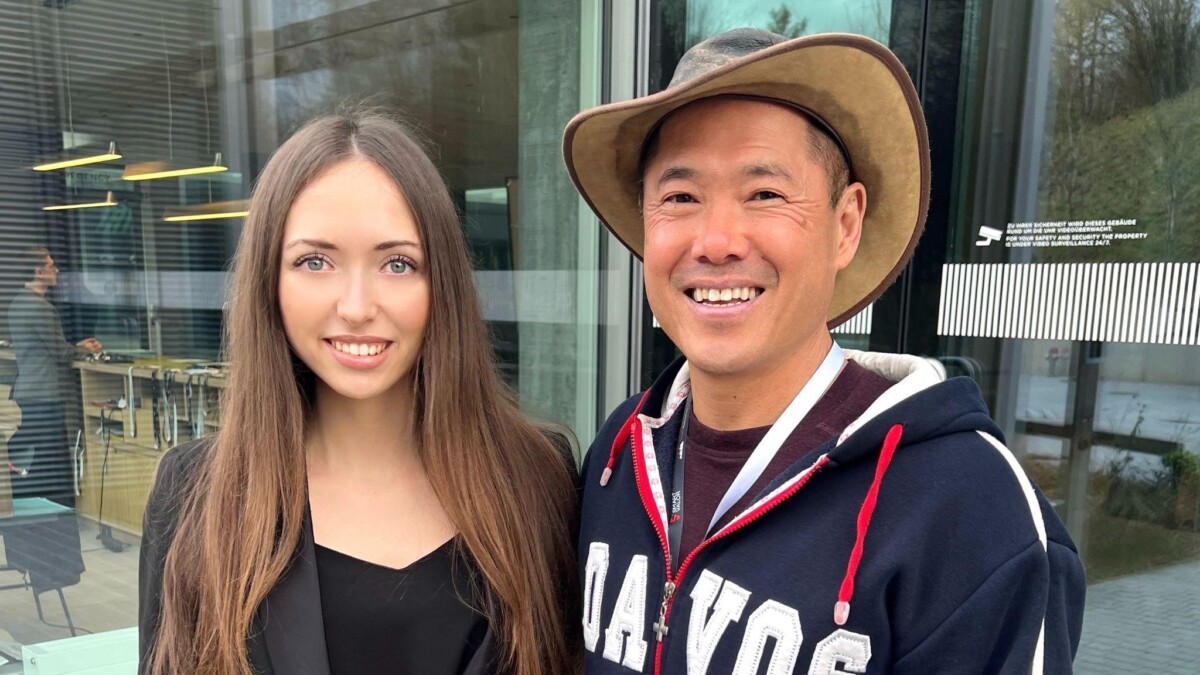
Credit: Anna Tutova (Founder AI Crypto Minds) with Bill Tai, legendary angel investor.
I had a chance to meet with Bill Tai, a legendary venture capital investor known for his investments in numerous successful companies, including Canva, Zoom, Dapper Labs and Twitter, with 23 of them going public. Additionally, he is Co-founder & Chairman Treasure Data and IPinfusion, Chairman Hut8Corp (NASDAQ:HUT), the third-largest bitcoin miner by stockpiled BTC.
The world is a metaverse on Zoom.
– Bill Tai, Legendary angel investor
Bill shares insights into his background, starting with his early days as an electrical and computer engineering specialist in Silicon Valley during its formative stages. He discusses his journey from investing in silicon-related companies to becoming a venture capitalist and his involvement in various waves of technology, including computer hardware, networking, and the internet. Bill also delves into his entry into the crypto and blockchain space, sharing his encounter with Bitcoin’s whitepaper and how he became an early believer in the technology. He further talks about his recent investments, with a focus on NFTs and projects supporting various social causes. Bill shares his perspectives on the future of crypto markets, the rise of decentralized social media, and the changing landscape of technological innovation beyond Silicon Valley.
Anna Tutova: Can you tell us about your background? How did you get involved in investing and as well, how did you get involved in the crypto and blockchain space?
Bill Tai: I was originally trained in electrical and computer engineering and was trained to design computer chips initially. I came out to Silicon Valley in the eighties, I was just lucky to be kind of there at the formative stages of the basic technology that would underpin everything else.
And I ended up entering silicon related companies, both of them ended up going public. I ended up becoming a venture capitalist in 1991.
I then took a few years off, started kiteboarding a lot. But when Web 2 started, I came back into the investing game. And in the middle of all that, in 1999, a friend of mine who was then CTO of Real Philip Rosedale networks told me he wanted to take Neil Stevenson’s science fiction novel Snow Crash and build it in real life.
Anna: That was the first prototype of Metaverse?
Bill: He built Second Life. It was one of the main real physics-based motion metaverse. Philip introduced in it the Linden dollar. So, it was a digital currency in 2003.
So, when Bitcoin came out, I had already done a little bit of work on peer-to-peer networks, and I somehow stumbled across the White Paper on Thanksgiving weekend of 2010. I think I tweeted: «Is anyone else using this peer P2P currency, Bitcoin?», and it was like shouting into an empty room. There were no replies. There were literally no replies or likes, how could this be? This is so cool, but nobody cares.
But that led me on this journey to really understand and implement some of this stuff. And I ended up running into some of the people that would go on to found a company called Bitfury, which became a substantial portion of Bitcoin blockchain rewards at that time. And I was on board of it.
Anna: Was it more like an experiment and have they been believing in this technology from the beginning?
Bill: I had experimented with peer-to-peer networks in 1999-2000 to do some video content distribution. I believed in the underlying technology. I also believed in the digitization of currency from the Linden Dollar days at Second Life, the peer-to-peer underlying indelible accounting. The ability to have a currency that was not controlled by a single government was interesting. I did believe in the principles.
Anna: And can you share some of your recent investments? How actively do you invest?
Bill: I was the first investor in Zoom video and helped catalyze what became Canva. CNBC has this list every year of the 50 top disruptors disruptive private companies. Of that 50 in the top ten I’m the backer of three: Lineage logistics(No. 9 in 2023), Canva(No. 5), Dapper Labs(No. 9 in 2022). With the last there is crypto representation in the top ten most disruptive companies per CNBC.
I’m a co-founder of two NFT projects that have some traction. One is called Metagood and another one is OnChainMonkey. MetaGood is a catalyst for collective action by communities that are interested in supporting different things that have actually originated with my investment in Dapper Labs. When I funded them, I could see the power of marketplaces around CryptoKitties, and I asked Dapper Labs to create for me a special edition crypto kitty that I could auction off to support an ocean charity. So, they created Honu Kitty for me, and I launched it at one of my Blockchain summits that I was doing and still do with Sir Richard Branson on his island, Necker BlockchainSummit.org. Ultimately it was sold for about 50,000 USD. It was the first ever NFT for Ocean Charity.
In 2021 I put together Danny Yang, who used to run the Stanford Bitcoin Meetup groups in 2013, and Amanda Terry, who was a Twitter X NBC type person, to create Meta Good. The companies created an OnChainMonkey NFT collection, which is also the first ever fully on-chain collection all in one transaction.
Anna: What are your thoughts on decentralized social media, as you are an early investor in Twitter?
The soil is ripe for the planting of those kinds of seeds to create more decentralized versions where you, as the individual, have a little bit more sovereign identity, a little bit more control over your own data set, and can steer the marketing of that data on an opt in basis and possibly actually get rewarded for your own participation in that.
Anna: You’re from Silicon Valley and I guess you mostly invest into companies as well based in Silicon Valley. Silicon Valley has been always considered the capital of technological innovations, but now there are different centers of innovation, it shifts as well. Beats a lot of people still complain about the quality of life now in Silicon Valley, in San Francisco, and so on. Do you see any other centers of innovation emerging?
Bill: You know, technology is truly becoming decentralized in a way. I think most of the good that advanced development comes from economically advanced countries. But I think it’s no longer innovative. As we’ve gone to the expression layer on the UI, it started to expand everywhere and data science started to span everywhere.
Anna: And you as well mentioned that currently you don’t have any managers, assistants. You manage everything on your own. What’s your usual day schedule? What you’re interested in, focused on? Where do you find the companies you invest into and how do you select whether to invest or not?
Bill: I’d say my life completely changed about ten years ago, when Eric Yuan, who ended up founding Zoom. asked me to fund him and I said yes on the spot.
When Zoom was born, I had this network of my friends around the world, who are techies, and we use it to communicate. It’s an odd story, but companies like Canva(the last valuation – $42 billion). I literally met Melanie when she was a young 20 something woman making essentially high school yearbooks out of her living room. And now she’s running this company that’s over $3B in revenue. And it’s been profitable for years. So how does that happen out of a little town like Perth that’s literally on the other side of the planet? Because I went there on a kiteboard trip.
So, a lot of my network is this group of technical people. There were some very prominent technical people like Sergey Brin and Larry Page that learned to kite board before Google went public. So, whether it’s Elon Musk or Drew Houston who started Dropbox, or Jamie Siminoff that started Ring, or Melanie that started Canva, or Eric that started Zoom, they’ve all been involved somehow in my kiteboarding community at one time or another.
And so, I find a lot of my companies through just my personal network. And I think because I’ve been able to effectively live on Zoom, I’ve had a competitive advantage.
I think there’s a certain construct for starting building and operating a group of people that are not in the same place, and you can still get a lot done. I think it’s a different operating style that is available to people today because the world is a metaverse on Zoom.
Benzinga Disclaimer: This article is from an unpaid external contributor. It does not represent Benzinga’s reporting and has not been edited for content or accuracy.