

EU's E6 Power Bloc: Two-Speed Europe Accelerates In US-China Race
ING Groep N.V. Sponsored ADR ING | 0.00 |
Europe's leaders have considered "two-speed" integration—where select member states advance faster on key issues—to break deadlocks on competitiveness and security.
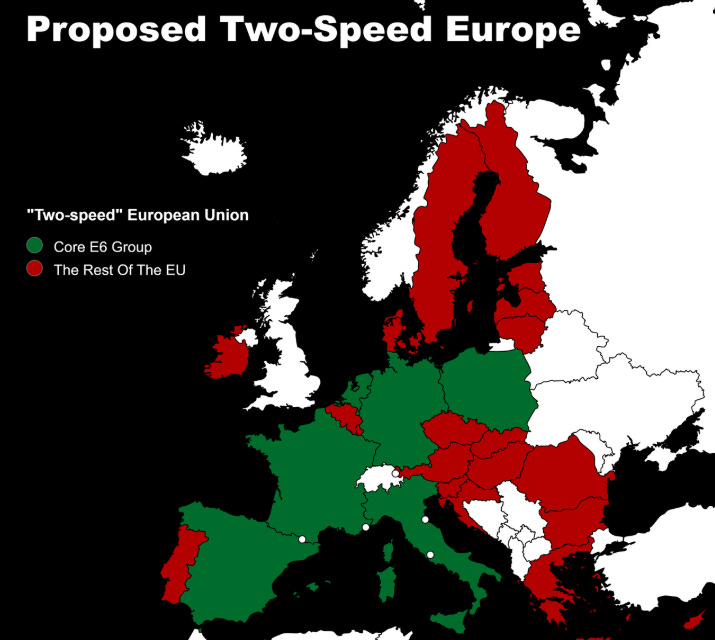
The debate intensified in early 2026 with the launch of the so-called E6 grouping of Europe's largest economies. It is an informal coalition of the EU's six largest economies designed to accelerate decision‑making where unanimity has repeatedly failed.
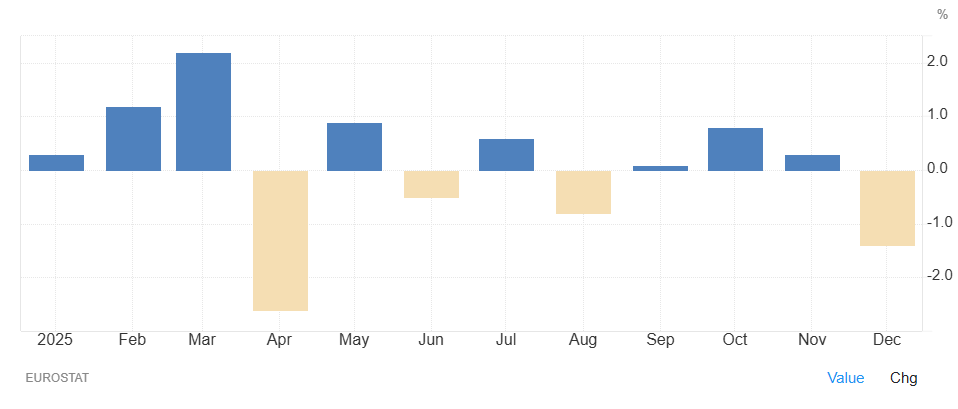
European Union (EU) leaders increasingly argue that unanimity among the bloc's 27 members is preventing the reforms needed to compete with the US and China. The bloc’s economy struggled last year. Industrial production grew just 1.2% year‑on‑year in December, and slow tech adoption held GDP to 1.3% in the final quarter of 2025.
The Transatlantic Task Force at Beyond the Horizon, a Belgian think tank, called the shift a "hard‑nosed admission of reality." European Commission President Ursula von der Leyen has echoed this view. She has urged member states to use the Treaties' enhanced‑cooperation mechanisms more aggressively to unlock stalled reforms.
Russia's war in Ukraine, doubts about US security guarantees, and defense spending ambitions pushed the EU toward a two‑speed approach.
Can a Two-Speed Address Systemic Challenges?
It is unclear whether a two-speed EU will help address the bloc's systemic economic and security handicaps.
Underscoring this, Hungary's Foreign Minister Péter Szijjártó said on Tuesday that Budapest will oppose the EU's 20th package for Ukraine. He stated his country’s position after Kyiv halted oil deliveries to Hungary.
"I can say it 100 times," Szijjártó said. "Hungary will not agree…because Ukraine decided not to restore oil deliveries." He warned that blocking supplies directly threatens Hungary's energy security — calling it a matter of national sovereignty.
Carsten Brzeski and Bert Colijn, economists at ING (NYSE:ING), wrote that national interests have often trumped EU-wide ambitions.
"Europe has never really suffered from a lack of plans or grand vision," they said. "The real obstacle has almost always been weak implementation and national interests taking precedence over European ones."
EU's Biggest Players Take Initiative
Germany and France launched the E6 to accelerate reforms that had stalled under unanimity rules. This will give the bloc's largest economies a vehicle to move ahead where consensus had broken down.
The E6 seeks to deepen the bloc’s capital markets union, improve coordination of defense-related investments, and secure reliable access to critical raw materials.
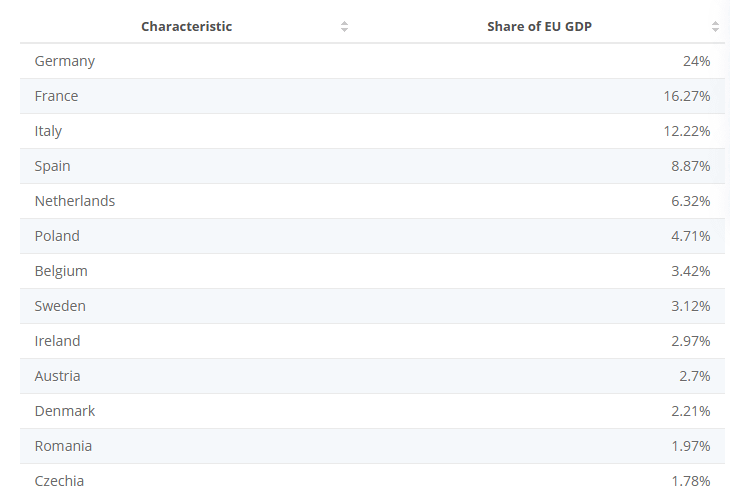
In January, the finance ministers of Germany, France, Italy, the Netherlands, Poland, and Spain met to drive "decisive action and swift progress." Together, the six states represent roughly 72% of the EU's total gross domestic product.
The next E6 meeting will be held during the EU finance ministers on March 9–10 in Brussels, Euractiv reported. The group will focus on defense and the international role of the euro during its third meeting.
"The E6's success will depend on whether it produces actual decisions rather than more meetings," Samuel Dempsey, a Brussels-based analyst specializing in European defense and competitiveness, wrote on February 7. "If the E6 delivers…it could become the template for how Europe navigates an era where global threats move faster than consensus allows."
E6 Will Support EU Startups
Europe must become "stronger and more resilient" in a volatile geopolitical environment, German Finance Minister Lars Klingbeil said. "Faster progress is needed to improve financing conditions for European firms and start-ups, and to embed defense as a driver of economic growth."
Danish Prime Minister Mette Frederiksen admitted she would have rejected such an idea "five or ten years ago." She now supports it, arguing some governments block "what is right for Europe."
Venture capital has remained a persistent structural gap. US VC deal value reached $170–$180 billion in 2023, according to Pitchbook and the National Venture Capital Association. That compared with €48 billion in Europe.
Even in Europe's strongest years, the US market has been roughly 3–4 times larger.
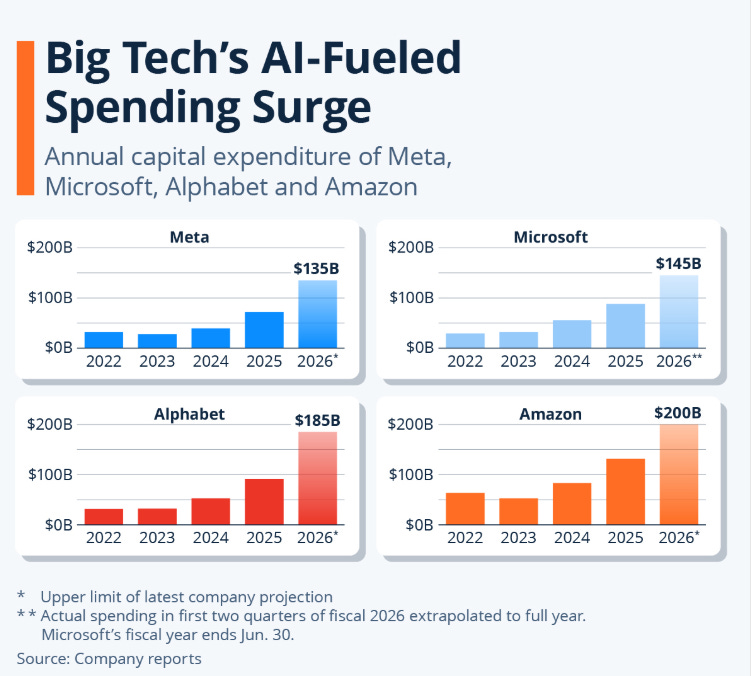
The capital expenditure gap between US tech hyperscalers and Europe is widening sharply. Alphabet, Microsoft, Meta, and Amazon alone are projected to spend nearly $700 billion on AI‑related infrastructure in 2026. End-user spending on AI-optimized servers in Europe is projected at $46.8 billion in 2026.
Ireland Pushes Back Against E6
A two-speed approach could deepen divisions within the bloc's single market architecture. Smaller states have expressed concern that the biggest nations will sideline smaller countries that disagree with the E6's agenda.
Irish Finance Minister Simon Harris, on February 16, argued against the formation of the E6.
"I am conscious, and I say this very respectfully, that a lot of the countries in that E6 will have different views on some fundamental issues," he said. "I would much rather see a structure where countries come together on issues where they share a common view rather than the entry to the club being based on your size exclusively."
Hungary, Slovakia, and Czechia have opted out of the EU's €90 billion Ukraine loan. This left them outside the enhanced‑cooperation framework, driving the package. Poland's prominent role in the E6 underscores that Eastern Europe is far from politically uniform.
EU Could Deploy Enhanced Cooperation
The Eurogroup president, Kyriakos Pierrakakis said that the E6 format is "potentially positive." It could "catalyze convergence" among the bloc's other member states, the Greek national said.
The E6 has precedent through the bloc's enhanced cooperation, a treaty-based mechanism that permits at least nine member states to advance policy initiatives within the EU framework. In December, EU leaders used it to approve a €90 billion Ukraine loan without the support of Hungary, Slovakia, and Czechia.
The EU could apply the two-speed approach to the Savings and Investment Union, rebranded from the stalled Capital Markets Union. The union aims to deepen the integration of European financial markets and mobilize savings into European strategic projects.
Von der Leyen said it could "unleash up to €470bn of investment." The union, though, is politically sensitive because it will impact pensions, retail investment rules, and national financial regulations.
EU Needs Progress on Economic Integration
A voluntary, EU‑level legal framework would create a single EU corporate framework alongside national systems. Companies or investors could opt into it instead of navigating 27 different national regimes, according to Zabala Innovation, a Spanish consultancy focused on R&D financing and strategy.
The objective is faster incorporation and fewer cross-border legal frictions. Companies could set up "within 48 hours" under the framework, Von der Leyen said. She presented it as a structural solution to Europe's scale-up gap. This would enable startups and innovative firms to operate across the single market.
French President Emmanuel Macron has called for merger-rule reform. This would help "great European champions" emerge by making it easier for startups to compete globally.
European Council President António Costa said he would "work to avoid" a two‑speed framework but noted that the Treaty of Lisbon provides tools such as enhanced cooperation when unanimity fails. Fabian Zuleeg, Chief Executive of the European Policy Centre, said the debate is often oversimplified: "The geography changes issue by issue. It is not two-tier. It is actually a multiple‑tier geography."
Disclaimer: Any opinions expressed in this article are not to be considered investment advice and are solely those of the authors. European Capital Insights is not responsible for any financial decisions made based on the contents of this article. Readers may use this article for information and educational purposes only.
Benzinga Disclaimer: This article is from an unpaid external contributor. It does not represent Benzinga’s reporting and has not been edited for content or accuracy.