

Google and Tesla Team Up to Drive a "Grid Utilization Revolution"; JPMorgan Urges to "Make the Grid Great Again" – How to Position Early for the Infrastructure Upgrade Wave?
Alphabet Inc. Class A GOOGL | 0.00 | |
Tesla Motors, Inc. TSLA | 0.00 | |
Carrier Global Corp. CARR | 0.00 | |
PG&E Corporation PCG | 0.00 | |
MasTec, Inc. MTZ | 0.00 |
Facing mounting electricity constraints, US tech giants are shifting their focus to maximizing the capacity of the existing power grid. On Tuesday, Alphabet Inc. Class A(GOOGL.US), Tesla Motors, Inc.(TSLA.US), Carrier Global Corp.(CARR.US), and four other power equipment and data center companies announced the formation of the "Utilize" coalition. The alliance aims to significantly enhance US grid efficiency, reduce power costs, and accommodate surging electricity demand.
The seven founding members cover the entire grid ecosystem: on the supply side, Tesla, Carrier Global, Span, Sparkfund, and Renew Home provide solutions ranging from battery storage and heat pumps to smart panels and distributed energy resources. On the demand side, Google and data center developer Verrus represent the massive power consumption required to sustain AI and server operations.
The move echoes growing concerns over power shortages voiced by tech leaders like Elon Musk, Jensen Huang, and OpenAI's Sam Altman. A recent JPMorgan research report underscores that underinvestment in the power grid has become a critical bottleneck, noting that over 2,500 GW of renewable energy, data center, and energy storage projects globally are waiting to connect to the grid. In response, JPMorgan has coined the thesis: "Make the Grid Great Again."
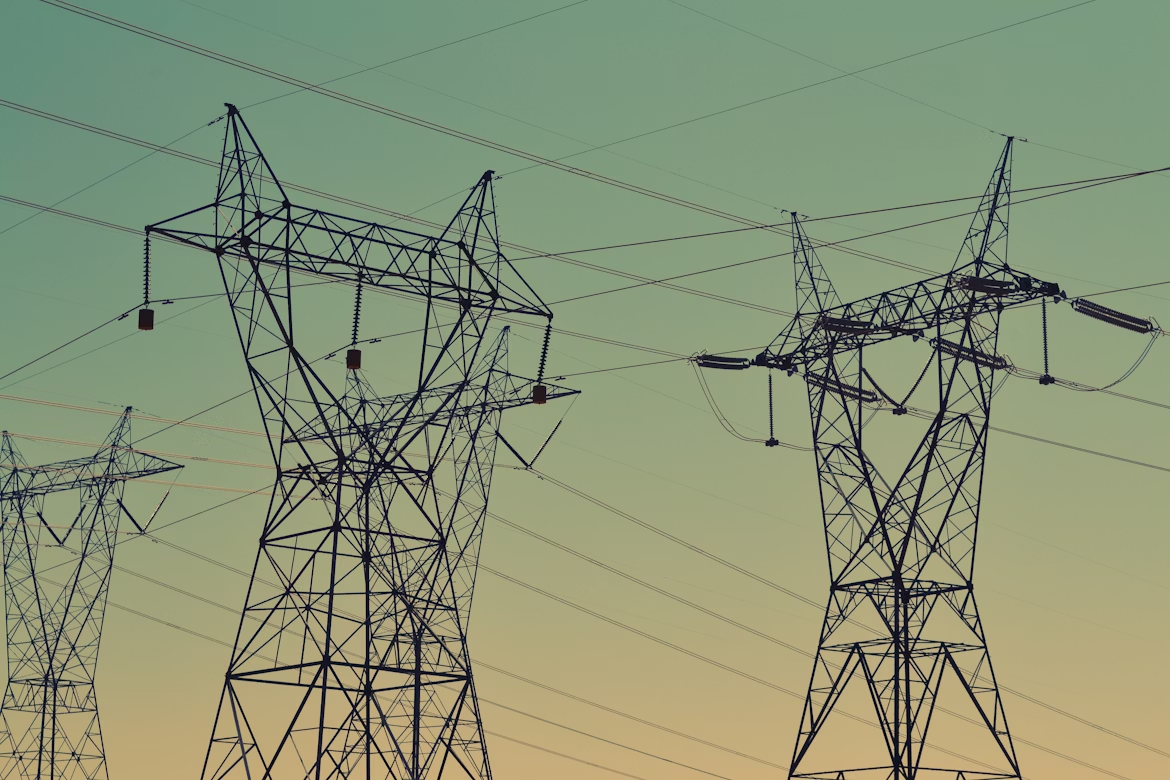
Why Grid Investment is a Prime Opportunity Now
JPMorgan identifies a massive investment opportunity driven by the rapid electrification of buildings, manufacturing, and transportation, alongside skyrocketing data center demand:
- Clear Growth Trajectory: Global grid investment is projected to reach $490 billion by 2025, with a 4% CAGR over the next five years. Smart grids are expected to grow at 9% CAGR, while energy storage systems (ESS) will surge by 20%.
- Breaking the Bottleneck: The massive backlog of projects waiting for grid interconnection (averaging a 5-year wait in the US and up to 10 years in parts of Europe) is hindering economic growth and the energy transition.
- Risk Mitigation & Security: Aging grids are vulnerable to cyberattacks and extreme weather. Upgrading grid resilience is foundational for both the energy transition and national security.
Where are the Investment Opportunities?
JPMorgan points out that opportunities span the entire value chain:
- Traditional Grid Assets: The largest market segment, making up 91% of total investment, covering essential "picks and shovels" like cables, transformers, and substations.
- Smart Grids & Cybersecurity: A rapidly growing segment expected to hit a 9% CAGR through 2030.
- Energy Storage Systems (ESS): The fastest-growing area, with an estimated 20% CAGR through 2030.
Based on this, JPMorgan selected 132 companies related to grid infrastructure (cables, transformers, equipment, etc.), smart grids, energy storage systems, and distributed and off-grid generation services, spanning the utilities, industrials, information technology, materials, and consumer sectors.
We have also selected US-listed companies with neutral and overweight ratings for investor reference:
Transmission & Distribution Systems, Grid Equipment and Infrastructure Engineering
- PG&E Corporation(PCG.US)
- MasTec, Inc.(MTZ.US)
- Quanta Services, Inc.(PWR.US)
- Xcel Energy Inc.(XEL.US)
- CMS Energy Corporation(CMS.US)
- Entergy Corporation(ETR.US)
- FirstEnergy Corp.(FE.US)
- Ameren Corporation(AEE.US)
- DTE Energy Company(DTE.US)
- Duke Energy Corporation(DUK.US)
- Edison International(EIX.US)
- Primoris Services Corporation(PRIM.US)
- Exelon Corporation(EXC.US)
- Emera Incorporated(EMA.US)
- GE Vernova Inc.(GEV.US)
- Valmont Industries, Inc.(VMI.US)
- NextEra Energy, Inc.(NEE.US)
- PPL Corporation(PPL.US)
- NiSource Inc(NI.US)
- Public Service Enterprise Group Inc(PEG.US)
- American Electric Power Company, Inc.(AEP.US)
- WEC Energy Group Inc(WEC.US)
- CenterPoint Energy, Inc.(CNP.US)
- Portland General Electric Company(POR.US)
- NorthWestern Energy Group, Inc.(NWE.US)
- ON Semiconductor Corporation(ON.US)
- Southern Company(SO.US)
Smart Grid
Energy Storage Systems
- Eos Energy Enterprises, Inc. Class A(EOSE.US)
- Fluence Energy, Inc. Class A(FLNC.US)
- Canadian Solar Inc.(CSIQ.US)
Distributed & Off-Grid Power Generation
Top Stock Pick: GE Vernova
JPMorgan analysts have given an "Overweight" rating to GE Vernova Inc.(GEV.US), adding it to their "Analyst Focus List." The bullish stance is based on:
- Core Electrification Asset: GEV is viewed as a scarce, long-term core holding for investors targeting the electrification trend, with a strong US market focus.
- AI-Driven Catalyst: Surging electricity demand tied to AI and increasing grid loads act as near-term catalysts for order growth and positive earnings revisions.
- Market Leadership & Margins: As a leader in the US gas turbine market, GEV's massive installed base promises higher profit margins and significant backlog expansion.
Conclusion
As the AI race enters its second half, it is fundamentally transforming into a battle for "power and infrastructure." Capitalizing on the "Make the Grid Great Again" mega-trend is now a crucial strategy for investors looking to ride the next wave of the AI infrastructure boom.