

Great Traders Don’t Just Win Big—Michael Platt’s Philosophy Focuses on 'Keeping Losses Near Zero'
PowerShares QQQ Trust,Series 1 QQQ | 0.00 | |
SAUDI ARAMCO 2222.SA | 0.00 | |
ACWA 2082.SA | 0.00 | |
MIS 7200.SA | 0.00 | |
Tesla Motors, Inc. TSLA | 0.00 |
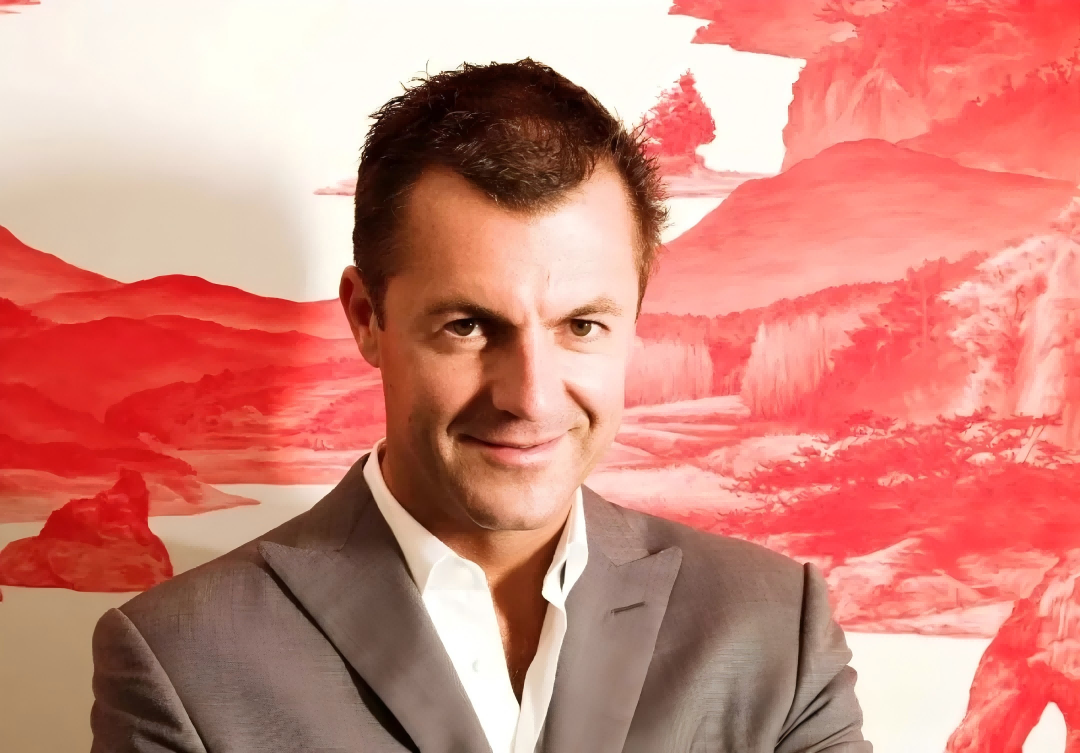
Tonight, let's delve into the world of Michael Platt, a hedge fund trading master who has perfected the art of "risk control." If you're in the trading business, this article offers invaluable insights.
Platt, a British national, founded and manages the hedge fund BlueCrest Capital Management. At one point, BlueCrest allowed retail investors to participate through an investment trust, but this arrangement was closed a few years ago.
From Aspiring Trader at Age 12 to BlueCrest Leader
Platt decided at the age of 12 that he wanted to become a trader, starting his journey at 13 with guidance from his grandmother, a long-term stock investor. During the privatization wave in the UK, his strategy was simple: buy newly listed stocks, sell after a slight rise. He made £20,000 to £30,000 as a teenager.
However, the 1987 "Black Monday" halved his account, and he sold at the lowest point. Interestingly, this was his only significant loss in his career.
After studying at the London School of Economics, Platt joined J.P. Morgan as a fixed-income derivatives trader for eight years. In 2000, he left to co-found BlueCrest with William Reeves. By the time Jack Schwager interviewed him in 2011, BlueCrest managed nearly $30 billion.
Core Belief: Static Systems Inevitably Fail
Platt's philosophy is worth contemplating: "If you use a fixed system continuously, it will eventually fail." Half of BlueCrest's funds are managed by Platt using subjective trading strategies; the other half follows trend strategies led by Leda Braga, known as the "Queen of Hedge Funds," who founded Systematica Investments in 2015.
His strategies are dynamic, not static. While his returns aren't the highest, his ability to limit drawdowns is exceptional.
The subjective trading fund he manages boasts a 14% annual compound return. Even during the 2008 financial crisis, the maximum drawdown was only 5%. Schwager calculated a "Gain to Pain" ratio of 5.6. The trend-following fund has a net annualized return of 16% with a maximum drawdown under 13%.
This isn't a story of making vast sums of money—it's about hardly losing any.
How Does He Approach Trading?
Platt's insights hit the mark:
- "I have zero tolerance for trading losses. I hate losing money. The real danger isn't the loss itself, but its impact on your mental state."
- "I start with a macro view, then find 20 ways to express the trade. The key is: which offers the best risk-reward ratio?"
- "80% of profits come from 20% of ideas. You must have ammunition ready when big opportunities arise."
- "If I feel uncomfortable immediately after entering a trade, I exit."
- "I ask myself daily: If this position were at today's price, would I still open it? If not, I close it."
- "Many stop losses aren't due to losing money but due to time. If inactive for a month, I become cautious."
- "When I realize I'm wrong, my instinct is to exit. If my initial judgment was incorrect, I'm likely not the only one shocked, so I must be the first to sell. I don't care about the price."
This isn't just a technique—it's a trading philosophy.

Three-Tier Risk Control System: Intensely Rigorous
- Extreme diversification (7 subjective strategies, 150 trend strategies)
- Hard loss limits for each trader
- Independent risk team monitoring correlation breakdowns
A notable detail: when trends overextend, they actively reduce/close positions. If the market reverses, they rebuild positions.
"Our greatest protection is actively closing positions when trends overextend. The core method is a 'response curve.' When the market reverses, we rebuild positions."
This "response curve" is the result of extensive mathematical research, designed to avoid significant reversals.
His Counterintuitive Understanding of Trends
"In financial markets, few things are certain. The one thing I can almost be sure of is that markets will trend."
Ideally, markets should reflect all known information and wait for new data. But reality differs.
Human brains aren't perfect. We predict the future based on past memories, but our memories are often pieced together from simplified highlights, filled in by our current emotions and thoughts.
Platt cites psychological experiments showing that human memory is unreliable, and question phrasing can alter what people "remember." Current feelings fill memory gaps. If the market is rising today, your prediction will likely lean towards continued growth because that’s how you feel now.
Schwager believes trends stem from fundamentals. Platt counters: "Markets may initially trend due to fundamentals, but prices often extend absurdly."
When asked how his system avoids whipsaws (false breakouts), he replied: "When the system judges the trend as weak, positions naturally remain small."
Managing Traders: Insights for Personal Traders
"I hire specialists." This includes experts in Nordic rates, short-term rates, volatility surface arbitrage, long-term euro trades, inflation, and more.
"I don't interfere with traders. They must be independent profit machines, or they leave."
If he begins micro-managing positions, they become his own. Why pay high incentives then? Each trader receives allocated funds, expected to use two-thirds. If they lose 3%, their trading limit is halved; another 3% loss terminates their trading rights, and positions are reassigned or liquidated. Every January 1st, traders restart with a 3% stop-loss line (unless carrying forward profits).
One year, a trader earned $500 million. Platt suggested settling $400 million and carrying forward $100 million, maintaining large fund access. The trader must first lose this $100 million before a 3% loss triggers a stop. This system limits losses while preserving unlimited profit potential.
"I don't want economists; I want market makers. Market makers know: the market is always right. If you're losing money, you're wrong. Value is meaningless in stressed markets; everything depends on positioning."
He believes making money requires three conditions:
- Sound fundamental logic
- Strong trend
- Market reactions to news align with expectations
Bull markets ignore bad news and use good news to justify further rises.
What Can You Learn from Him?
Platt's extreme focus on risk control. He uses complex methods to achieve optimal risk-reward ratios and strictly enforces stop-losses (time-based, amount-based, and trader loss controls).
It's not about BlueCrest's model (a black box), but these transferable underlying principles:
- Daily review of positions: Would you open them today?
- Time-based stop-losses are more crucial than price-based ones.
- Exit immediately if uncomfortable.
- Preserve firepower for significant opportunities.
- Diversification is the only long-term effective risk hedge.
- Trends are among the few reliable market characteristics.
- Losing money means you're wrong—no excuses.
While Platt's proprietary systems remain elusive, any trader can adopt and apply the core principles behind them.
Ultimately, he's not researching how to make more money—he's studying how to hardly lose any.
This is the mindset of a true master.