

How Investors Are Reacting To Microsoft (MSFT) Balancing Workforce Buyouts With Massive AI Infrastructure Spending
Microsoft Corporation MSFT | 0.00 |
- Earlier this week, Microsoft announced its first-ever voluntary buyout program for up to 7% of its U.S. workforce while committing around US$110 billion–US$120 billion in fiscal 2026 capital expenditures to expand Azure AI infrastructure.
- This simultaneous push to streamline headcount and accelerate AI data center build-out highlights how Microsoft is reshaping its cost base and talent mix for an AI-first era.
- We’ll now examine how this workforce buyout, alongside surging AI infrastructure spending, could influence Microsoft’s existing investment narrative.
Uncover the next big thing with 25 elite penny stocks that balance risk and reward.
Microsoft Investment Narrative Recap
To own Microsoft today, you need to believe its hefty AI and cloud investments can keep translating into durable, high-margin software and subscription cash flows, even as CapEx surges. The new US$110 billion–US$120 billion fiscal 2026 CapEx plan and the voluntary buyout program sharpen that trade off: they intensify the near term risk that AI spending pressures free cash flow, while keeping the key catalyst firmly tied to how quickly Copilot and Azure AI adoption show up in reported numbers.
Against that backdrop, Microsoft’s A$25 billion (about US$18 billion) commitment to expand Azure AI infrastructure and cybersecurity capabilities in Australia by 2029 looks directly connected to the same AI-first narrative. It reinforces the idea that hyperscale AI data center build outs are global and long dated, which supports the catalyst of rising cloud and AI usage but also ties back to the risk that prolonged high capital intensity could outpace monetization if AI workloads do not ramp as expected.
Yet even with Microsoft’s strengths, investors should be aware that elevated AI data center CapEx could become a problem if...
Microsoft's narrative projects $475.3 billion revenue and $183.3 billion earnings by 2029. This requires 15.9% yearly revenue growth and an earnings increase of about $64.0 billion from $119.3 billion today.
Uncover how Microsoft's forecasts yield a $579.57 fair value, a 36% upside to its current price.
Exploring Other Perspectives
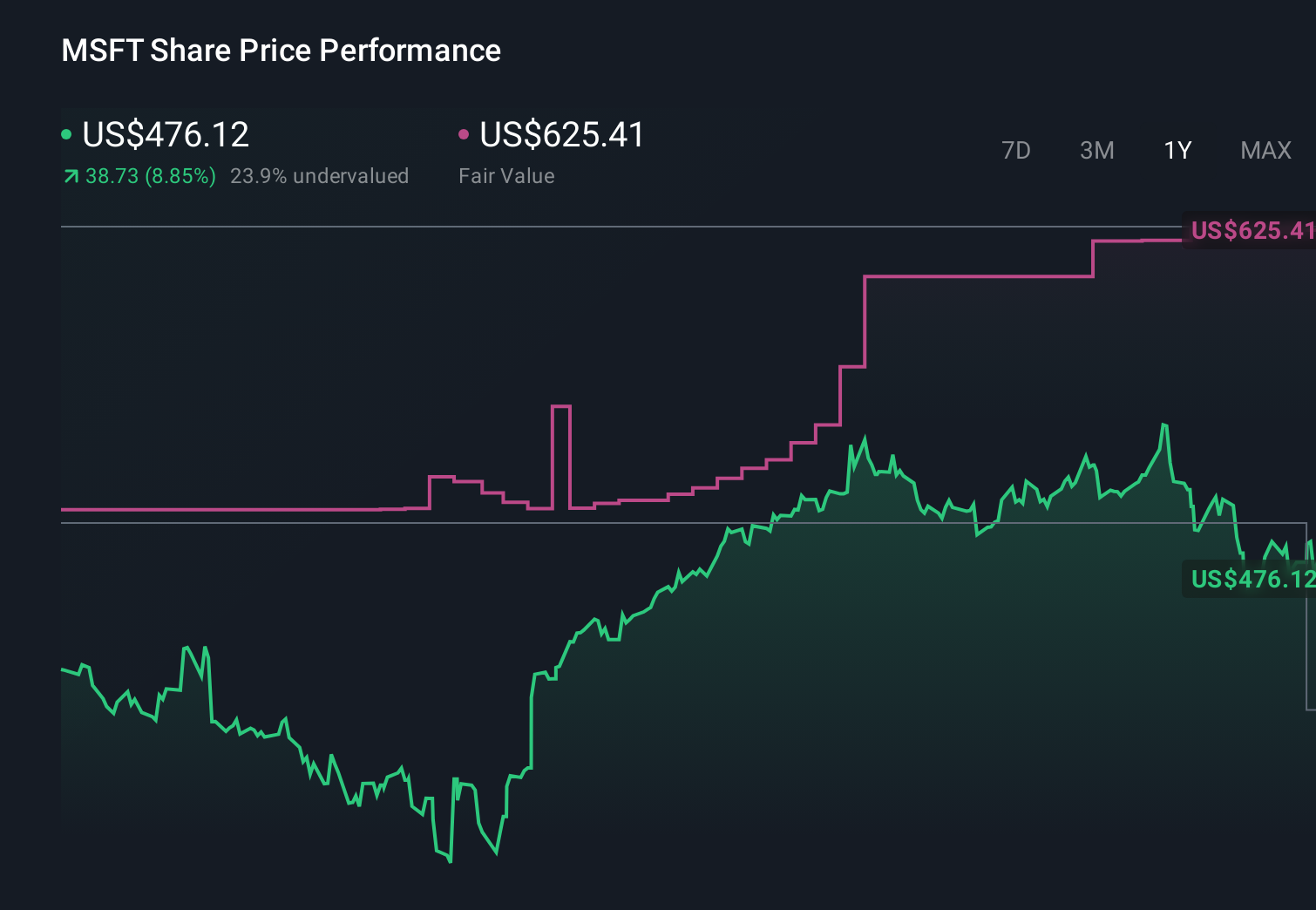
Some of the lowest ranked analysts were already assuming revenue of about US$456 billion and earnings near US$164 billion by 2029, and their more cautious view on margins and capital intensity could look very different once this new AI spend and buyout plan are fully reflected in updated scenarios, so it is worth comparing these more pessimistic assumptions with your own.
Explore 94 other fair value estimates on Microsoft - why the stock might be worth as much as 41% more than the current price!
Reach Your Own Conclusion
Don't just follow the ticker - dig into the data and build a conviction that's truly your own.
- A great starting point for your Microsoft research is our analysis highlighting 5 key rewards and 1 important warning sign that could impact your investment decision.
- Our free Microsoft research report provides a comprehensive fundamental analysis summarized in a single visual - the Snowflake - making it easy to evaluate Microsoft's overall financial health at a glance.
Seeking Other Investments?
The market won't wait. These fast-moving stocks are hot now. Grab the list before they run:
- Explore 26 top quantum computing companies leading the revolution in next-gen technology and shaping the future with breakthroughs in quantum algorithms, superconducting qubits, and cutting-edge research.
- We've uncovered the 13 dividend fortresses yielding 5%+ that don't just survive market storms, but thrive in them.
- Capitalize on the AI infrastructure supercycle with our selection of the 38 best 'picks and shovels' of the AI gold rush converting record-breaking demand into massive cash flow.
This article by Simply Wall St is general in nature. We provide commentary based on historical data and analyst forecasts only using an unbiased methodology and our articles are not intended to be financial advice. It does not constitute a recommendation to buy or sell any stock, and does not take account of your objectives, or your financial situation. We aim to bring you long-term focused analysis driven by fundamental data. Note that our analysis may not factor in the latest price-sensitive company announcements or qualitative material. Simply Wall St has no position in any stocks mentioned.