

Is Expanded PBM Access to Obesity Drugs Altering The Investment Case For Eli Lilly (LLY)?
Eli Lilly LLY | 0.00 |
- Eli Lilly recently reported extensive Phase 3 data for its obesity and diabetes pipeline at the American Diabetes Association meeting, highlighted by retatrutide’s triple-agonist profile and Foundayo’s performance versus existing oral therapies, alongside earlier positive base-editing results for VERVE-102 in high-risk cholesterol patients.
- At the same time, all three largest US pharmacy benefit managers have agreed to cover Lilly’s full obesity portfolio, materially broadening access to Zepbound and the new oral pill Foundayo for commercially insured and some Medicare patients.
- We’ll now examine how this expanded PBM coverage for Zepbound and Foundayo could influence Eli Lilly’s obesity-led investment narrative and risk balance.
Find 46 companies with promising cash flow potential yet trading below their fair value.
Eli Lilly Investment Narrative Recap
To own Eli Lilly today, you have to believe its obesity and diabetes franchise can support the current valuation while the company manages pricing, safety and concentration risks. The latest ADA data and broad PBM coverage for Zepbound and Foundayo appear to reinforce, rather than change, the near term catalyst: access driven volume growth in obesity. The biggest immediate risk remains future reimbursement and pricing pressure as payers reassess the long term cost of these therapies.
Among recent announcements, the PBM decision to cover Lilly’s full obesity portfolio stands out as most relevant. Co preferred formulary status for Zepbound and rapid inclusion of Foundayo on CVS Caremark plans directly addresses earlier worries about formulary exclusions and access bottlenecks. It also tightens the link between clinical momentum at ADA and the core commercial catalyst in obesity, while leaving pricing and policy risks very much in focus.
Yet even with this momentum, the risk that future U.S. and European pricing reforms reshape obesity drug economics is something investors should be aware of...
Eli Lilly's narrative projects $113.6 billion revenue and $46.8 billion earnings by 2029.
Uncover how Eli Lilly's forecasts yield a $1211 fair value, a 10% upside to its current price.
Exploring Other Perspectives
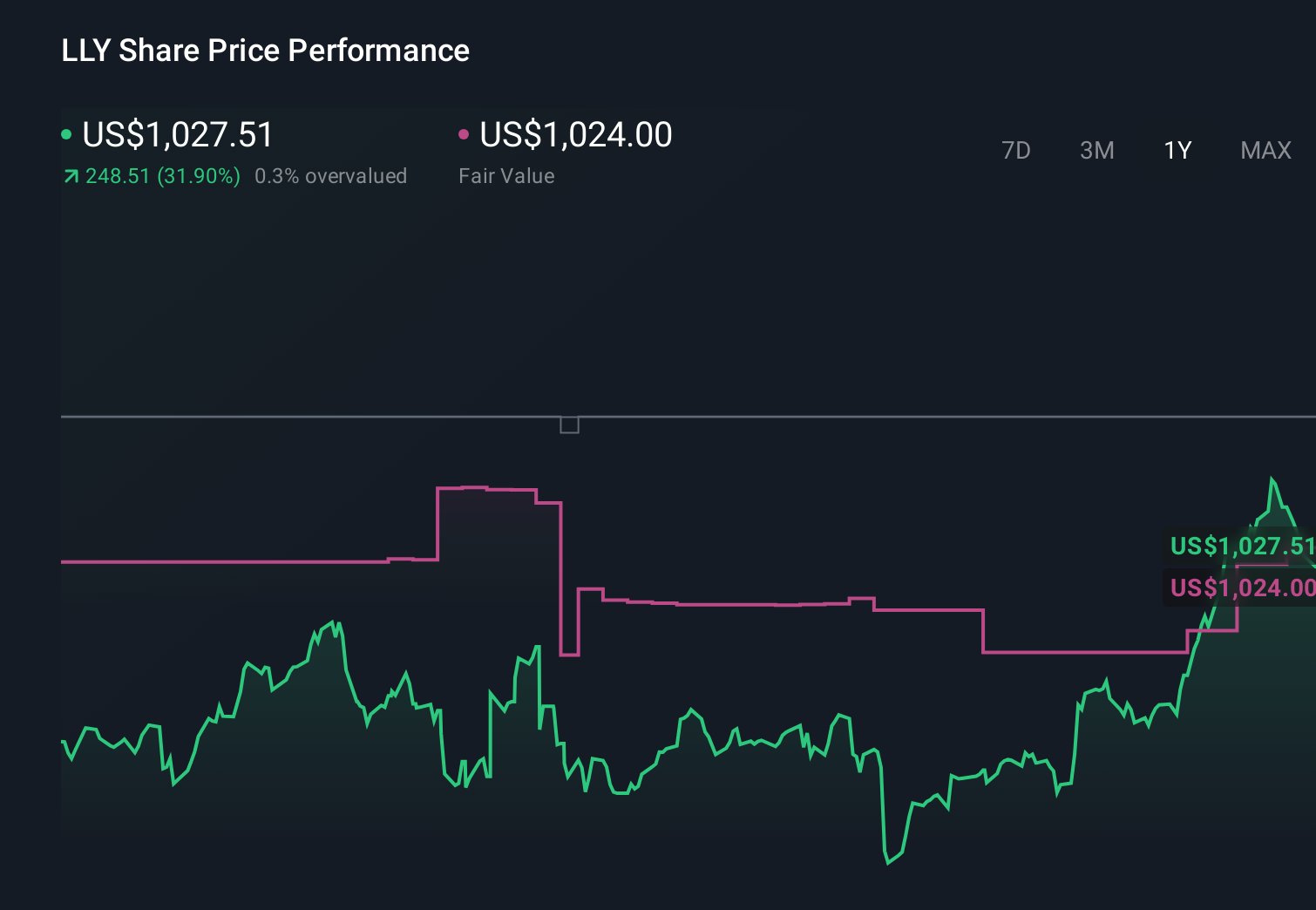
Some of the lowest ranked analysts were already cautious, assuming Lilly’s revenue would reach about US$102.4 billion and earnings US$40.2 billion by 2029, and they see obesity pricing and safety scrutiny as powerful counterweights to access wins like the new PBM coverage, reminding you that reasonable people can read the same news and come to very different conclusions.
Explore 19 other fair value estimates on Eli Lilly - why the stock might be worth 19% less than the current price!
Reach Your Own Conclusion
Don't just follow the ticker - dig into the data and build a conviction that's truly your own.
- A great starting point for your Eli Lilly research is our analysis highlighting 3 key rewards and 2 important warning signs that could impact your investment decision.
- Our free Eli Lilly research report provides a comprehensive fundamental analysis summarized in a single visual - the Snowflake - making it easy to evaluate Eli Lilly's overall financial health at a glance.
Want Some Alternatives?
Don't miss your shot at the next 10-bagger. Our latest stock picks just dropped:
- Outshine the giants: these 12 early-stage AI stocks could fund your retirement.
- This technology could replace computers: discover 29 stocks that are working to make quantum computing a reality.
- The future of work is here. Discover the 33 top robotics and automation stocks leading the charge in AI-driven automation and industrial transformation.
This article by Simply Wall St is general in nature. We provide commentary based on historical data and analyst forecasts only using an unbiased methodology and our articles are not intended to be financial advice. It does not constitute a recommendation to buy or sell any stock, and does not take account of your objectives, or your financial situation. We aim to bring you long-term focused analysis driven by fundamental data. Note that our analysis may not factor in the latest price-sensitive company announcements or qualitative material. Simply Wall St has no position in any stocks mentioned.