

Microsoft (MSFT) Posts Strong AI Led Results, Is The Upside Already Priced In?
Microsoft Corporation MSFT | 0.00 |
Microsoft (MSFT) has just delivered a strong fiscal fourth-quarter and full-year update, with higher revenue, higher net income, and ongoing traction in Azure and AI products like Copilot, supporting renewed interest in the stock.
That earnings surprise has fed directly into the share price, with a 1 day share price return of 3.02% and a powerful 7 day share price return of 21.75%. However, the year to date share price return is still slightly negative and the 1 year total shareholder return is down 10.62%, while 3 and 5 year total shareholder returns of 45.13% and 67.29% show longer term holders still ahead.
If Microsoft’s AI and cloud momentum has your attention, it can be useful to see what else is moving in the space and uncover 55 AI infrastructure stocks
After a jump to around US$464 on strong AI and cloud results, Microsoft now carries high expectations. Do those numbers and its earnings profile still give buyers a reasonable margin of safety, or is the balance tilting toward risk?
Most Popular Narrative: 11% Overvalued
According to the most followed narrative on Simply Wall St, Microsoft’s recent close at $464.72 sits above a fair value estimate of $419.91, which frames the current debate about how much optimism is already in the price.
Microsoft rarely goes on sale, so it is worth paying attention when the multiple compresses. At around $380, the stock trades at roughly 22 to 23x trailing earnings and approximately 14x EV/EBITDA, well below its own seven year historical range. This is the cheapest Microsoft has been in years, and the de rating looks more like a capex cycle worry than a deterioration in the business. Returns on equity sit around 33% and returns on invested capital around 21%, the balance sheet is effectively net cash, and the enterprise/cloud moat, Azure, the Office and Windows franchise, and AI platform optionality through Copilot and the OpenAI stake, remains as good as anything in large cap tech.
Want to understand why this narrative still lands above $400 per share despite that compression point and user fair value tag of overvalued? The entire case leans on strong profitability, rich margins and a specific view on how fast those earnings streams compound. Curious which financial lever matters most in that projection and how sensitive the fair value is to it? The full narrative lays out those assumptions in plain language.
Result: Fair Value of $419.91 (OVERVALUED)
However, Microsoft investors still face questions about whether heavy AI capex will deliver strong returns and how quickly any slowdown in cloud demand might affect expectations.
Another View On Microsoft’s Valuation
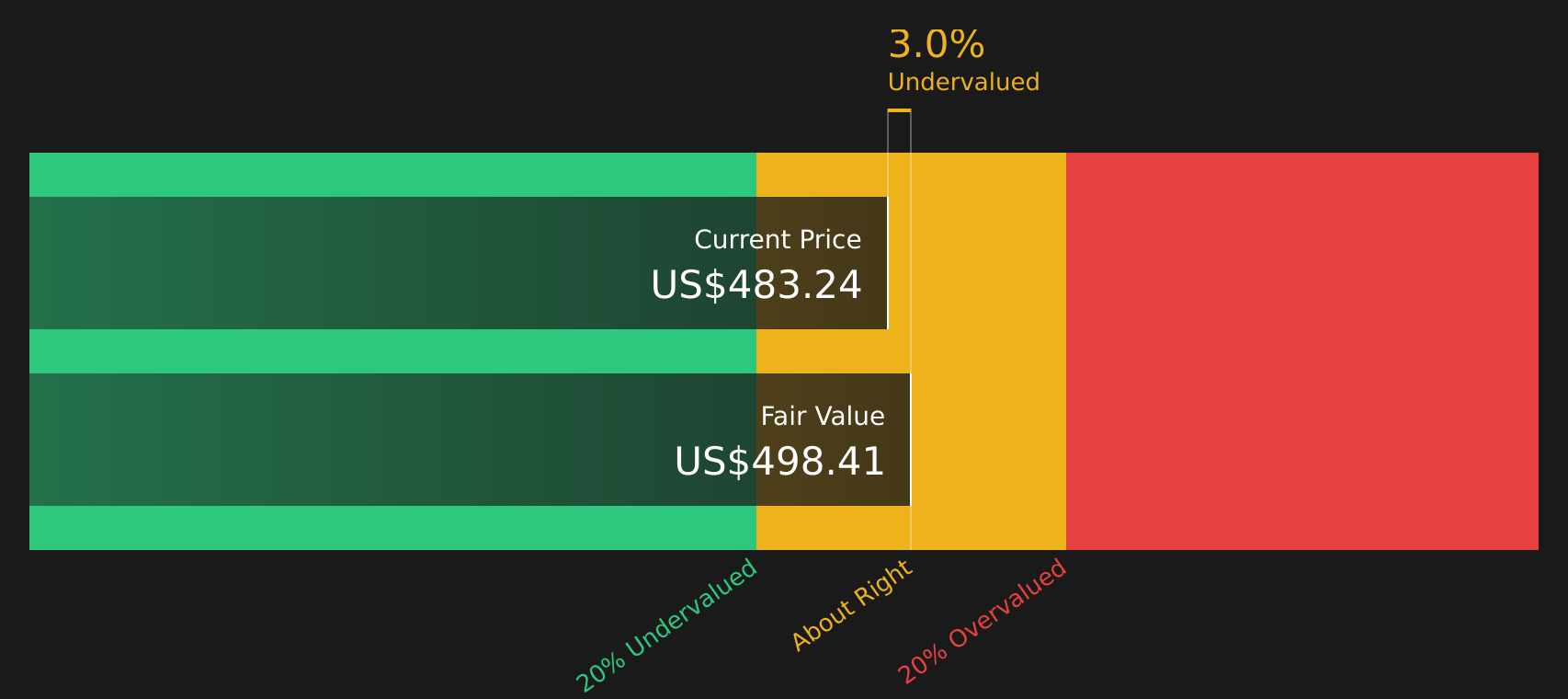
The popular user narrative frames Microsoft as about 11% overvalued around $464.72 with a fair value of $419.91. Our DCF model presents a different perspective. It indicates the stock trades about 16.4% below an estimated future cash flow value of $555.80. Which interpretation do you think better aligns with your risk tolerance?
Next Steps
After weighing both the optimism around Microsoft and the concerns raised, it helps to review the data directly and decide where you stand. To see how the positives and negatives balance out, take a closer look at the 4 key rewards and 1 important warning sign
Looking For More Investment Ideas Beyond Microsoft?
If you only focus on Microsoft, you could miss other stocks that fit your goals. Take a few minutes now to scan fresh ideas and widen your watchlist.
- Spot potential value opportunities before they are crowded by checking companies highlighted in the 55 high quality undervalued stocks.
- Strengthen your portfolio foundations by reviewing stocks featured in the solid balance sheet and fundamentals stocks screener (45 results).
- Get ahead of the crowd by tracking future contenders using the screener containing 19 high quality undiscovered gems.
This article by Simply Wall St is general in nature. We provide commentary based on historical data and analyst forecasts only using an unbiased methodology and our articles are not intended to be financial advice. It does not constitute a recommendation to buy or sell any stock, and does not take account of your objectives, or your financial situation. We aim to bring you long-term focused analysis driven by fundamental data. Note that our analysis may not factor in the latest price-sensitive company announcements or qualitative material. Simply Wall St has no position in any stocks mentioned.