

News Headline | Market Downturn Protection Guide: Strategies for Uncertain Times & What Actions to Take
20+ Year Trsy Bond Ishares TLT | 0.00 | |
Direxion Shares ETF Trust Daily 20+ Yr Treas Bull 3X TMF | 0.00 | |
Ishares 7-10 Year Treasury Bond ETF IEF | 0.00 | |
Vanguard Intermediate-Term Treasury ETF VGIT | 0.00 | |
iShares TIPS Bond ETF TIP | 0.00 |
Recent Market Selloff
The U.S. stock market experienced a significant selloff on March 10, 2025, with the S&P 500 approaching correction territory (near -10% from recent highs). The crash was triggered by concerns over Trump's tariffs policies and government personnel changes potentially disrupting U.S. economic growth.
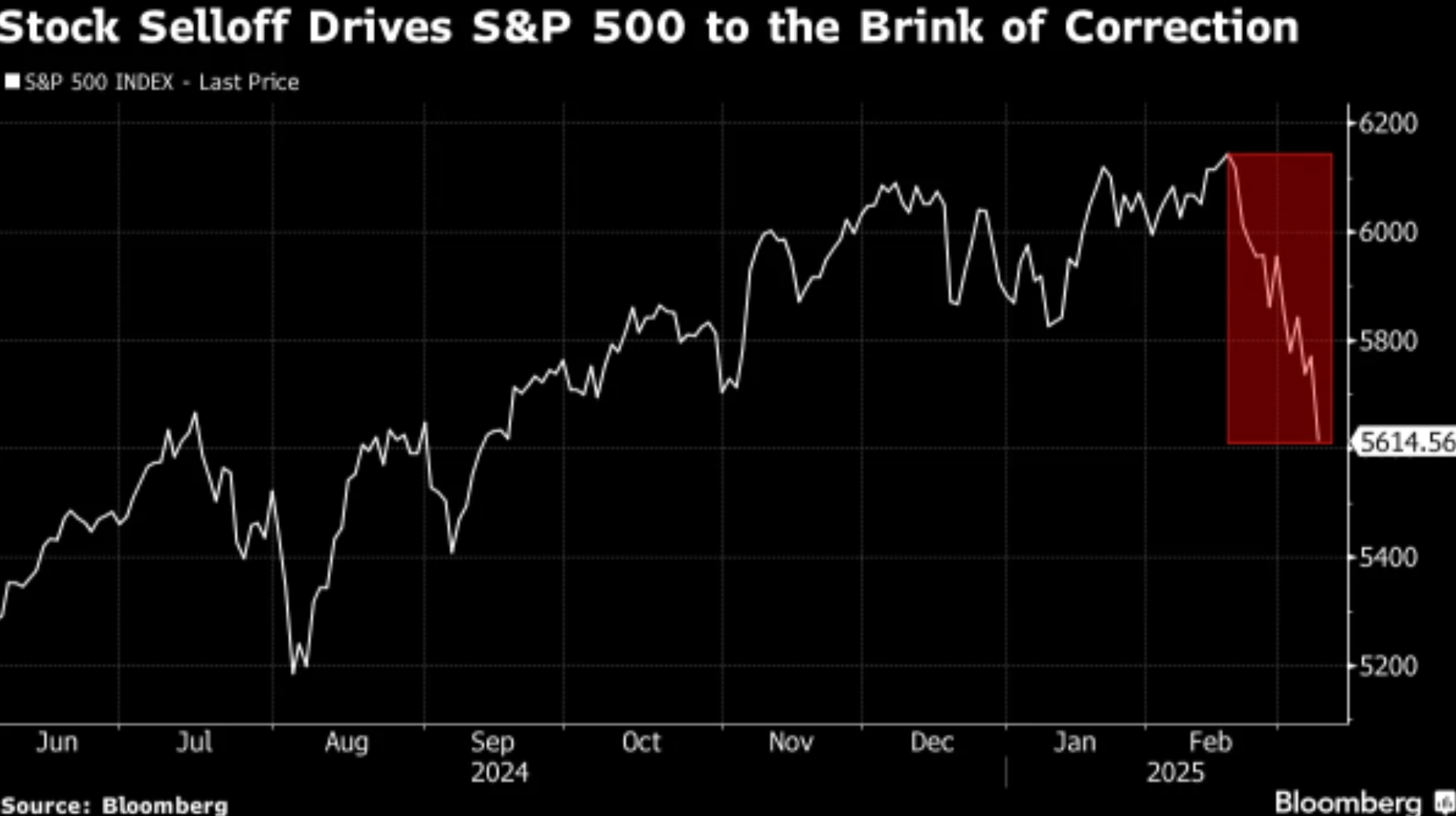
Tech stocks were particularly affected, with the "Magnificent Seven" large tech companies dropping approximately 5.4%. The NASDAQ recorded its largest single-day decline since September 2022.
U.S. Treasury yields fell as markets anticipated the Federal Reserve would aggressively cut interest rates in response. Bitcoin prices also dropped below $80,000.
Market Expert Assessments
Financial institutions are expressing caution:
- Washington Crossing Advisors: "The market has significantly reassessed growth expectations, with investors moving from high-risk, low-quality stocks to high-quality stocks. Currently, it's difficult to determine where the market will bottom."
- RBC Capital Markets: "We expect a period of chaotic and frightening market conditions. As market levels continue to rise, we'll see profit-taking operations with increased uncertainty leading to more volatility."
- Susquehanna International Group: "This selloff feels like position squaring for any overexposed or leveraged positions, accompanied by 'fear buying' behavior. If Trump isn't concerned about the stock market and Yellen isn't rushing to act, why buy now?"
Defensive Investment Strategies
1. Bond Investments for Economic Downturns
During economic downturns, central banks often implement stimulative policies like cutting interest rates, which can benefit bond investors. Bonds may serve as effective hedges against economic uncertainty by providing:
- Fixed income streams
- Lower volatility compared to stocks
- Stability during turbulent economic periods
Recommended Bond ETFs
Long-Term Treasury Bonds:
Intermediate Treasury Bonds:
Inflation Protection:
Short-Term Hedging:
2. Inverse ETFs for Short-Term Protection
These can provide short-term hedging against downside risk:
- Ultrapro Short QQQ Proshares(SQQQ.US)
- Proshares Trust Short Qqq Proshares (Post Rev Split)(PSQ.US)
- Ultrapro Short DOW 30 Proshares(SDOW.US)
- Proshares Trust Pshs Ulshrus2000 (Post Rev Split)(TWM.US)
- Short S&P 500 Proshares(SH.US)
Important Note: Leveraged and inverse ETFs track daily performance, not cumulative long-term performance. These instruments are not suitable for long-term holding and can magnify both losses and gains.
3. Defensive Sector ETFs
These sectors typically show strong resistance during recessions:
Healthcare:
Consumer Staples:
Utilities:
4. Tail Risk and Volatility ETFs for Protection
Investors can protect their portfolios against potential market downturns by purchasing tail risk hedging or volatility (fear) index ETFs, which act as insurance against the stock market's potential downside risks.
- 2x Long VIX Futures ETF(UVIX.US); When the S&P 500 declines, the volatility index VIX tends to spike. Investors can mitigate losses during market crashes by buying ETFs that track VIX futures.
- Cambria Tail Risk ETF(TAIL.US); TAIL uses a strategy of buying out-of-the-money put options on the S&P 500 index combined with U.S. Treasury bonds to hedge against market downturns. This strategy provides a defensive approach.
Trading Practices to Avoid During Recessions
- Panic Selling: Liquidating investments during market declines can lock in losses and miss recovery gains
- Over-Trading: Market volatility may tempt frequent trades, leading to high transaction costs
- High-Risk Assets: Avoid speculative investments despite their appeal during downturns
- Ignoring Diversification: Maintain diverse investments across asset classes
- Neglecting Research: Continue thorough research to identify risks and opportunities
- Short-Term Focus: Maintain a long-term perspective to weather market fluctuations
Conclusion
Maintaining a diversified portfolio across various asset classes remains crucial during market downturns. The current market conditions suggest investors should consider defensive positioning while remaining alert for potential opportunities created by market dislocations.
Extra reads:
According to the well-known Merrill Lynch Clock Cycle Theory, recessions typically occur during the late stages of declining inflation. When it comes to asset allocation during such periods, the recommended hierarchy to consider is: Bonds > Cash (Foreign Exchange) > Stocks > Commodities.
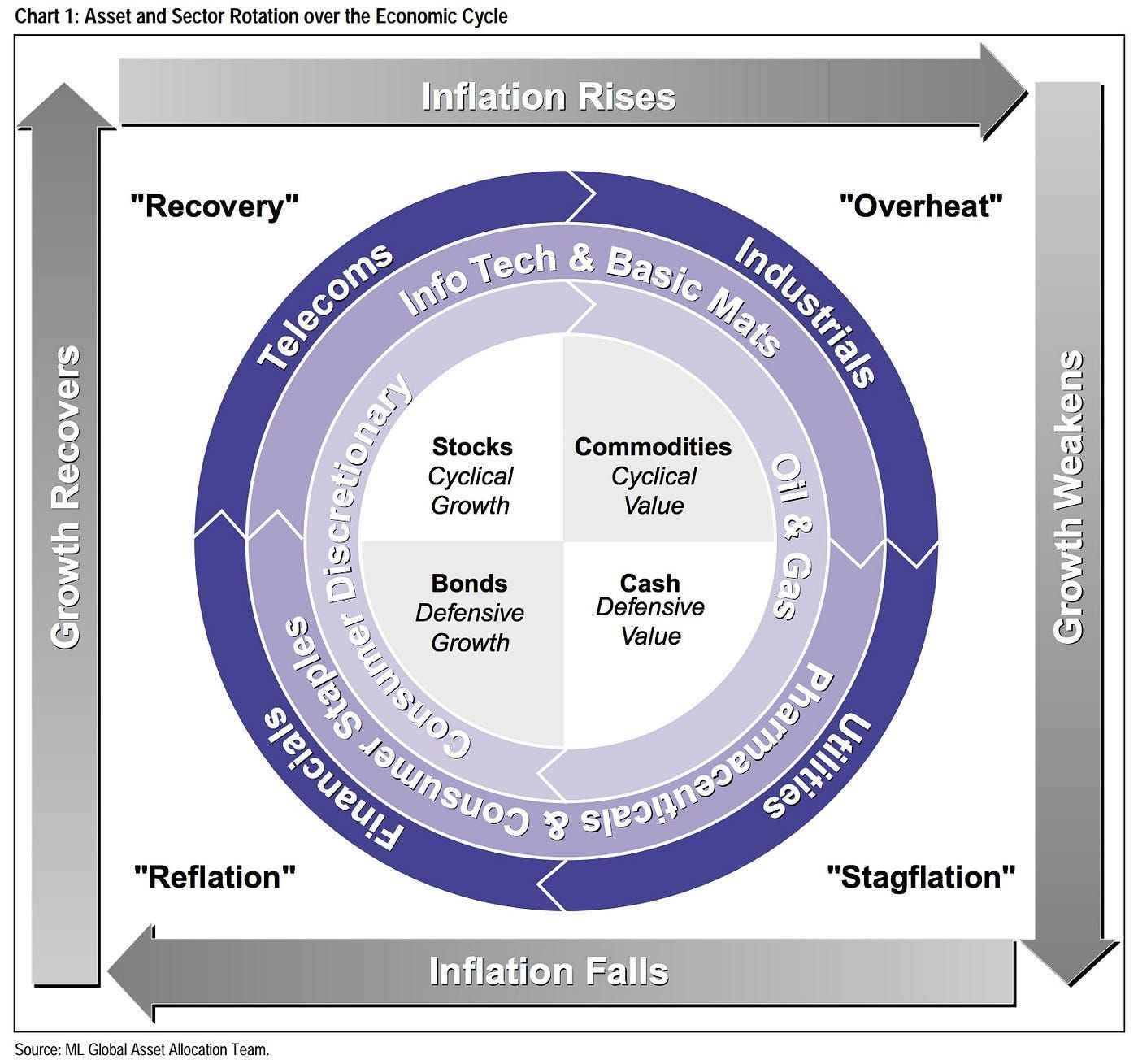
Recovery: Stocks > Bonds > Cash (Forex) > Commodities
Overheating: Commodities > Stocks > Cash (Forex) / Bonds
Stagflation: Cash (Forex) > Commodities / Bonds > Stocks