

Oil Jumped 20% In This Month, As The Middle East Back in Focus. Here's What It Means for Gold, Oil and Stocks
United States Oil Fund Lp Units USO | 0.00 | |
Spdr Select Fund-Energy Select Sector XLE | 0.00 | |
Exxonmobil Holdings Corporation XOM | 0.00 | |
Chevron Corporation CVX | 0.00 | |
SPDR Gold GLD | 0.00 |
The Federal Reserve left interest rates unchanged for a seventh straight meeting, but the real story wasn't the Fed—it was the market's reaction.
While the policy rate remained at 3.50%-3.75%, the 30-year U.S. Treasury yield climbed to 5.23%, its highest level since 2007, even as the 2-year yield edged lower. The move suggests investors are demanding a larger long-term inflation premium rather than pricing an imminent rate hike.
At the same time, renewed military tensions between the U.S. and Iran pushed oil prices sharply higher and helped gold recover from an early selloff. For investors, geopolitical risk—not monetary policy—has quickly become the market's biggest uncertainty.
Subscribe to "The Trend Catcher Topic," tracking hottest sectors & technical breakouts in real time daily, accompanying you every US stock trading day.
The Bond Market Is Tightening Financial Conditions
Although the Fed kept rates unchanged, three FOMC members voted for a 25-basis-point hike, highlighting persistent concerns over inflation.
The bond market interpreted the meeting differently.
Short-term yields imply investors see little chance of an immediate hike, but the surge in long-term yields signals growing concerns over inflation, fiscal deficits and long-run borrowing costs.
Higher long-term yields translate into more expensive mortgages, corporate financing and investment, effectively tightening financial conditions without another Fed rate increase.
The Middle East Is Driving Oil—and Market Risk
Since tensions between the U.S. and Iran escalated in July, Brent crude has surged as much as 20%, while the S&P 500 has remained relatively resilient.
That disconnect suggests equities may still be underpricing geopolitical risk.
Macro research firm MRB Partners highlights two developments investors should monitor closely:
- Direct deployment of U.S. ground forces
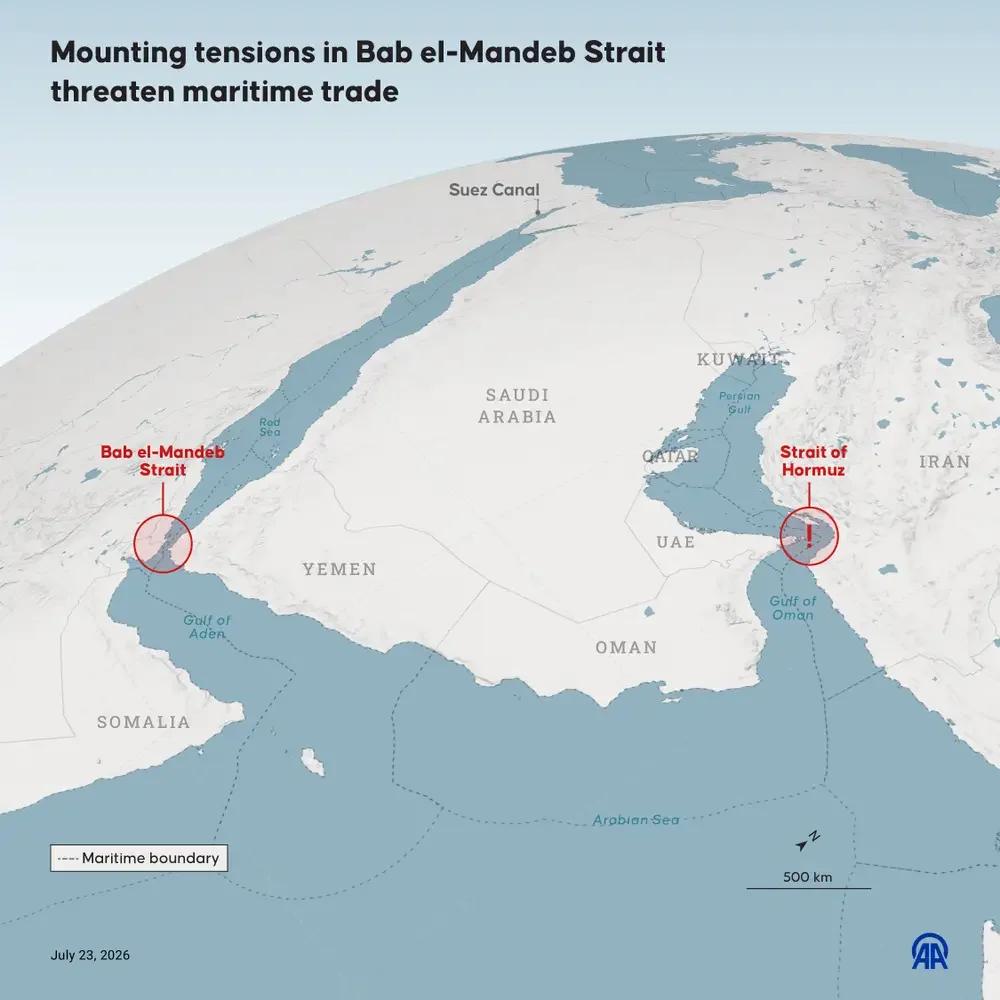
- A disruption of the Bab el-Mandeb Strait, one of the world's most important energy shipping routes.
Either event could significantly reduce global oil supply, reignite inflation pressures and increase the probability of a broader risk-off move across global markets.
Assets to Watch
| Asset | Why It Matters |
|---|---|
| Brent Crude | Direct barometer of geopolitical risk and energy inflation. |
| United States Oil Fund Lp Units(USO.US) | ETF tracking oil prices; likely to remain highly sensitive to Middle East headlines. |
| Spdr Select Fund-Energy Select Sector(XLE.US) | Integrated oil majors generally benefit from sustained higher crude prices. |
| Exxonmobil Holdings Corporation(XOM.US) & Chevron Corporation(CVX.US) | Large-cap energy producers with strong cash flows during periods of elevated oil prices. |
If crude continues moving toward the $90-$100/barrel range, energy stocks could continue outperforming the broader market, although increased volatility should also be expected.
Gold Is Being Supported by More Than Safe-Haven Buying
Gold initially weakened after the Fed decision before rebounding as geopolitical concerns intensified.
The rally reflects three overlapping drivers:
- Rising geopolitical uncertainty
- Sticky inflation expectations
Expectations that central banks may eventually need to respond if economic growth slows.
While higher Treasury yields usually weigh on non-yielding assets like gold, investors often return to bullion when inflation and geopolitical risks rise simultaneously.
Assets to Watch
| Asset | Why It Matters |
|---|---|
| Spot Gold (XAU/USD) | Primary safe-haven asset. |
| SPDR Gold(GLD.US) | Largest physically backed gold ETF. |
| Gold Trust Ishares(IAU.US) | Lower-cost alternative for gold exposure. |
| VanEck Vectors Gold Miners ETF(GDX.US) | Offers leveraged exposure if gold prices continue higher. |
| Newmont Corporation(NEM.US) & Barrick Gold Corp.(GOLD.US) | Major gold miners that typically benefit from rising bullion prices. |
Technically, investors may watch whether spot gold can regain and hold above the $4,100/oz level. A sustained move higher could improve momentum, while renewed strength in real yields may limit further upside.
What Could Matter Next?
Rather than focusing solely on the Fed, investors may want to monitor several indicators over the coming weeks:
- Whether military tensions in the Middle East continue to escalate.
- Brent crude's ability to remain above recent highs.
- Long-term Treasury yields and inflation expectations.
Upcoming U.S. inflation and labor market data, which will shape expectations for future Fed policy.
Bottom Line
The market narrative is shifting.
Instead of asking when the Federal Reserve will cut or raise rates, investors are increasingly asking whether geopolitical tensions could keep inflation elevated for longer.
If energy prices continue rising while long-term Treasury yields remain near multi-year highs, markets could face a more challenging environment marked by slower growth, sticky inflation and higher volatility.
In that backdrop, energy assets may continue benefiting from supply concerns, while gold could remain supported as a portfolio diversifier, even if higher interest rates cap part of its upside. For equity investors, the interaction between oil prices, Treasury yields and geopolitical developments may become more important than any single Fed meeting over the remainder of the year.
Higher oil prices could also reinforce gold's longer-term outlook. A sustained rise in energy costs may keep inflation elevated, limiting the Fed's flexibility to ease policy while increasing demand for inflation hedges. Even if higher real yields cap short-term upside, persistent geopolitical uncertainty and inflation concerns could continue to support strategic allocations to gold.
Disclaimer: This article is for informational purposes only and does not constitute investment advice or a recommendation to buy or sell any security.