

Stocks to Watch | Has the AI Trade Peaked? Two Numbers in Big Tech Earnings Could Tell You What's Next
Microsoft Corporation MSFT | 0.00 | |
Meta Platforms META | 0.00 | |
Apple Inc. AAPL | 0.00 | |
Amazon.com, Inc. AMZN | 0.00 | |
Alphabet Inc. Class A GOOGL | 0.00 |
U.S. equities enter one of the most important weeks of the year with investor sentiment becoming noticeably more fragile. The S&P 500 remains only about 3% below its record high, yet recent market action suggests that investors are becoming far less willing to overlook familiar risks. Rising oil prices, higher Treasury yields, persistent inflation concerns, and escalating AI infrastructure spending are now converging at the same time.
Against this backdrop, earnings from Microsoft Corporation(MSFT.US), Meta Platforms(META.US), Apple Inc.(AAPL.US) and Amazon.com, Inc.(AMZN.US)—alongside the Federal Reserve meeting—could determine whether the market regains confidence or slips into a deeper correction.
AI Spending Faces Its First Real Stress Test
For nearly two years, Wall Street largely rewarded every announcement of larger AI infrastructure investments. Massive spending on GPUs, data centers and cloud infrastructure fueled expectations of stronger productivity, higher long-term earnings and a new technology supercycle.
That narrative is now facing its first meaningful challenge.
The turning point came after Alphabet raised its 2026 capital expenditure guidance to $195-205 billion, roughly $15 billion higher than its previous outlook, while simultaneously reporting negative free cash flow for the first time since becoming a public company in 2004. Although Google Cloud revenue surged 82% year over year, investors largely ignored the strong operating performance and instead focused on the accelerating pace of spending.
Market participants are increasingly asking a different question: How much investment is too much?
Bond Investors Are Sending the First Warning Signal
The growing skepticism is showing up most clearly in fixed income rather than equities.
According to CreditSights, hyperscale AI companies have already raised more than $200 billion through bonds and loans this year, while announcing another $115 billion of equity financing. Meanwhile, Alphabet Inc. Class A(GOOGL.US), Amazon.com, Inc.(AMZN.US) and Meta Platforms(META.US)have all experienced widening credit spreads as bond investors demand higher yields to compensate for rising leverage and capital requirements.
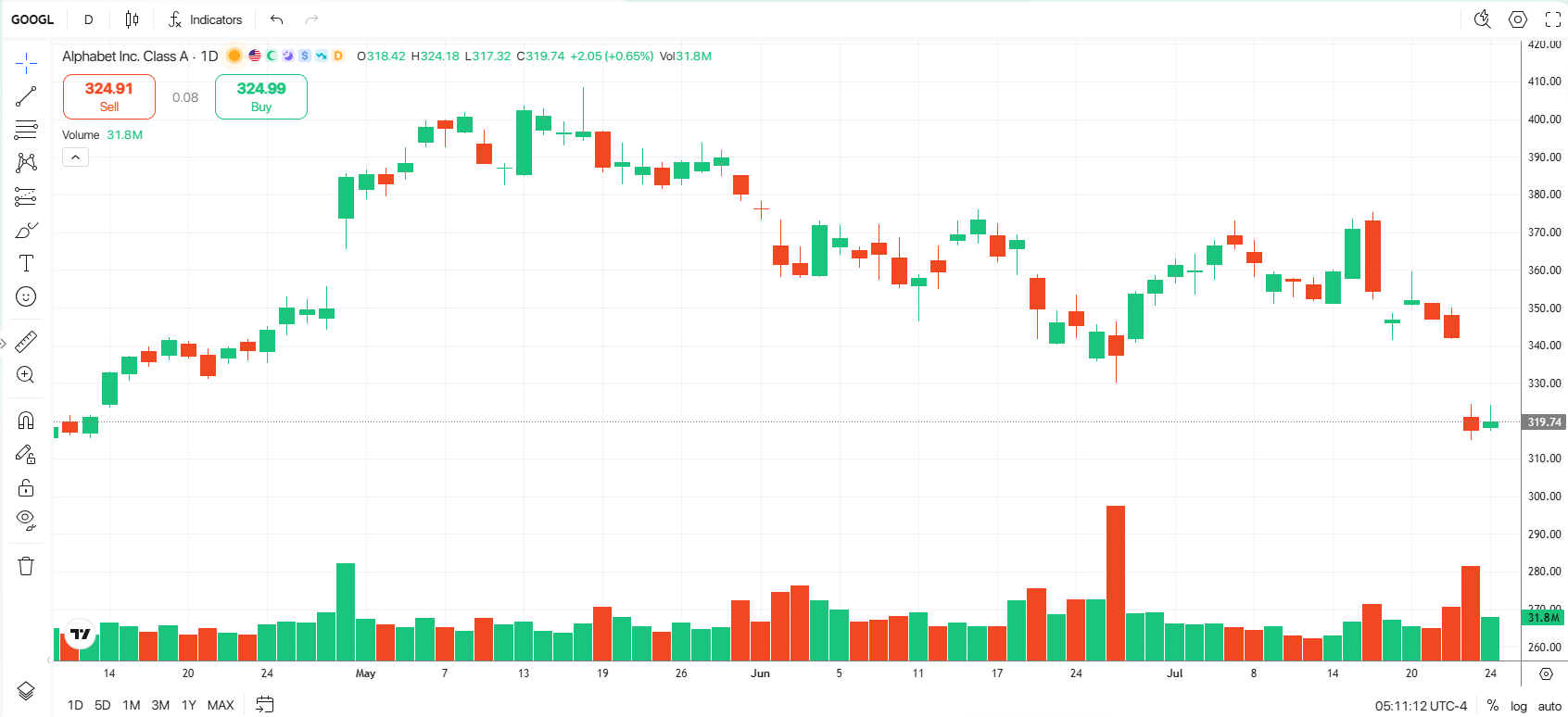
CNBC reported that fixed-income investors are becoming increasingly uncomfortable with the scale of AI-related capital expenditures, particularly as many hyperscalers are projected to spend more on capital expenditures than they generate in free cash flow by next year. The concern is no longer whether AI will generate demand—it is whether today's financing structure leaves enough room for acceptable shareholder returns.
Another closely watched indicator is Oracle's five-year credit default swap (CDS), which has climbed to multi-year highs. Barclays credit analyst Andrew Keches noted that Oracle Corporation(ORCL.US)'s CDS has increasingly become a liquid market proxy for broader AI debt concerns rather than company-specific fundamentals, reflecting investor anxiety around AI infrastructure financing, OpenAI execution and data-center spending.
The message from the credit market is becoming increasingly clear: investors are beginning to demand evidence that AI investment can eventually generate sufficient cash returns.
Rising Rates Make Every Dollar of AI Spending More Expensive
The macro backdrop is amplifying those concerns.
Oil prices climbing above $100 per barrel have reignited inflation worries, while U.S. Treasury yields have risen toward their highest levels since early 2025. Higher financing costs directly increase the economic burden of funding large-scale AI infrastructure projects.
Power costs are becoming another major headwind. As utilities and equipment suppliers continue to face inflationary pressure, the cost of building and operating hyperscale data centers continues to rise. GE Vernova CEO Scott Strazik recently said he expects the current inflationary environment to persist, partly due to geopolitical tensions and higher energy prices.
The combination of rising borrowing costs and rising operating costs means that every incremental dollar invested into AI infrastructure now carries a significantly higher hurdle rate than it did just a year ago.
While hyperscalers have come under pressure, several upstream beneficiaries have continued to attract investor attention, including NVIDIA Corporation(NVDA.US), Advanced Micro Devices, Inc.(AMD.US), Micron Technology, Inc.(MU.US) and networking supplier Broadcom Limited(AVGO.US).
Investors Are Beginning to Reward Capital Discipline
Perhaps the biggest shift in market psychology is that investors are no longer automatically rewarding aggressive AI spending.
Earlier in the AI cycle, larger capital expenditure announcements were often interpreted as a sign of competitive leadership. Today, those same announcements increasingly trigger questions about financing, leverage and future profitability.
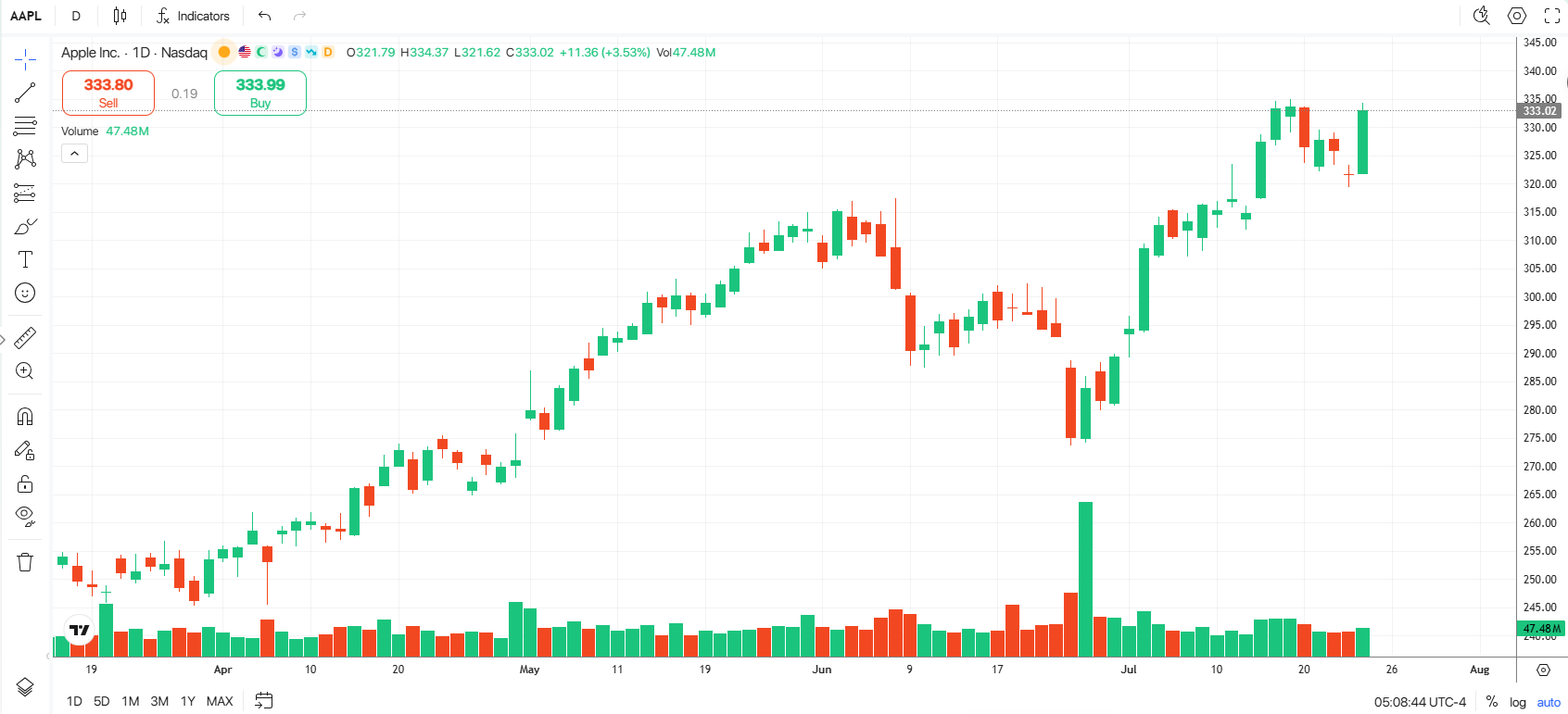
Apple Inc.(AAPL.US) illustrates this changing preference. Unlike several of its peers, Apple has largely relied on partnerships with foundation model providers rather than committing to massive proprietary AI infrastructure investments. While the company still faces higher component costs associated with AI hardware demand, investors have recently rewarded its comparatively disciplined capital allocation approach.
The market's focus has therefore shifted from "Who spends the most?" to "Who earns the highest return on invested capital?"
This Earnings Season May Define the Next Phase of the AI Trade
This week's earnings reports from Microsoft Corporation(MSFT.US), Meta Platforms(META.US), Amazon.com, Inc.(AMZN.US) and Apple Inc.(AAPL.US) are likely to be judged less by headline revenue growth than by two metrics: capital expenditure guidance and free cash flow generation.
Those figures will help investors answer a much larger question—whether today's extraordinary AI investment cycle remains the foundation of a multi-year technology expansion, or whether it is approaching the point of diminishing returns.
Ultimately, investment strategy increasingly depends on how investors view the AI cycle itself.
If one believes the AI boom is entering its later stages, then rallies may become opportunities to reduce exposure as valuation compression and margin pressure begin to outweigh future growth expectations.
Investors looking to express a broader view on the AI cycle may also watch ETFs such as the Roundhill Magnificent Seven ETF(MAGS.US), VanEck Vectors Semiconductor ETF(SMH.US), PHLX Sox Semiconductor Sector Ishares(SOXX.US) and the PowerShares QQQ Trust,Series 1(QQQ.US), all of which could see increased volatility as earnings reshape expectations for AI spending.
Conversely, if one believes AI infrastructure investment is still in the early innings of a much longer adoption cycle, then periods of market weakness may present attractive opportunities to accumulate high-quality leaders while sentiment remains fragile.
The upcoming earnings reports are unlikely to settle that debate overnight. However, management commentary on AI capital spending, financing plans and free cash flow will almost certainly become the market's most closely watched signals—and may determine where the next leg of the AI trade goes from here.
Disclaimer: This article is for informational purposes only and should not be considered investment advice. Investors should conduct their own research and evaluate individual risk tolerance before making investment decisions.