

Tesla Q2 Earnings in the Bag? Intense Wall Street Debate! Morgan Stanley Points to Optimus and Robotaxi as Major Catalysts
Tesla Motors, Inc. TSLA | 0.00 | |
SpaceX SPCX | 0.00 | |
BHP Group Ltd Sponsored American Depositary Receipt Repr 2 Shs BHP | 0.00 | |
STMicroelectronics NV Sponsored ADR RegS STM | 0.00 | |
TE Connectivity plc TEL | 0.00 |
Subscribe to Our The Trend Catcher Topic / The Value Anchor Topic — Stay Tuned for More Trading Opportunities
Global EV giant Tesla Motors, Inc.(TSLA.US) is scheduled to release its Q2 2026 earnings after the US market closes on July 22. According to Bloomberg consensus estimates, Q2 revenue is projected at $26.14 billion, representing a 16% year-over-year increase. Adjusted net income is expected to reach $1.79 billion, up 28% YoY, with earnings per share (EPS) estimated at $0.33, a 1% YoY growth.
With the stock still trading at an approximate 20% discount to its historical highs due to concerns over EV demand, relentless price wars, and uncertain growth timelines, investors are looking for clear signals that CEO Elon Musk can inject sustainable growth dynamics back into the company. The market's focus has fundamentally shifted from pure auto sales volumes to highly anticipated growth narratives: Robotaxis, the Optimus humanoid robot, and AI infrastructure.
Deliveries Provide a "Safety Cushion," but Competitive Pressures Persist
Tesla previously reported Q2 global deliveries of 480,126 vehicles (with production at 451,758), up about 25% YoY and crushing the pessimistic Wall Street consensus of around 400,000. This historical best performance, driven by demand recovery in Europe and China, acts as a fundamental "safety cushion."
However, a >7% post-delivery stock drop indicated that investors have digested this positive news. Competition remains white-hot in the US and China, with legacy automakers and local brands like BYD rolling out aggressively priced models. Despite Tesla's dominance, BYD has secured the global EV crown (including PHEVs) and surpassed Tesla in pure BEV sales in multiple quarters. Investors will closely watch management's outlook on H2 production, order trends, and consumer demand amidst a high-interest-rate macro environment.
Margins & Cash Flow: The Crucial Balancing Act
While strong deliveries are positive, the market is laser-focused on profitability. Auto gross margins (excluding regulatory credits) are expected to be slightly above 18%. A stabilized margin would prove demand recovery is sustainable, while a miss would imply heavy reliance on price cuts.
Furthermore, Q2 operating margins and Free Cash Flow (FCF) will be critical metrics. Given the rapid expansion in capital expenditures, there is high anticipation that FCF could turn negative. Morgan Stanley analyst Andrew Percoco noted that with CapEx more than doubling, investors urgently need to see if this spending is truly fortifying Tesla’s "Physical AI" economic moat. Energy storage (Megapacks) remains a bright spot for diversification, though analysts are divided on its short-term margin trajectory.
The Narrative Shifts to AI: Robotaxi and Optimus Moving to Production
Tesla is increasingly valued as an AI and robotics entity. Key updates expected include:
- Robotaxi & FSD: BofA analyst Alexander Perry expects detailed updates on Robotaxi fleet deployment and market expansion. Following a July 3 launch in Miami, services are operating in five markets with four more in preparation. Safety data (22 accidents since mid-June, with no severe injuries) support regulatory approval. Timelines for commercialization and FSD subscription rates will be major stock catalysts.
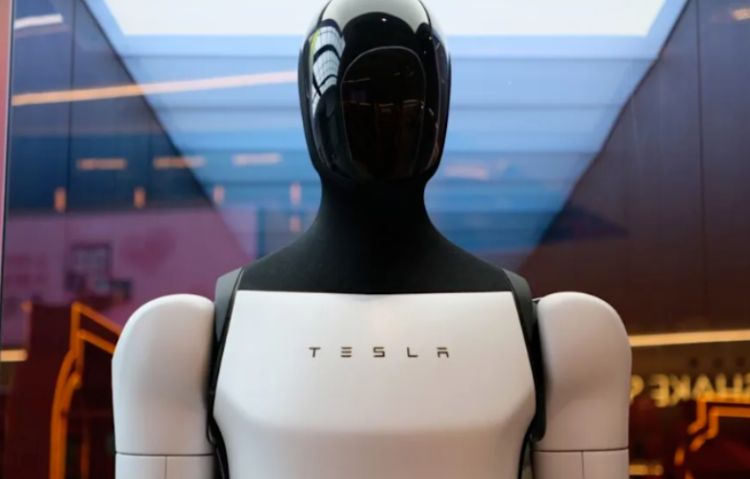
- Optimus Robot: Optimus is moving from a grand narrative to actual production. Tesla plans to begin initial production at the Fremont factory in late July/August, potentially unveiling Gen 3. Supply chain signals indicate Tesla targets a parts capacity of 1,000 units/week by September, scaling to 2,000-2,500 by year-end. Morgan Stanley expects updates on the final design, the production ramp-up curve, and early deployment within Tesla's own factories.
A Divided Wall Street: Bulls vs. Bears
Analysts remain fiercely divided on Tesla's trajectory:
- The Bulls (Morgan Stanley, UBS): Emphasize Tesla's "Physical AI" moat. Morgan Stanley (PT $417) and UBS (PT $442) view milestones in FSD (surpassing 10B miles), Robotaxi testing, and Optimus as the core valuation drivers, overriding auto business headwinds.
- The Cautious (JPMorgan, Barclays): Maintain a cautious stance (Barclays PT $360), citing fading US EV subsidies and the dissipation of one-off profit tailwinds like tariffs and warranties.
- The Bear (HSBC): Maintains a "Reduce" rating (PT $120), citing the lack of a sub-$25k model, modest medium-term sales growth, and significant hurdles for Robotaxi's pure-vision approach and AI computing costs.
SpaceX Merger Speculation as a Valuation Catalyst
While Wall Street previously warned that a SpaceX(SPCX.US) IPO could dilute Tesla's retail investor base, a new narrative regarding a potential merger between the two companies has emerged. Institutions like Wedbush and Baird assign an over-80 % probability of a merger within the next 12–18 months, with JPMorgan noting that their shared AI ambitions act as "strategic glue." Although SpaceX's high valuation was seen as a roadblock, its recent share price drop from a 225peakto225 peak to 225peakto131 makes a merger much more feasible, serving as a critical potential catalyst for Tesla's stock.
Focus on Related Investment Targets
With Tesla's earnings approaching, investors can also keep an eye on related concept stocks within the Tesla supply chain and ecosystem.
Tesla-Related Concept Stocks:
- Space Stocks: SpaceX(SPCX.US)
- Battery Packs: BHP Group Ltd Sponsored American Depositary Receipt Repr 2 Shs(BHP.US), STMicroelectronics NV Sponsored ADR RegS(STM.US), TE Connectivity plc(TEL.US)
- Thermal Management: Texas Instruments Incorporated(TXN.US), Modine Manufacturing Company(MOD.US)
- Smart Cockpit & ADAS: ON Semiconductor Corporation(ON.US), Mobileye Global, Inc. Class A(MBLY.US), VALEO(VLEEY.US), AT&T Inc(T.US), Advanced Micro Devices, Inc.(AMD.US), NVIDIA Corporation(NVDA.US), Corning Inc(GLW.US), SHARP CORP(SHCAY.US)
- Chassis & Body: CONTINENTAL AG(CTTAY.US)
- Interior & Exterior: Magna International Inc.(MGA.US), Lear Corporation(LEA.US), Adient plc(ADNT.US), Avery Dennison Corporation(AVY.US), Autoliv Inc.(ALV.US)
- Tesla Robotaxi-Related Companies: Uber Technologies,Inc.(UBER.US), Lyft(LYFT.US), Pony AI Inc.(PONY.US), WeRide Inc. Sponsored ADR(WRD.US), Baidu, Inc. Sponsored ADR Class A(BIDU.US)
Tesla-Related ETFs for Investors to Watch: