

Trading Wisdom | Roger's Journey: Wall Street Whiz at 26, Financially Free by 37
PowerShares QQQ Trust,Series 1 QQQ | 638.20 | +0.13% |
Apple Inc. AAPL | 261.68 | -1.78% |
Tesla Motors, Inc. TSLA | 384.23 | -1.97% |
NVIDIA Corporation NVDA | 198.60 | -0.14% |
Jim Rogers, former partner of Quantum Fund, and finance professor entered Wall Street at the age of 26 and retired at the age of 37 after earning enough money to last a lifetime. The "Rogers International Commodity Index" he created is one of the six globally recognized commodity indices.
He has also traveled around the world twice, especially fond of China, and made a point of having his two daughters learn Chinese from an early age. Out of his love for his children, he has written letters to them multiple times, conveying his thoughts on life, history, wisdom, money, and other issues.
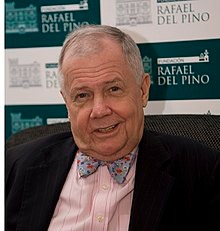
Today, we have excerpted a passage from Rogers's letter to his children about sharing money with everyone.
Money isn't everything, but it's definitely necessary. In the future, I hope that our relationship with money won't simply be about possession and use, but rather, we'll consider how we can use money to achieve greater meaning in life.
We don't live just to earn money, but to learn something new every day. However, it's important to understand money early on because money has ruined many people's lives. If you do acquire a large sum of money, be extremely cautious and careful because money can bring destruction in many forms. It's important to stay grounded, be realistic, and avoid spending recklessly. There's nothing worse than flaunting wealth and spending money without thought.
How to Invest
Investing may seem simple, but as you enter adulthood, it’s essential to understand the value of money. Over the years, I’ve encountered countless people, especially young adults in their teens or twenties, who have little knowledge about money and don’t truly understand its meaning.
One of the most important reasons to get a job is to understand the role of money. In today’s society, anyone can easily borrow money, leading many to become burdened by debt, including credit card debts or other types of debts. They often realize too late that they cannot repay the debt, suddenly finding themselves in financial trouble, unable to even pay rent. They have no idea what went wrong and don’t know where to turn.
It’s essential to understand the value of money early on. You must learn to be strict with money matters, or you may encounter significant problems in the future. I’ve seen many people, from their twenties to their fifties, face huge financial problems because they didn’t understand money. Money doesn’t grow on trees, and you must monitor your spending and make your money work for you, even if it’s only earning a small amount of interest in the bank.
If you become a financial investor, I can teach you the most important lesson: stick to what you know and believe in. Don’t listen to familiar tips and tricks, don’t rely on television or the internet, and don’t find the latest fad in newspapers. Everyone wants these tips, and there are many popular tricks out there, but it’s best to ignore them and invest in what you are familiar with.

Successful investors don’t rely on these tips to make investment choices. They only invest in fields they are familiar with. As you become an adult, you’re learning and gaining knowledge in various areas such as fashion, cars, sports, or completely different fields. Whatever your area of expertise or familiarity may be, invest in what you’re confident in.
If you have in-depth knowledge of a particular industry, you should work harder than me to understand it. By doing so, when there’s innovation in the fashion or automotive industry, you’ll know it’s a success opportunity because tracking this industry is your hobby and passion, your interest, and the result of reading related reports and research.
For example, if you’re interested in the automotive industry, you might browse the car sections of websites and read various newspapers’ car special editions every time you use the internet. When you see something innovative in the automotive industry, you’ll realize it’s an opportunity. This is crucial to becoming a successful investor. You’ll be able to spot opportunities earlier than I would, and even earlier than Wall Street, because you’re keeping up with updates every day.
You’ll also know better than anyone when to make a move, as you can anticipate changes. Perhaps a new electric car is launching, or a competitor is introducing a more advanced product, or South Korea is capable of manufacturing better and cheaper products. Whatever the case may be, you’ll know when to leave the market earlier than others.
If I told you that you only have 25 opportunities to invest in your lifetime, you’d be very cautious and wouldn’t flip-flop between different investment projects. You’ll wait until the money is piled up in the corner before taking action and grabbing it. This is how you should invest.

If your investment makes a huge profit, note that this is the point of hidden danger. You may feel very smart and confident, even overconfident, thinking you can immediately obtain success again. This is when you should take a break, go to the beach, calm down, and wait until you no longer feel too excited, arrogant, or full of yourself.
Everyone likes to attend parties and chat about the booming stock market, but don’t listen to them. Wait until you are fully confident based on your research before making a move. Nobody wants to hear this advice, but you must be patient and restrain yourself if you want to become a successful investor. If you invest in any other way, you may not be a successful investor.
When it comes to investing, there’s another crucial experience: never lose or suffer losses. Even if you’ve just made a compound investment at a low-interest rate, it can still achieve significant growth in the next few years or even ten years. The real reason for compound investment bankruptcy is whether you suffer losses. If you incur losses for one, two, or three years, your compound investment will be ruined. You’d be better off investing in assets then instead of compound investments.
Learning from Others: Using Their Strengths to Improve Your Own
One of the most valuable lessons I’ve learned is the importance of understanding the flow of funds. By analyzing who will earn money, why, and how, you can uncover the true motivations behind financial decisions, especially in American politics. This is commonly referred to as “following the money”.
While making money can be challenging, following the flow of funds can lead to success in the political arena, philanthropy, or social life. Although those who manipulate exchange rates or introduce new laws often claim to act in the best interests of their country and people, following the money can reveal their true intentions.

For instance, I once shorted Fannie Mae, a government-established company that helped people buy homes through the purchase of existing mortgage loans. Despite seemingly strong financial statements, I discovered hidden losses that the company could not solve. When I discussed my concerns with a US senator, he confirmed that Fannie Mae was a major donor to politicians, but they kept quiet about it due to the controversy surrounding it.
Fannie Mae funded politicians’ district projects, such as new park construction, creating a beneficial relationship between the company and Washington politicians. However, this patronage made me skeptical about the company’s potential success and prompted me to take a certain risk. Ultimately, Fannie Mae’s challenges to financial rules and operations caught up with them, leading to their eventual collapse.
In a world where making profits is not always easy, understanding the flow of funds and motivations behind financial decisions can lead to success and avoid risk. By learning from others’ strengths and weaknesses, you can build your investment strategy and achieve success in the long run.