

UK's Fiscal Woes: Can Labour Raise Revenue Without Causing Market Turmoil?
The United Kingdom faces difficult decisions regarding its Autumn Budget. If the Labour government decided to close its £30 billion budget gap through tax increases, the wealthiest taxpayers could flee the country—taking with them the very revenue needed to solve the problem.
Chancellor Rachel Reeves will unveil the budget on Wednesday. Yet, ahead of the decision, bond markets are sending an unmistakable warning. Ten-year gilts surged to 4.60% last week, while 30-year gilts hit 5.49%.
Now, the UK has the highest borrowing costs among G-7 nations at levels not seen since the late 1990s. When reports emerged on November 14 of a potential income tax U-turn, yields jumped 13 basis points in a single session. The FTSE 100 tumbled 1.6%.
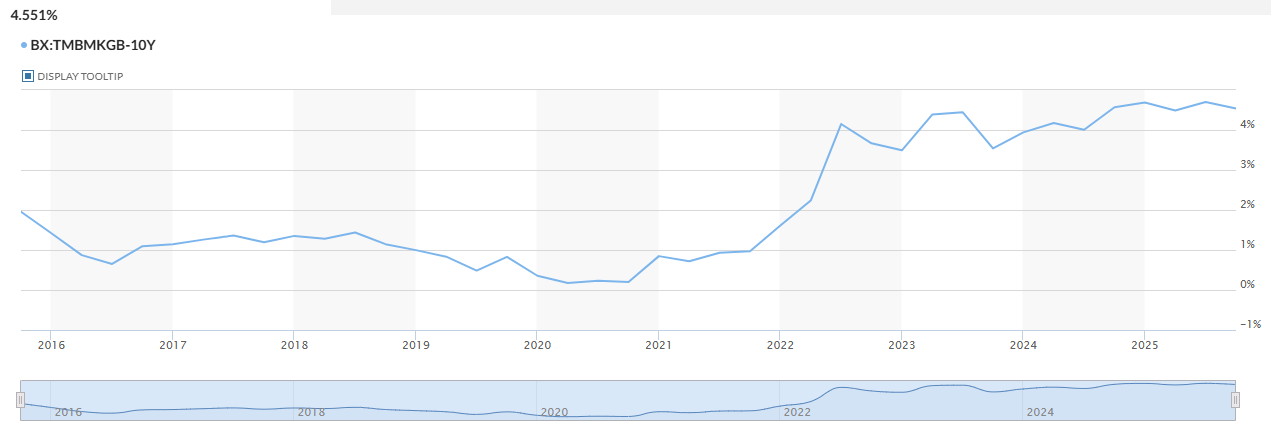
The market sent a clear message to Reeves: the UK lost what market analysts call its "borrower's privilege." After the 2022 mini-budget crisis that toppled Liz Truss's government, investors no longer grant the UK the benefit of the doubt.
The government's fiscal headroom—once £9.9 billion—has evaporated entirely as higher gilt yields drive debt interest payments to a projected £111.2 billion for 2025-26. That is triple the £38 billion paid in 2019-20.
Economic Growth and Inflation Challenges
The borrowing crisis has stuck the Labour Party at the wrong time. The Office for Budget Responsibility will reportedly downgrade productivity forecasts, while GDP growth limped along at just 0.3% in the second quarter.
After cutting rates from 5.25% to 4.0% through five reductions since the summer of 2024, Bank of England Governor Andrew Bailey has limited room to maneuver. The market expects another quarter-point cut in December, but persistent inflation could undermine those expectations.
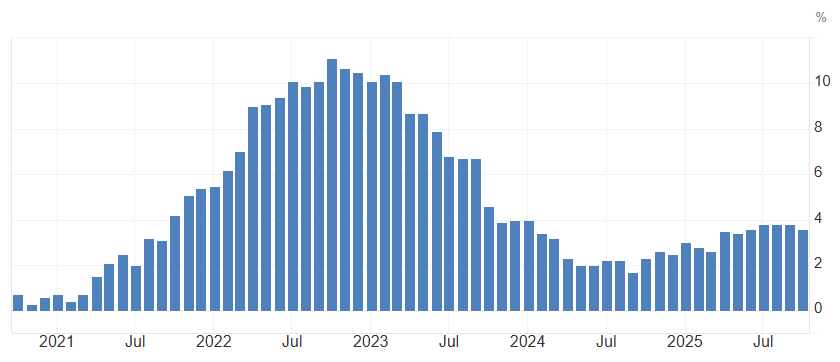
The UK had the highest inflation rate among developed economies at 3.8% in September. Although October's figure cooled to 3.6%, services inflation—the sticky component that central bankers fear most—remained elevated at 4.5%.
Reeves has pledged to maintain "iron-clad" fiscal rules, requiring the current budget to balance and public sector net debt to fall by 2029-30. With spending cuts politically toxic and relaxing fiscal rules market suicide, the Chancellor faces a narrow path of raising taxes without triggering capital flight.
Britain's Prime Minister Keir Starmer has repeatedly declined to commit to a previous pledge not to raise taxes on working people ahead of a budget next month. Seventeen months into office, he has the lowest popularity ratings of any prime minister since records began.
Taxation Measures, Current and Possible
The government's effort to raise taxes has been comprehensive. The abolition of non-domicile status, announced in March 2024 with full implementation from April 2025, eliminated a regime that allowed wealthy residents to pay UK tax only on UK earnings.
Capital gains tax jumped from 10% to 18% at the lower band and from 20% to 24% at the higher end. Inheritance tax will now capture private pensions from April 2027, while agricultural estates above £1 million face a new 20% levy—sparking farmer protests across the countryside.
The government might extend personal tax thresholds through 2030, instead of the planned 2028. It is a stealth measure that drags more earners into higher brackets. As inflation pushes prices higher and employees press for salary increases, higher revenue brings along a higher taxation rate.
This scenario becomes hidden taxation, as employees nominally pay more while their purchasing power remains the same, at best, according to RIFT, a UK finance research firm.
UK Witnesses Taxpayers' Exodus
Reeves has reportedly considered a 20% exit charge on wealthy Britons leaving the country to raise some £2 billion for the Treasury. She might raise the main income tax rate by one percentage point to raise an extra £8 billion a year.
An estimated 16,500 millionaires will depart Britain in 2025, according to the Henley Private Wealth Migration Report. It is the largest net outflow from any country since tracking began a decade ago. "For the first time in a decade of tracking, a European country leads the world in millionaire outflows," Henley & Partners CEO Juerg Steffen said.
That's more than double China's anticipated exodus of 7,800 and represents a dramatic acceleration from the 9,500 who left in 2024 and the 4,200 who left in 2023. The United Arab Emirates is their destination of choice. The Persian Gulf sheikhdom has attracted British millionaires with its zero personal income tax, world-class infrastructure, and a Golden Visa program. The Gulf nation expects to welcome 9,800 millionaires in 2025.
The UAE's gain represents an estimated $63 billion in inflows of wealth. Other popular destinations include the United States (7,500 projected arrivals), Italy (3,600), and Switzerland (3,000)—all offering more favorable tax treatment than Britain.
Top 1% Pays 28% of All Income Tax Revenue
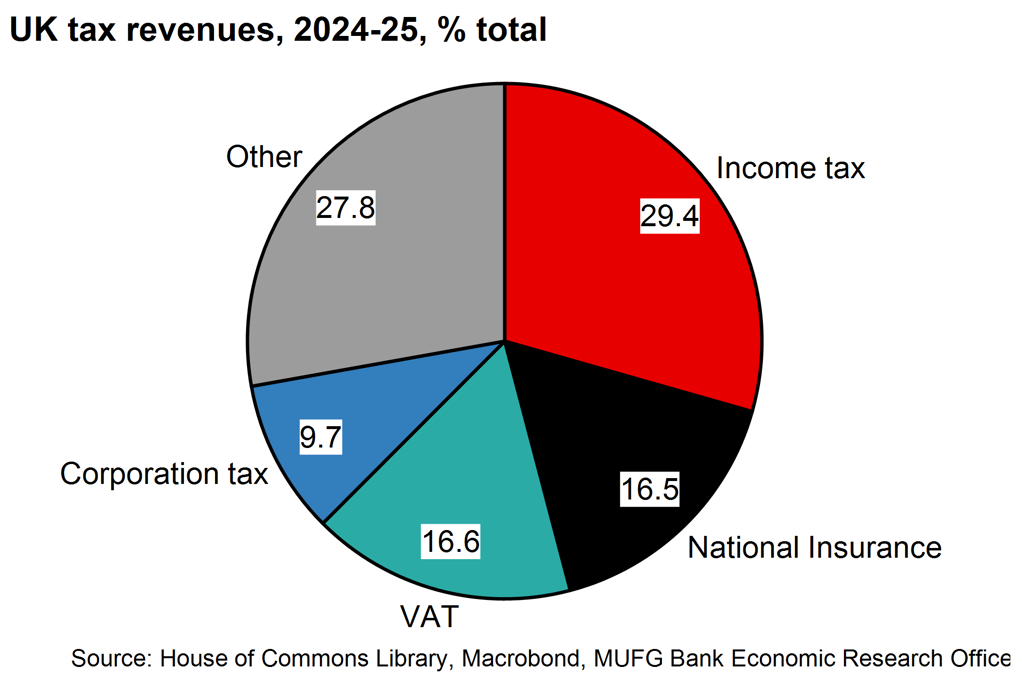
With millionaires fleeing the country, the UK's limited tax base is set to shrink further. Top 1% earners —those making above £200,000 annually— already contribute 28.2% of all income tax revenue while earning just 13.3% of total income.
They pay more than twice their income share in tax, a concentration that has remained consistent for years. Furthermore, approximately 60% of income tax revenue comes from the top 10% of earners.
When millionaires leave, they don't just take their wealth—they take the tax revenue that funds the NHS, schools, and infrastructure.
The UK remains the only country among the world's 10 wealthiest nations to see negative millionaire growth since 2014, according to Trevor Williams, Chair and Co-founder at FXGuard and former Chief Economist at Lloyds Bank Commercial Banking.
UK Demographic Spells Long-Term Trouble
If the exodus of the wealthy poses a short-term, visible risk, UK demographics is the real problem. The population is aging rapidly.
Around 19% of the population is currently over 65, but that figure will reach 27% by 2072. Life expectancy for girls born in 2023 is 90 years, and nearly a quarter of girls born in 2047 could live to 100.
Meanwhile, the working-age population has struggled on multiple fronts. Economic inactivity among 50–64-year-olds stands at 27.4%, driven primarily by sickness and disability. By the mid-2030s, natural population change will turn negative, with deaths exceeding births, making migration the sole driver of population growth.
"Meaningful economic growth has not materialized, the fiscal deficit remains significant and any relaxation of borrowing rules risks market backlash," Martin Rankin, director of the UK accountancy firm S&W, wrote on Friday.
"Attempts to cut spending have proved politically unworkable, while demands for public investment in defense, health, education, technology and the environment continue to grow. To ensure fiscal sustainability, the Chancellor must embrace a tax system that is growth-oriented and supported by a broad base of taxpayers."
Disclaimer:
Any opinions expressed in this article are not to be considered investment advice and are solely those of the authors. European Capital Insights is not responsible for any financial decisions made based on the contents of this article. Readers may use this article for information and educational purposes only.
Benzinga Disclaimer: This article is from an unpaid external contributor. It does not represent Benzinga’s reporting and has not been edited for content or accuracy.