

Walmart (WMT) Stock Looks Fully Valued After Its Big Run
Walmart Inc. WMT | 0.00 |
Walmart stock has delivered a strong 142.1% total return over the past five years, while the latest valuation work using a Discounted Cash Flow (DCF) approach suggests the shares trade at a premium to that intrinsic value estimate.
- Over five years, Walmart has returned 142.1%, which puts recent gains under the spotlight as investors assess how much future cash flow is already reflected in the price.
- Growth expectations around e-commerce, advertising and automation partnerships such as the Symbotic rollout can support optimism, while concerns about a rich P/E multiple and consumer pressure may cap how much investors are willing to pay for that story.
- On Simply Wall St's broader checks, Walmart scores 2 out of 6 on value, which leans expensive rather than a clear bargain.
For investors, the debate is whether Walmart's quality and growth drivers justify paying what the DCF work currently flags as a premium valuation.
Is Walmart Getting Expensive on Cash Flow?
The Discounted Cash Flow (DCF) model looks at the cash Walmart can generate for shareholders in the future and brings it back to a single value today. For Walmart, the latest twelve-month free cash flow sits at about $15.2b, and the model assumes these cash flows continue to grow rather than shrink over time.
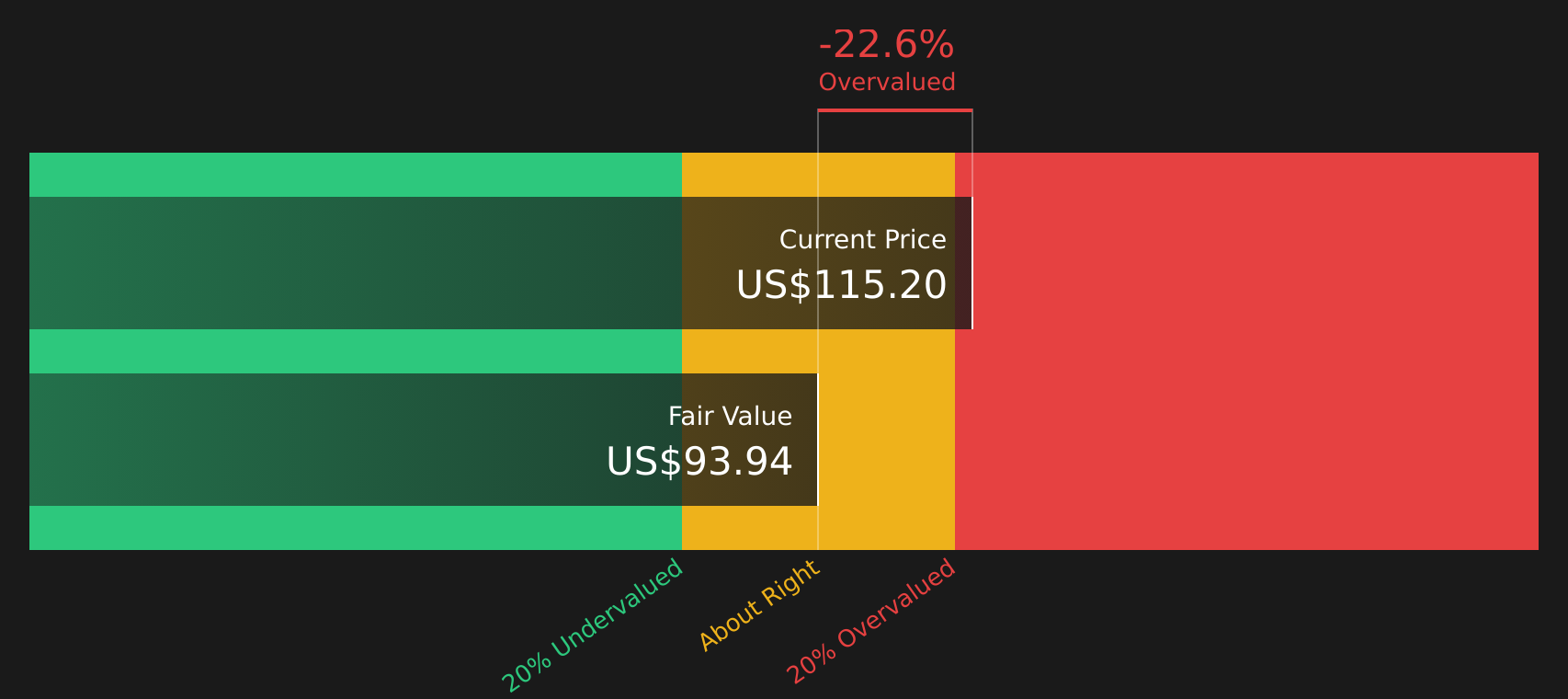
Based on those assumptions, the DCF points to an intrinsic value of about $93.94 per share, which is below the current share price and implies the stock is around 21.7% overvalued. Recent headlines about Walmart's acquisition of streaming TV ad platform Vibe.co help explain why the market is willing to pay up for its advertising potential, even if that enthusiasm runs ahead of what the cash flow model supports.
Overall, the DCF work suggests Walmart stock currently screens as overvalued relative to its estimated intrinsic value.
Our Discounted Cash Flow (DCF) analysis suggests Walmart may be overvalued by 21.7%. Discover 53 high quality undervalued stocks or create your own screener to find better value opportunities.
Is Walmart Fairly Priced on Earnings?
The P/E multiple suits Walmart because earnings are a clean way to compare mature retailers that already generate steady profits. Right now, Walmart trades on a P/E of about 40.0x, compared with a Consumer Retailing industry average near 19.9x and a peer average around 26.1x. That is a clear premium to both the sector and large retailer peers.
Simply Wall St's fair P/E for Walmart is about 41.0x, which is very close to where the stock trades today. This fair ratio already factors in the company’s size, margin profile and risk, so the narrow gap suggests the market is roughly aligning the share price with those fundamentals rather than stretching the multiple to an extreme.
On this earnings multiple, Walmart stock appears roughly fairly valued rather than clearly cheap or expensive.

The Walmart Narrative: What Would Justify Today's Price?
Simply Wall St Narratives pick up where the valuation puzzle for Walmart leaves off and explain which combinations of growth, margins and earnings would need to occur for the stock to be worth materially more or less than today's price. Each Narrative ties a fair value to a specific story about Walmart's potential catalysts and key risks, so you can see over time which version of events is actually unfolding on the Community page.
One of the top community narratives on Walmart: 17% undervalued
"Expansion of high margin business streams Walmart Connect, marketplace, and Walmart+ memberships is diversifying Walmart's income base beyond retail, gradually transforming the company's profit mix..."
Do you think there's more to the story for Walmart? Head over to our Community to see what others are saying!
The Bottom Line
For Walmart, the Discounted Cash Flow (DCF) work points to an intrinsic value below the current share price, while the P/E view suggests the stock is priced about right against its earnings profile. That gap reflects a market that is willing to pay for growth and resilience, even if the timing and intensity of future cash flows look less generous on the model. With broader valuation checks on the weak side, the key question from here is whether Walmart can deliver enough sustained earnings progress to keep justifying a premium over its intrinsic value estimate.
This article by Simply Wall St is general in nature. We provide commentary based on historical data and analyst forecasts only using an unbiased methodology and our articles are not intended to be financial advice. It does not constitute a recommendation to buy or sell any stock, and does not take account of your objectives, or your financial situation. We aim to bring you long-term focused analysis driven by fundamental data. Note that our analysis may not factor in the latest price-sensitive company announcements or qualitative material. Simply Wall St has no position in any stocks mentioned.