

Why Silver Suddenly Plunged: A Historical Look at Two Major Bull-Bear Battles and Key U.S. Stocks to Watch for Turbulence This Week
Silver Trust Ishares SLV | 0.00 | |
abrdn Physical Silver Shares ETF SIVR | 0.00 | |
Proshares Trust Ii Proshares Ultra Silver AGQ | 0.00 | |
Ultrashort Silver Proshares ZSL | 0.00 | |
Global X Silver Miners ETF SIL | 0.00 |
Year-to-date, spot silver has surged more than 180%, briefly surpassing the market capitalizations of Apple and Google to become the world’s third-most valuable asset, behind only gold and Nvidia.
After the feverish rally, silver experienced a sharp sell-off on Monday. Spot silver briefly broke $84 per ounce in early trading—setting a fresh record—before reversing sharply. On Tuesday, it rebounded, and as of press time, the silver ETF Silver Trust Ishares(SLV.US) has rebounded to 4.14%.
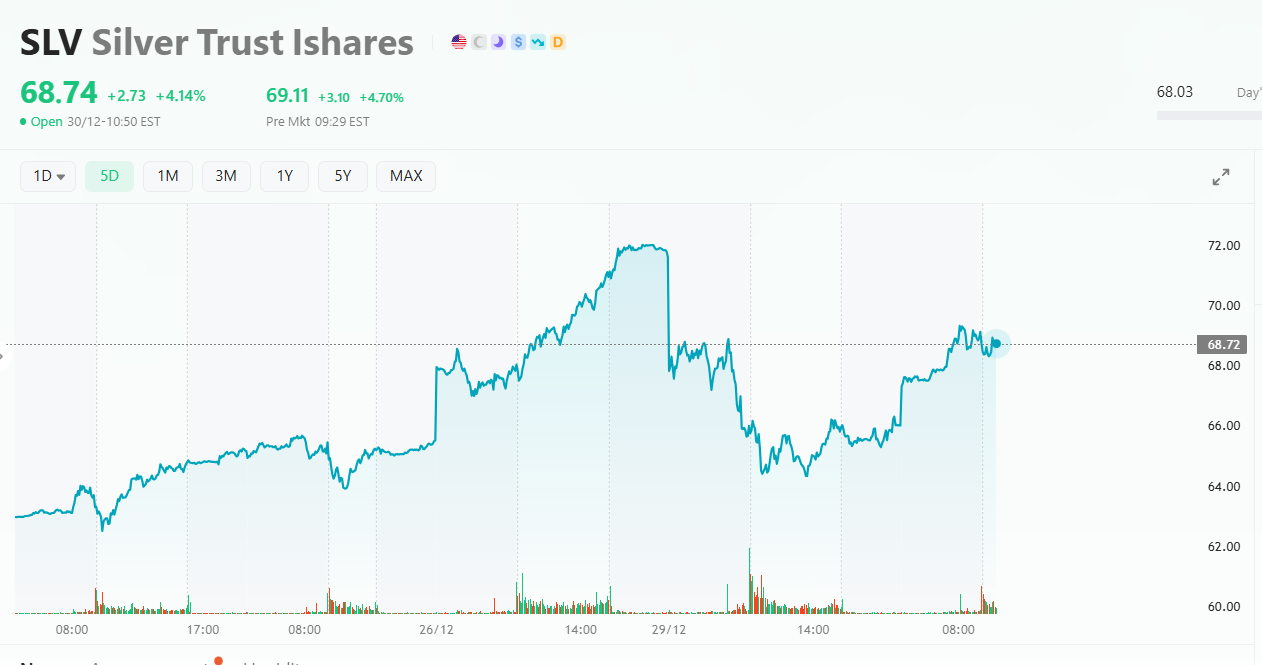
The pullback comes after the Chicago Mercantile Exchange (CME) announced a second margin hike for silver futures within two weeks, raising requirements to roughly $25,000 per contract. The new rules took effect Dec. 29, adding pressure on leveraged traders and setting up a critical week for the metal.
Will deleveraging in the current silver futures market overwhelm physical buying? How high can silver prices rise? What are some "silver concept stocks" in the US stock market? This article will help you understand.
CME Margin Hikes in Historical Context: Fears of a Repeat Collapse
Silver markets are unusually sensitive to CME margin adjustments. In fact, the two most significant bull markets in silver’s history unraveled after similar margin increases.
1. 2011: Margin Increases Popped the Bubble
In the aftermath of the 2008 financial crisis, ultra-loose monetary policy helped drive silver prices nearly 500% higher over two years. The rally ended abruptly when CME raised margin requirements five times in nine days, triggering a wave of forced futures liquidations and driving prices down nearly 30% in weeks. Even with continued physical demand, the withdrawal of levered capital proved devastating.
2. 1980: Hunt Brothers Silver Saga
The famed Hunt Brothers attempted to corner the silver market, pushing prices from single digits to nearly $50 per ounce using massive leverage. When CME implemented “Silver Rule 7” to limit positions and raise margin requirements—alongside a Fed rate hike to 20%—liquidity evaporated. The brothers collapsed under margin calls and silver prices plummeted.
The common lesson: once leverage becomes extreme and prices detach from fundamentals, regulator and exchange intervention often extinguishes speculative blow-offs.
What’s Driving the 2025 Silver Surge?
——Spot Squeeze Fueled by Industrial Demand
The core driver behind the runaway 2025 rally appears to be a spot market squeeze. Even a small uptick in physical delivery demand can destabilize the broader pricing structure—especially amid this year’s surge in real industrial consumption.
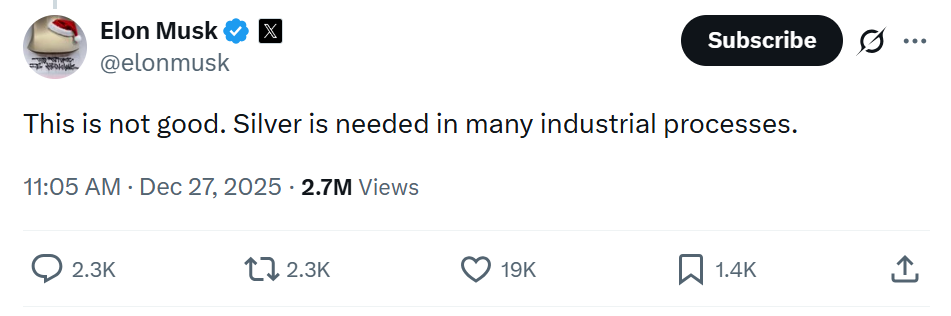
- On the demand side: thanks to the AI wave, the demand for silver, as one of the traditional industrial metals, has exploded.
Silver is critical in solar panels, electric vehicles, and AI hardware. Solar alone accounts for a large share of annual silver consumption. But delivery inventories remain tight, while the paper silver market has ballooned.
Critics liken the rally in part to a futures squeeze: 2025 data show global demand at 1.24 billion ounces versus supply of 1.01 billion, implying a supply deficit of 100–250 million ounces.
Wall Street analysts warn there’s a clear industrial threshold: if silver nears $134 per ounce, it could erode solar industry margins and slow installation growth.
- Supply Constraints and Policy Shifts: China—accountable for roughly 60–70% of refined silver production—plans to implement an export licensing regime starting Jan. 1, 2026, restricting overseas sales to certified large producers.
Reportedly, COMEX silver inventories have fallen about 70% over five years, while Chinese domestic stocks are near decade lows.
Analysts say the squeeze has widened the gap between paper and physical silver prices, with deeply negative silver swap rates signaling intense demand for physical delivery and heightened speculative positioning.
U.S. Silver-Related Securities Poised for Significant Volatility
Name | Ticker | Leverage/Direction |
|---|---|---|
| Physical Silver ETF | Silver Trust Ishares(SLV.US) | 1× Long |
| abrdn Physical Silver Shares ETF(SIVR.US) | 1× Long | |
| 2× Long Silver ETF | Proshares Trust Ii Proshares Ultra Silver(AGQ.US) | 2× Long |
| 2× Short Silver ETF | Ultrashort Silver Proshares(ZSL.US) | 2× Short |
| Silver Miners ETF | Global X Silver Miners ETF(SIL.US) | 1× Long |
| Amplify Junior Silver Miners ETF(SILJ.US) | 1× Long | |
| iShares MSCI Global Silver Miners ETF(SLVP.US) | 1× Long | |
| Silver Mining Stocks | Silver Wheaton Corp.(SLW.US) | — |
| Pan American Silver Corp.(PAAS.US) | — | |
| Coeur Mining, Inc.(CDE.US) | — |
Market Interpretation and Outlook
Zhonghui Futures warns that silver has entered a severely overbought territory, signaling potential for sharp pullbacks or prolonged sideways consolidation. UBS earlier flagged that short-term risks in precious metals markets have risen significantly, with profit-taking likely after fresh highs.
However, this does not necessarily signal the end of the bull market. Long-term drivers—such as an anticipated Fed rate-cut cycle, continued central bank gold purchases, rising geopolitical risk, and persistent concerns over monetary credibility—remain intact. Renowned economist Peter Schiff believes silver could exceed $100 per ounce next year.
Are you optimistic that silver can reach new highs?
Should you short or long now?
Feel free to leave your comments below.